MYCPE ONE
MYCPE ONE LOGO

Join 250,000+
professionals today

Add Insights to your inbox - get the latest
professional news for free.

MYCPE ONE insights

Indemnification Terms That Make Or Break Deals

Join our 250K+ subscribers

Join our 250K+ subscribers

Subscribe

25 NOV 2025 / EXPERT INSIGHTS

Indemnification Terms That Make Or Break Deals

Indemnification Terms That Make Or Break Deals

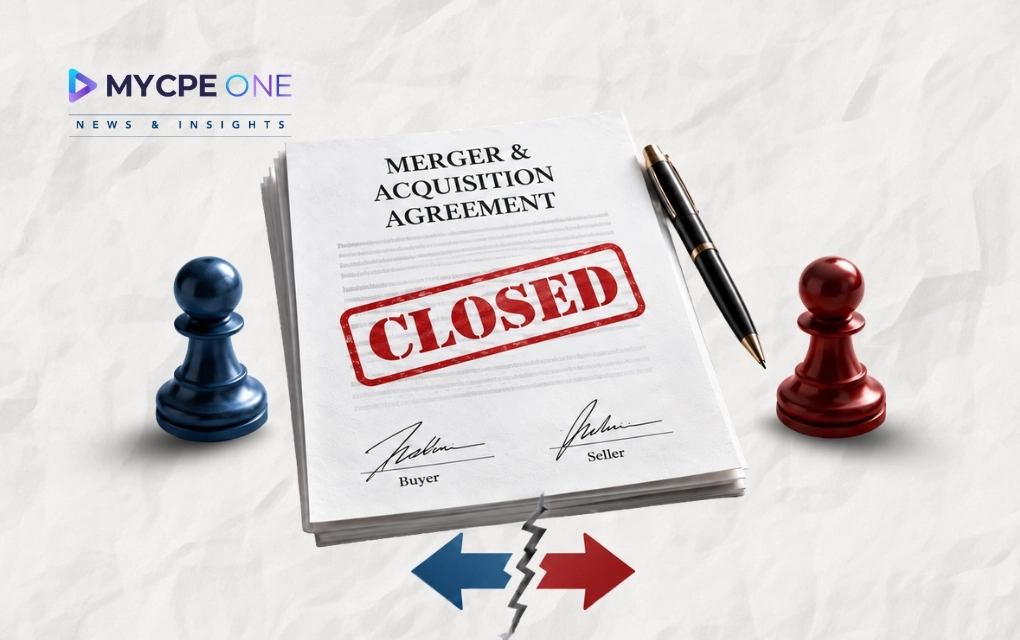
Some parts of an accounting firm sale feel straightforward: valuation formulas, client retention curves, even the awkward “so… who tells the staff?” moment. Then you hit the indemnification clause; usually buried somewhere around page 37; and the deal suddenly feels like you need a JD, a flashlight, and maybe a snack. 

Here’s the truth that sneaks up on a lot of partners: that clause can quietly become the most expensive paragraph in the entire agreement. When things go sideways, the indemnification section decides who pulls out the checkbook. Let’s break it down like actual humans, not lawyers who bill by the comma. 

What Indemnification Really Means 

At its core, indemnification is a safety net. One party agrees to cover certain losses the other party suffers; typically, when a promise (the fancy term is a “representation” or “warranty”) turns out to be untrue, or a third party files a lawsuit. 

A quick example: 

  • Seller says: “No ongoing litigation.” 
  • Reality: A disgruntled ex-employee has been hinting at a lawsuit through passive-aggressive emails. 
  • Buyer gets sued after closing.
  • Question: Who pays to clean this up? 
  • Answer: The indemnification clause decides. 

Simple enough. But the clause itself? That’s where it gets spicy. 

The Building Blocks of an Indemnification Clause 

Indemnification provisions have a surprising amount of moving parts. They determine: 

  • What triggers indemnification: 
    Breach of contract? Third-party claims? Both? 
  • How long liability lasts: 
    “Survival periods” differ for regular representations versus “fundamental” ones. 
  • Whether there’s a cap: 
    Limits on how much can be claimed. 
  • Whether fraud is excluded from caps: 
    Spoiler: it usually is. 

Each tiny piece can reshape the entire deal. Think of it as the tax footnotes of the M&A world: easy to overlook, expensive to ignore. 

What Exactly Is an Indemnification Cap? 

A cap is the maximum amount one party can be held responsible for if things go wrong. 

The tug-of-war looks like this: 

  • Sellers: “Let’s cap this thing low so I’m not writing checks years after I retire.” 
  • Buyers: “Actually, let’s keep it high so I don’t inherit a dumpster fire.” 

This is where negotiations get… animated. Not hostile, just “let me grab my spreadsheet” animated. 

What the Market Data Gets Wrong (Especially for Smaller Deals) 

You’ll often see big-firm deal studies claiming that indemnification caps hover around 10% of the purchase price. And that’s true, for massive transactions. 

But here’s the no-brainer: 
Those studies rarely include deals under $25 million, which means your $1.2M or $4M CPA firm sales are not represented at all. And there’s no reps and warranties insurance (RWI) swooping in to save the day; that’s a big-deal luxury. 

So, what actually happens in real-world, small-firm deals? 

For deals $5M and under, the practical ranges look more like: 

  • Caps between cash at closing and 2× the total purchase price 
  • Variations like: 
    • 1.5× or 2× cash at close 
    • 3× total purchase price 
    • 0.75× the purchase price 
  • Uncapped liability for fraud, gross negligence, or willful misconduct

This structure keeps things fair without making anyone feel like they’re signing up for a financial booby trap. 

A Practical Framework for CPA Firm Buyers and Sellers 

If you’re the seller, your priorities are usually straightforward: 

  1. Get paid at closing. 
  2. Limit your exposure after closing.

If you’re the buyer, your list looks a bit different: 

  1. Protect yourself from hidden liabilities; especially tax, employment, or client-specific issues. 
  2. Ensure survival periods give you enough time to find and act on those issues. 

And both sides tend to agree on one universal truth: 

Fraud = no cap. 

If someone lies intentionally, all bets are off. No negotiation. No exception. That’s just being a straight shooter. 

The Bottom Line on Indemnification 

In small-firm accounting deals, indemnification isn’t about winning legal chess. It’s about keeping the deal functional, fair, and financially sane for both parties. 

Here’s a quick reference table that puts it all in one place: 

Deal Size Typical Cap Range RWI (Reps & Warranties Insurance)?
Under $5M Between cash at close and 2× total purchase price Rare
$5M–$25M 10–20% of purchase price Sometimes
$25M+ Often capped at 10% or covered by insurance Common


If your cap is too low, buyers get nervous. Too high, sellers get cranky. The sweet spot sits somewhere in the middle, enough protection for the buyer, enough guardrails for the seller. 

Looking Ahead 

Indemnification is never the sexiest part of a deal, but when an issue surfaces post-closing, it becomes the part everyone suddenly reads very closely. Understanding how these clauses work gives both sides the confidence to move forward without fear of writing a surprise check later. 

If you want to break down more deal terms the same way, practical, clear, and without a law degree, check out our courses at DealAcademy.org, where we turn contract complexity into something you can actually use the next time you’re buying or selling a firm.

Until next time…

Don’t forget to share this story on LinkedIn, X and Facebook

Subscribe now for $199 and get unlimited access to MYCPE ONE, from CPE credits to insights Magazine

📢MYCPE ONE Insights has a newsletter on LinkedIn as well! If you want the sharpest analysis of all accounting and finance news without the jargon, Insights is the place to be! Click Here to Join

Website Services for CPA & Accounting Firms - Starting $69/month.

Is your website attracting clients—or turning them away? MYCPE ONE’s Website Development Services, starting at just $69/month, create high-converting, professional websites tailored for accounting firms like yours.

With over 400 designs to choose from and a dedicated webmaster, we handle it all for you—no DIY required.

Get started today and create a website that works for your firm with MYCPE ONE!
Make a lasting impression. Boost conversions. Stay secure.

Schedule a call today!

Unlock Annual Access to News & CPE Subscription

You’ve reached the 3 free-content piece limit. Unlock unlimited access to all News & CPE resources.
Subscribe Today.

News & Updates

  • Exclusive News & Insights
  • Latest Regulatory Updates
  • Accounting Industry Trends
  • Expert Insights
  • AI-Driven Audio & Summaries
  • Infographics & Videos
  • CPE-Approved Articles
  • Digital Magazine
  • Benchmarking Blogs

Unlimited CPE Access for 1 Year

  • 15,000+ Hours of Content
  • 500+ Subject Areas
  • Mandatory Ethics Courses
  • 250+ Compliance Packages
  • 50+ Virtual Conferences and Events Access
  • Format: Live, Audio, Video, E-Books
  • Audio Based Courses & Podcasts
  • Add External Certificates with AI
  • AI Compliance Tracking and Report
  • Instant Certification and Fast Reporting
  • Mobile App Access (iOS and Android)
  • Dedicated Support System
  • Practical Training Programs
  • AI Academy Access
  • Tax Academy Access
  • Audit Academy Access
  • Leadership Academy Access