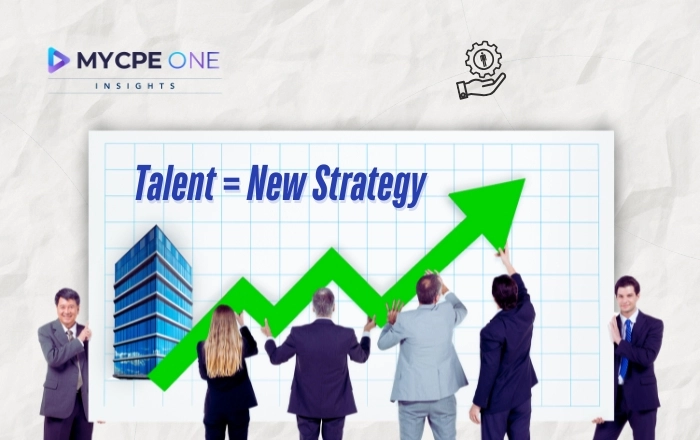
Audit, tax, and advisory firms are facing a crisis as high-pressure environments and relentless performance metrics result in high levels of burnout and attrition among professionals. Industry experts suggest leaders can combat this trend by promoting transparency, cultivating unique talent, supporting professional wellbeing and learning, and rewarding creativity and innovation over time spent on task, which will better align with the disruptive, tech-heavy future of the industry.
In today’s audit, tax and advisory firms, the biggest lever isn’t a shiny new piece of software, it’s the people. For decades, professionals in these firms were the backbone of the business, driving excellence through expertise, judgment and trust. Now they’re working in an environment that feels increasingly unforgiving. Private-equity pressure, relentless KPIs and automation have created a high-intensity environment where the human element often gets squeezed. Talent isn’t checking out because it lacks grit; it’s reacting like any group of humans would under chronic stress. Burnout, quiet quitting and attrition are signals that the old model is breaking. Amid all this change, it’s easy to forget the human cost, and the urgent need to imagine a future where technology doesn’t just enable people but truly empowers them. It’s like trying to drive a stick shift in a world built for self‑driving cars; no wonder people feel beat up.
Professionals want more than productivity. They’re looking for purpose, belonging and connection. They want to work for firms that stand for something. When those things are missing, even the most talented accountants and advisors can feel isolated and disillusioned. Behind the glossy headlines about innovation and growth lies a quieter, more personal story, one of talent in distress.
Winning with Talent
With talent under systemic strain, the role of senior leadership becomes mission‑critical. Their task isn’t just to manage workloads, but to create conditions where professionals can thrive, conditions built on safety, belonging and inspiration. The most effective executives are those who reduce systemic stress and empower their people to bring forward their best thinking. They drive cultural and organizational alignment to enable agility, resilience and relevance in a market defined by disruption. They attract and activate the right talent, foster high‑performance cultures and guide teams to embrace new service models with confidence. These leaders are strategic architects: bold in vision, relentless in execution and fluent in the language of transformation. Success will demand foresight, cross‑functional influence and the ability to align firm strategy with market realities while keeping the human, both the client and the professional, at the center. This isn’t our first rodeo with industry upheaval, but it might be the most human one yet.
Some actions that firms can take include:
Setting the “Tone at the Top”: One of the greatest sources of stress is not just a lack of clarity, but also the gap between what leaders say and what they do. Walking the talk isn’t optional, it’s table stakes. In times of disruption, consistency and embodiment matter more than volume. Leaders must anchor themselves first in the firm’s purpose and values, then communicate strategy, vision and priorities. When leaders model transparency, balance and resilience, it signals safety and trust far more powerfully than repeated messages. Alignment across Partner, Principal and Managing Director (PPMD) teams is essential, but it must extend beyond words into actions, because culture is shaped by what leaders embody every day.
Cultivating Unique Talent: True strengths aren’t fixed; they evolve when professionals are encouraged to explore, experiment and reflect. Instead of viewing people as interchangeable players to be slotted into predefined roles, firms should provide opportunities for professionals to uncover what energizes them and where they bring unique value.
Client service: Some senior professionals will thrive in building deep, strategic relationships with clients. They bring value not just by managing accounts, but by shaping trust, insight and long‑term partnerships, things AI can support with data but can never authentically replicate. These professionals will serve as relationship leaders for key clients, private‑equity firms and portfolio companies. They will evolve into strategic generalists: proactive, insight‑driven and equipped to optimize value creation, revenue growth and cross‑functional collaboration across the firm’s capabilities.
Service delivery: As delivery models shift toward hybrid teams with tech‑enabled onshore talent, tech‑enabled offshore and nearshore professionals, third‑party providers and managed and outsourced service providers, some professionals may find their strengths in operational excellence, precision, technology and scaled delivery. These roles are ideal for those who enjoy structure, detail and problem‑solving. Here, professionals can lean on AI and automation for efficiency while adding the judgment, creativity and adaptability that machines alone cannot provide.
Other pathways: Others may decide the profession is no longer the right fit. By opening pathways for exploration rather than locking people into labels, firms can help professionals discover their distinctive blend of skills, perspectives and creativity. In this model, AI becomes a tool that supports specialization, but human curiosity, creativity and emotional intelligence drive differentiation and meaning. When professionals are supported in this kind of exploration, they build not only technical competence, but also resilience, adaptability and the confidence to innovate.
Nurturing Talent Needs: Support professionals by embedding well‑being, learning and purpose into the firm’s DNA, not bolting them on as afterthoughts. To support and empower professionals, leadership can provide the following resources, each championed by a senior firm leader:
Professional development & learning: Curated learning paths including upskilling in AI, analytics, ESG and advisory capabilities. Invite high‑performing professionals to experiential programs for emerging leaders, focused on strategic thinking, client impact and team building. Provide support for paid study time and exam fees for firm‑approved professional studies.
Career navigation & mentorship: Provide tools that help talent explore new roles, projects and geographies within the firm. Develop structured programs pairing junior talent with senior leaders, including reverse mentoring for digital fluency. Provide access to certified coaches for goal setting, feedback and growth planning.
Culture & connection: Establish cross‑functional groups focused on innovation, generative AI, industry verticals, etc. Conduct pulse surveys and feedback loops to surface talent needs and act on them. Establish recognition platforms that celebrate impact beyond billables, such as peer‑to‑peer shout‑outs, leadership awards and spotlight stories.
Well‑being & mental health: Establish programs that provide resilience training, workload‑balancing tools and access to mental‑health professionals. Enable professionals to have hybrid schedules, compressed workweeks and asynchronous collaboration options. Provide annual budgets for fitness, therapy, meditation apps or creative pursuits.
Innovation & autonomy: Establish internal platforms for pitching and piloting new service ideas or tech solutions. Provide time for creativity. As we know, some tech companies allow their professionals a number of hours to innovate. Similarly, firms can provide protected hours for learning, experimentation or thought‑leadership development.
Access to generative‑AI tools: Empower talent with firm‑sanctioned generative‑AI solutions for research, writing and client delivery.
Rewarding what really matters: Recognizing that motivated, empowered talent is critical for success, incentives must go beyond financial rewards. Professional services firms were built on measuring contribution by the clock, but today, time is no longer the best proxy for value. The future belongs to firms that reward outcomes, creativity and presence, not just hours logged.
Establish purpose‑driven performance metrics: Replace traditional KPIs, such as utilization, with metrics that reflect true impact: innovation adoption, client transformation, team engagement and talent development. Link rewards to long‑term value creation, not just quarterly numbers.
Equity & ownership models: Expand profit‑sharing to more junior professionals and create “growth pools” tied to new service lines, digital initiatives or client wins, rewarding entrepreneurial mindset and collective success.
Recognition & visibility: Showcase professionals not just for revenue but for creativity, leadership and contribution to culture. Create platforms that elevate diverse voices and stories.
Talent development mandates: Incentivize senior professionals to actively invest in mentorship, succession planning and cross‑functional collaboration. Recognize leaders who grow people, not just numbers.
Evolve or Fall Apart
As audit, tax and advisory firms face mounting pressure to meet market and investor expectations, it is no longer feasible to achieve results by squeezing people harder. The key is unlocking human potential as the only sustainable driver of growth. The old playbook of acquisition‑led expansion and relentless performance metrics is losing traction. The future belongs to firms that recognize talent not as a cost center, but as the catalyst for transformation. This shift demands courage and a belief that purpose, belonging and trust in people’s autonomy will prove more powerful than short‑term metrics. Without this pivot, the industry risks not just a quiet exodus, but the erosion of creativity itself, the very thing clients need most in a world defined by disruption. When leaders embrace these principles, they unleash creativity, curiosity and innovation that no technology can replicate. The choice is stark: reinvent the model, or risk watching it unravel, and nobody enjoys watching a slow‑motion train wreck.
(Special mention to: Marie‑Pier Duchesne, a leading transformational leader and conscious strategist, for her contributions to this article.)
Subscribe now for $199 and get unlimited access to MYCPE ONE, from CPE credits to insights Magazine
📢MYCPE ONE Insights has a newsletter on LinkedIn as well! If you want the sharpest analysis of all accounting and finance news without the jargon, Insights is the place to be! Click Here to Join
The Only All-in-One CPE & Learning Platform for CPA & Accounting Firms
Get everything you need for team learning and CPE compliance—starting at just $199 per user/year!
15,000+ hours of CPE-approved content
Learning Management Software to track & manage learning
CPE compliance tracking for all 50 states & 100+ designations
Mobile app access with audio-based courses
CPE-approved articles (like the one you're reading!)
Experience MYCPE ONE at its best! Upgrade your browser for a more interactive, user-friendly interface, and stay ahead in your professional development journey.