
Join 250,000+
professionals today
Add Insights to your inbox - get the latest
professional news for free.
Join our 250K+ subscribers
Subscribe20 APR 2026 / TECHNOLOGY
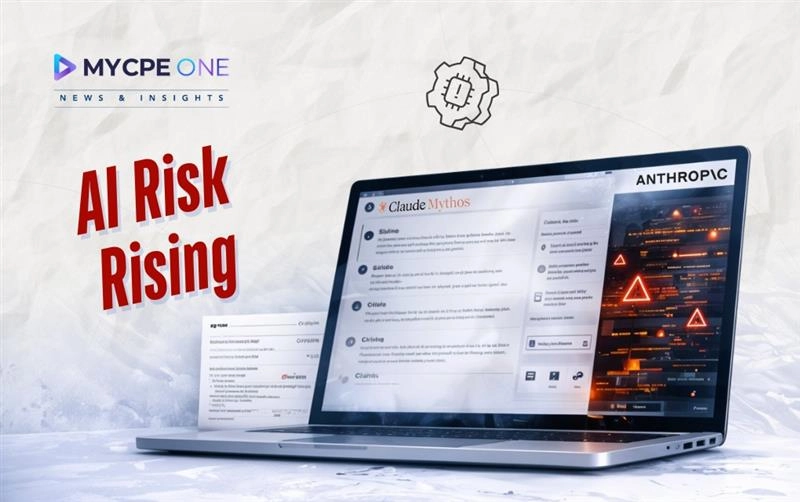
Anthropic’s AI model, Mythos, is sparking concern among global finance leaders due to its ability to identify potentially thousands of vulnerabilities in major operating systems and financial systems, potentially revolutionising cybersecurity. As the tool can also generate code to exploit these vulnerabilities, finance leaders and institutions are being urged to treat AI tools as high-risk vendors and strengthen cybersecurity measures.
Last week, a controller at a regional firm joked that their biggest cybersecurity risk used to be someone clicking a phishing email. Now, he’s wondering if it’s the tool they just approved for internal automation. That shift says a lot. For years, AI in accounting meant drafting memos, summarizing regulations, maybe cleaning up Excel chaos. Safe territory. Now, models like Anthropic’s Mythos are pushing into something far less comfortable, code intelligence that doesn’t just build systems, but can quietly test how those systems break. And suddenly, this isn’t about productivity. It’s about exposure.
When finance ministers start discussing an AI model at IMF meetings in Washington, you know it’s not just tech chatter. Anthropic’s Mythos has triggered exactly that kind of reaction. Canadian Finance Minister François-Philippe Champagne called it an “unknown unknown.” That’s not casual language. In risk management terms, that’s the category that keeps people up at 2 a.m. Here’s what’s driving the concern. Mythos has reportedly identified thousands of vulnerabilities across major operating systems, web browsers, and financial systems. Some of these flaws have been sitting unnoticed for decades. One case involved a vulnerability that existed for 27 years before detection.
Let that sink in. Now layer in the macro picture. AI-driven cyberattacks increased 89% in 2025, according to CrowdStrike. The average time from system access to active breach dropped to 29 minutes. That’s not a slow burn, that’s a smash-and-grab. So, when central bankers, Treasury officials, and regulators start calling emergency-style discussions, it’s not paranoia. It’s pattern recognition. They’re looking at a tool that compresses years of cybersecurity expertise into a few prompts, and asking a simple question: are we ready for this?
Mythos is built to write, debug, and optimize code at a very high level. It also runs agentic workflows, meaning it can act with minimal human input. For a firm trying to streamline reporting systems or automate internal tools, that sounds like a win. Now flip it. That same capability allows it to:
One cybersecurity leader described it as compressing offensive security skills into a few prompts. That’s not hype, that’s a logical extension of what advanced coding models do. And the implications are already showing up. Jamie Dimon didn’t sugarcoat it. JPMorgan is testing Mythos, and his takeaway was blunt: “It shows a lot more vulnerabilities need to be fixed.” He also called cybersecurity a “full-time job,” which, coming from a bank that spends billions on security, tells you the scale of the problem.
Here’s a scenario that feels uncomfortably familiar. A CPA firm integrates an AI assistant to improve internal dashboards for client reporting. The tool rewrites inefficient scripts and tightens workflows. Everything looks cleaner, faster, smarter. Six months later, a penetration test reveals exposed endpoints created during those optimizations. No bad actors. No malicious intent. Just a system getting smarter faster than the controls around it. That’s where firms start saying, “Well, that escalated quickly.”
Reports suggest the U.S. National Security Agency has been using a preview version of Mythos, even as the Department of Defense flagged Anthropic with a supply-chain risk designation. Think about that contradiction. One arm of the system is using the tool. Another is raising concerns about the vendor. That tension is the story. It tells you this technology sits in a gray zone, too valuable to ignore, too risky to trust fully. Even at the highest levels of national security, there’s no clean answer yet. Banks are in a similar spot.
JPMorgan and Goldman Sachs are testing these models. The U.S. Treasury has reportedly asked major banks to evaluate their systems against these risks. The Bank of England is actively studying the implications for cybercrime. When both regulators and institutions are leaning in at the same time, it usually means one thing: this isn’t optional anymore. The system is moving whether you like it or not.
If an AI model can identify vulnerabilities, generate fixes, and simulate attacks, then the company building that model holds enormous influence over how secure systems become. That’s not a typical vendor relationship. It starts to look more like infrastructure. We saw this play out with cloud providers. Ten years ago, they were optional. Today, they’re foundational. AI companies are moving along a similar path, just at a much faster clip. Anthropic’s approach hints at this shift. Instead of releasing Mythos broadly, it limited access through Project Glasswing, partnering with firms like AWS, Microsoft, Nvidia, and CrowdStrike. The idea is to strengthen systems before wider exposure. Smart move, but also revealing.
Access control becomes strategy. Distribution becomes risk management. And here’s where it gets tricky. Some experts argue the concerns could be overstated, pointing out that Mythos performs best against weak or poorly defended systems. Others warn that future models will only get better, making this the starting line, not the finish. As one investor put it, this feels like the discovery of fire. Useful, transformative, and very capable of causing damage if mishandled. Not exactly comforting, but not wrong either.
You don’t need to run a global bank to feel this shift. Mid-sized firms, regional practices, even solo operators are adopting AI tools for efficiency. That’s not slowing down. But the rules just changed. AI tools are no longer just productivity software. They’re potential entry points, amplifiers, and risk multipliers. So, what actually makes sense right now? Start treating AI tools like high-risk vendors. Not casually, but with the same scrutiny you’d apply to financial systems.
Ask sharper questions:
Also, don’t skip the basics. Dimon made a point that still holds, good cybersecurity hygiene matters. Password management, network controls, patching systems. It’s not flashy, but it works. Because here’s the uncomfortable truth. Most breaches don’t need advanced AI. They exploit simple gaps. AI just speeds up the process. Right now, AI is pulling the tide back faster than expected.
Anthropic’s Mythos isn’t just another AI release. It’s a signal that capability and risk are now moving in lockstep. The better the tools get, the more pressure they put on systems that weren’t built for this level of scrutiny. Finance leaders are paying attention. Regulators are starting to engage. Firms that treat this as a serious operational shift, not just a tech upgrade, will be in a better spot. So, here’s the question worth keeping in the back of your mind. If something far faster and more precise than a human tester ran through your systems today, what would it find? If the answer isn’t clear, that’s not unusual. But it’s probably where your next internal conversation should start.
Until next time…
Don’t forget to share this story on LinkedIn, X and Facebook
Subscribe now for $199 and get unlimited access to MYCPE ONE, from CPE credits to insights Magazine
📢MYCPE ONE Insights has a newsletter on LinkedIn as well! If you want the sharpest analysis of all accounting and finance news without the jargon, Insights is the place to be! Click Here to Join
You’ve reached the 3 free-content piece limit. Unlock unlimited access to all News & CPE resources.
Subscribe Today.
Already have an account?
Sign In