Join 250,000+
professionals today
Add Insights to your inbox - get the latest
professional news for free.
Join our 250K+ subscribers
Subscribe08 MAY 2026 / TECHNOLOGY
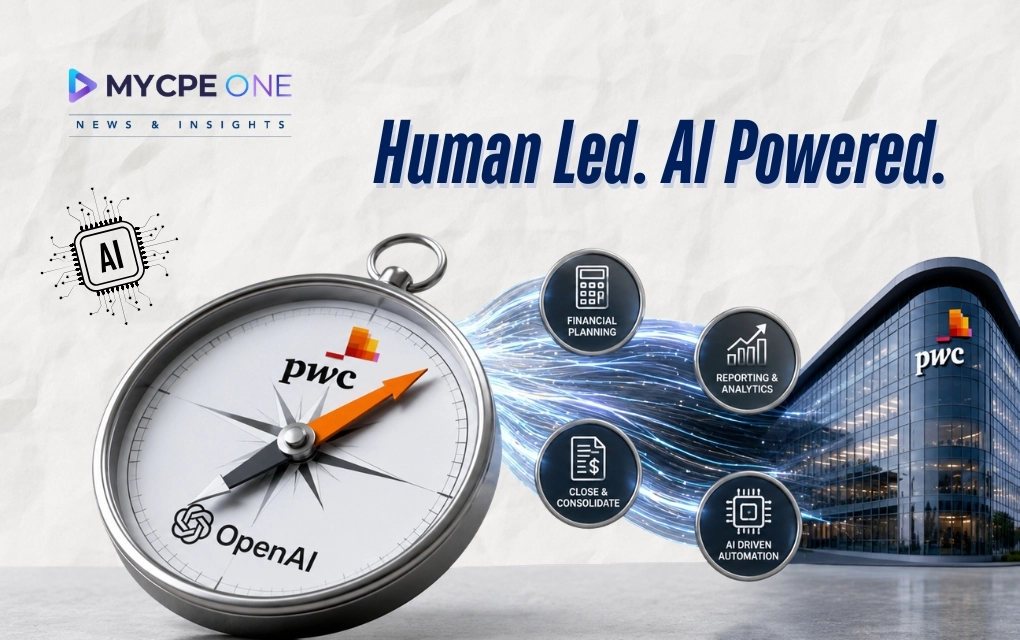
PwC and OpenAI have expanded their partnership to build an AI-native finance function wherein AI will undertake major finance operations while being supervised by humans. The collaboration follows PwC becoming OpenAI's first reseller and its largest enterprise customer in 2024, giving approximately 100,000 PwC employees in the US and the UK access to ChatGPT tools. Notably, the AI agents' primary responsibilities range from executing multi-step finance workflows to initiating tasks and interacting with enterprise platforms under predefined controls, hence shifting finance professionals roles to supervisors of these AI systems.
PwC and OpenAI just made it pretty clear they think those days are living on borrowed time. On May 5, 2026, PwC and OpenAI announced an expanded partnership to build what they’re calling the first enterprise-scale AI-native finance function. Translation: they want AI agents handling major chunks of finance operations while humans supervise, approve, challenge, and control the outcome. Not robots replacing CFOs. More like digital staff accountants that never sleep, never forget a reconciliation rule, and never complain about close week pizza. And honestly, this didn’t come out of nowhere.
This story really starts in 2023, when Big Four firms began realizing generative AI was not another shiny tech toy from Silicon Valley. It had real implications for audit, tax, reporting, advisory, and compliance work. Then came May 2024. PwC struck a major ChatGPT Enterprise agreement with OpenAI, becoming both OpenAI’s first reseller and its largest enterprise customer at the time. Roughly 100,000 PwC employees across the U.S. and U.K. gained access to enterprise-grade ChatGPT tools, including advanced GPT models. That deal mattered for two reasons: it transformed PwC internally, and it created an entirely new AI-driven revenue opportunity externally. The firm was no longer simply advising clients about AI adoption. It became a direct distributor and implementation partner for enterprise AI tools. That move sat on top of PwC’s already massive $1 billion AI investment plan announced in 2023.
The firm rolled out internal tools like ChatPwC and custom GPTs to assist with tax return reviews, proposal drafting, dashboard generation, reporting workflows, software development, and internal research. According to PwC disclosures, the company identified more than 3,000 internal AI use cases across its operations. That’s not dabbling. That’s a full-on kitchen remodel. The interesting part is that PwC did not position AI as some magical replacement machine. Leadership repeatedly emphasized human oversight, governance, controls, and professional judgment. In accounting language: “trust, but verify.”
The new PwC-OpenAI partnership moves beyond simple chatbot assistance and into “agentic AI.” These are AI agents designed to execute multi-step finance workflows across systems. Think procurement, planning, forecasting, treasury, payments, reconciliations, reporting, tax operations, accounting close activities, and accrual workflows. Under the new model, finance teams still own judgment, accountability, and compliance outcomes. The AI handles execution-heavy work while professionals supervise outputs, refine agent behavior, define guardrails, establish policies, and build organizational memory over time. That governance piece is not some side note. It is the entire ballgame for regulated finance environments.
Instead of asking ChatGPT to summarize a spreadsheet, firms are building systems where AI agents can initiate tasks, coordinate workflows, flag exceptions, follow approval chains, and interact with enterprise platforms under predefined controls. PwC and OpenAI are already piloting a procurement agent directly inside OpenAI’s own finance organization, creating a real-world testing ground before broader enterprise rollout. That “customer zero” approach says a lot. Nobody wants another flashy tech announcement that melts down the second it hits a live ERP environment during quarter close.
The partnership introduces model context protocols, reusable AI skills, and Codex-powered finance applications that allow agents to connect securely with enterprise systems and generate more reliable outputs across finance workflows. That means finance specialists could potentially build custom applications for reconciliations, accruals, close activities, and reporting workflows without waiting through traditional software development cycles that usually move slower than airport Wi-Fi.
The firm has reported productivity gains ranging from 20% to 40% among regular ChatGPT Enterprise users. Employees reportedly save up to an hour daily on research and administrative tasks using internal AI tools. That matters more than it sounds. An hour saved inside a CPA firm does not magically create free time. It usually gets redirected into advisory work, client responsiveness, review quality, or simply surviving busy season without turning into a caffeine-powered gremlin. PwC also said more than 95% of its U.S. employees completed AI-related training, totaling over 360,000 hours of upskilling. The business transformation angle is equally important. PwC reportedly deployed generative AI solutions across 950 of its top 1,000 U.S. consulting clients, turning AI from an internal efficiency experiment into a large-scale client service engine. That creates a flywheel effect: internal experimentation fuels client services, which then feeds additional enterprise deployments.
And this is where the competitive pressure starts heating up. Deloitte, EY, and KPMG are all investing heavily in generative AI platforms, internal copilots, and enterprise transformation services. But PwC’s deep alignment with OpenAI gives it an early positioning advantage in what could become the next major consulting arms race. Because the real money may not sit inside chatbot subscriptions. The bigger revenue opportunity likely sits in AI governance consulting, AI risk assessments, ERP transformation, AI assurance services, tax workflow redesign, and regulatory compliance modernization. That’s where Big Four billing rates start humming.
Probably both.
PwC’s model shifts finance professionals from process executors to supervisors of AI systems. Humans still own judgment, controls, ethics, and accountability, while AI agents handle repetitive workflows like reconciliations, accruals, reporting, and procurement reviews. Entry-level accounting work may shrink as automation expands, while mid-level professionals face growing pressure to build AI governance, analytics, and advisory skills much earlier in their careers.
The bigger issue is governance. Who validates outputs? Who owns mistakes? How do firms document AI-assisted workflows for regulators and inspections? Those questions are quickly moving from conference chatter to real operational challenges inside finance departments, especially as SEC reporting teams, internal audit groups, and risk committees begin evaluating AI-driven processes more closely. If PwC’s model succeeds, finance teams may spend less time building spreadsheets and more time supervising the systems that build them.
A few years ago, that sounded like science fiction. Today, it sounds more like the next finance upgrade. PwC and OpenAI are pushing toward continuous accounting environments where AI agents monitor transactions, reconcile balances, flag anomalies, and update reporting workflows in near real time. That could reshape the traditional monthly close cycle many finance teams still dread. Future finance functions may rely on AI-driven forecasting, continuous tax monitoring, autonomous reporting workflows, and real-time dashboards tied directly into ERP systems. The spreadsheets are not disappearing tomorrow. But finance professionals may spend far less time building reports and far more time validating what the machines produce.
Until next time…
Don’t forget to share this story on LinkedIn, X and Facebook
Subscribe now for $199 and get unlimited access to MYCPE ONE, from CPE credits to insights Magazine
📢MYCPE ONE Insights has a newsletter on LinkedIn as well! If you want the sharpest analysis of all accounting and finance news without the jargon, Insights is the place to be! Click Here to Join
You’ve reached the 3 free-content piece limit. Unlock unlimited access to all News & CPE resources.
Subscribe Today.
Already have an account?
Sign In