Join 250,000+
professionals today
Add Insights to your inbox - get the latest
professional news for free.
Join our 250K+ subscribers
Subscribe24 NOV 2025 / SEC UPDATES
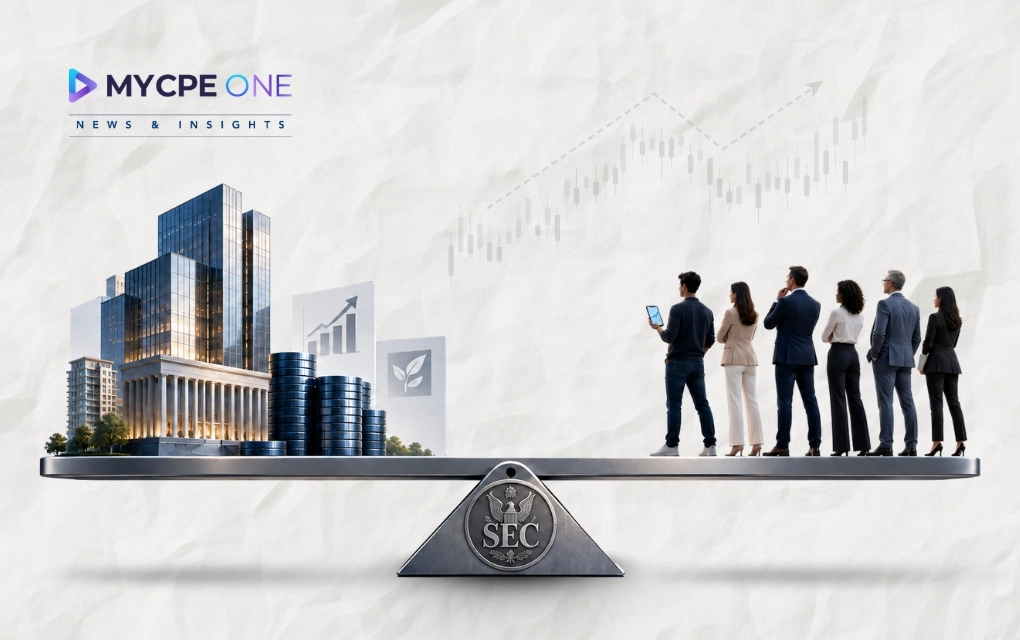
The US Securities and Exchange Commission (SEC) is reportedly considering a significant update of its independence framework, which regulates the relationship between auditors and their clients. The existing framework, designed for the pre-AI and cloud computing era, may no longer be fit for purpose as Big Four audit firms increasingly integrate tools from tech giants into their services, potentially compromising their neutrality. The proposed changes could increase flexibility for audit firms and redefine what constitutes conflict of interest, while maintaining the emphasis on impartiality.
Think of auditor independence like a seatbelt designed in the early 2000s. Back then, cars were simple, roads were predictable, and staying safe meant keeping things separate. Fast forward to today’s business world, and it feels like everyone is driving a souped-up Tesla at 90 mph on a highway full of AI tools, cloud partners, and cross-platform integrations. The seatbelt still works, but it is not built for the ride. Now the SEC is quietly hinting that the independence rulebook could be getting its biggest shake-up in two decades, and Wall Street is paying attention.
The current independence framework was shaped in the wake of massive corporate scandals and the post-Sarbanes-Oxley rebuild of market trust. The logic was simple. If an auditor had financial ties to a client or provided services that could influence judgment, neutrality was compromised.
The SEC doubled down on strict interpretations:
In 2020, the SEC eased a few pressure points. It added materiality thresholds for affiliates, narrowed conflict rules for investment structures, reduced look-back periods for IPO audits, and allowed certain debtor-creditor relationships. The goal was to reduce unnecessary violations without weakening objectivity. But even that refresh did not anticipate what AI and cloud ecosystems would look like in 2024 and 2025.
Today’s tech economy is messy, interconnected, and fast. And that is exactly why the old rulebook is struggling.
Here is what changed:
As SEC Chief Accountant Kurt Hohl put it, long-standing independence rules “may not be fit for purpose” in a world where SAP partners with Microsoft, OpenAI collaborates with cloud providers, and audit firms integrate AI tools from companies they are barred from auditing. Hohl said the SEC is worried that tech companies may soon have no real auditor choice, which becomes a market-structure problem. And the kicker: FT revealed that Deloitte is actually OpenAI’s auditor, a fact that was not previously public.
If the SEC pulls the trigger, the next version of independence might shift toward practical judgment rather than rigid checklists. Expect movement in three areas:
This mirrors the SEC’s 2020 shift toward focusing on what actually threatens independence rather than hypothetical risks.
Looser rules do not automatically mean weaker audits. But they do shake the guardrails. Here is what could realistically happen.
Best-Case Scenario: “Smooth Sailing”
This is exactly what the SEC said it intended during earlier rule changes: reduce burdens without compromising impartiality.
Moderate Scenario: “Same Game, Fewer Headaches”
Risk Scenario: “Watch Your Step”
Investor confidence depends on skepticism. Skepticism depends on distance. And distance is what could shrink if the rules loosen too much.
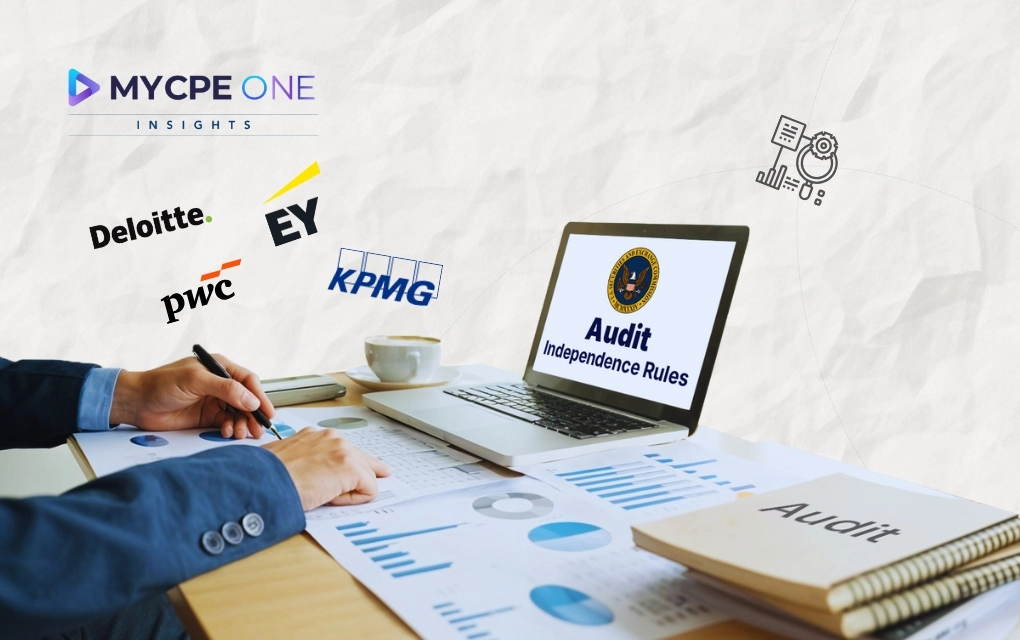
The Big Four have felt boxed in for years. EY, PwC, Deloitte, and KPMG all sell or integrate technologies built by the same companies they audit or want to audit.
If the rules loosen:
But here is the trap: more freedom does not mean more opportunity. It means more responsibility. The firms that succeed will be the ones that treat independence not as “minimum compliance” but as a cultural anchor.
Finance, audit, and governance professionals should prepare for several shifts:
Early adaptation will prevent surprises: Professionals who adjust quickly will help their organizations avoid compliance gaps and unexpected conflicts.
The SEC is not weakening independence. It is redefining it for an economy where cloud networks, AI tools, and software ecosystems overlap constantly. Looser rules could reduce unnecessary conflicts, widen auditor choice, and reflect real economic structures. But independence is not just a regulation. It is a mindset, a culture, and a public expectation. The firms and professionals who stand out in this next chapter will be the ones who maintain iron-clad judgment even when the guardrails get wider.
Until next time…
Don’t forget to share this story on LinkedIn, X and Facebook
Subscribe now for $199 and get unlimited access to MYCPE ONE, from CPE credits to insights Magazine
📢MYCPE ONE Insights has a newsletter on LinkedIn as well! If you want the sharpest analysis of all accounting and finance news without the jargon, Insights is the place to be! Click Here to Join
Transforming Finance & Accounting Operations for Enterprises!
We help 100+ clients streamline F&A operations with our full-suite outsourcing services—eliminating the need for in-house teams. Partner with us for Top-tier finance & accounting talent, Cutting-edge technology, and World-class infrastructure.
Our Full-Suite F&A Services Include:
We collaborate with CPA and accounting firms to drive real business value.
Schedule a no-obligation discovery callYou’ve reached the 3 free-content piece limit. Unlock unlimited access to all News & CPE resources.
Subscribe Today.
Already have an account?
Sign In