
Join 250,000+
professionals today
Add Insights to your inbox - get the latest
professional news for free.
Join our 250K+ subscribers
Subscribe23 JAN 2026 / SEC UPDATES
Recently, a Manhattan judge ruled that regulators can still reclaim money following misconduct if genuine harm is proven, justifying the SEC's stance amid recent questions raised by courts. The decision has significant implications for securities enforcement, indicating that disgorgement is still possible but requires solid proof of substantial damage rather than mere misconduct or legal technicalities.
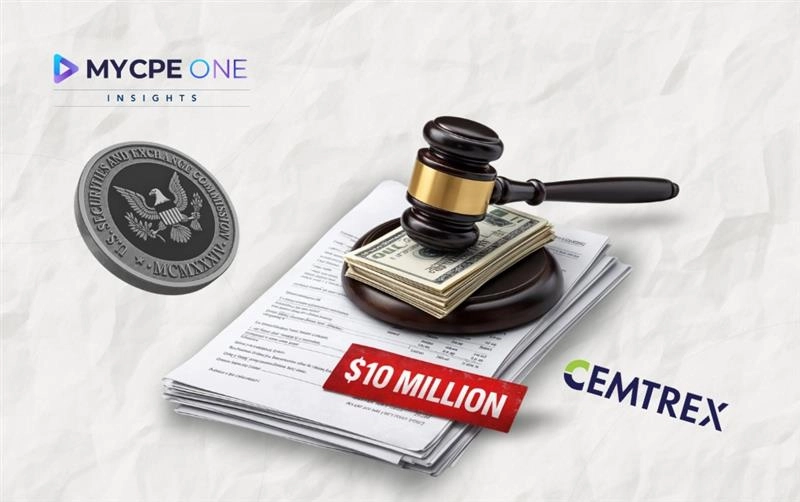
A few years ago, disgorgement felt like muscle memory for securities enforcement. If the SEC proved misconduct, the money came back. Lately, that assumption stopped holding. Courts started asking harder questions, defendants got bolder, and compliance teams quietly rewrote their risk math. This month, a Manhattan judge put some of that uncertainty to bed. The Cemtrex ruling did not just order repayment. It clarified when regulators can still claw money back, even after appellate courts tried to narrow the lane.
The Cemtrex case landed at the intersection of fraud and judicial skepticism. In 2023, the Second Circuit told the SEC it could not demand disgorgement unless it showed real harm, not just technical violations. That decision rattled enforcement desks and defense firms alike. On remand, the SEC adjusted its playbook. Instead of leaning on abstract misconduct, it focused on measurable damage. Judge J. Paul Oetken accepted that framing. He found that both Cemtrex and its investors suffered concrete losses after founder Aron Govil diverted offering proceeds to personal uses. The result: roughly $6.6 million in disgorgement plus $3 million in prejudgment interest. Not a full rewind, but close enough to get everyone’s attention. For professionals tracking enforcement trends, this matters. Disgorgement is not dead. It just demands tighter proof. Think less theory, more math.
Look across the enforcement aisle, and you see the same theme. Prosecutors want receipts. The New York Attorney General’s lawsuit against Emergent BioSolutions’ former CEO, Robert Kramer, reads like a case study in timing. Manufacturing executives flagged contaminated COVID vaccine batches in late 2020. Public disclosures lagged. Kramer allegedly activated a trading plan anyway and sold more than $10 million in stock before the market caught on. The state leaned on the Martin Act, not federal securities law, which lowers the bar on proving intent. Still, the narrative centered on economic harm. Investors bought into a story that did not match internal reality. The stock popped on contract news, then slid after production halted. From a compliance standpoint, this is not edge case behavior. Trading plans, disclosure controls, and manufacturing risks collide more often than firms like to admit. Many companies still treat Rule 10b5-1 plans as safe harbors rather than compliance tools that require discipline.
Here’s the uncomfortable part. These cases do not hinge on exotic fraud. They hinge on controls that failed quietly. In Cemtrex, the proceeds were moved without adequate oversight. In Emergent’s case, internal knowledge and external disclosures drifted out of sync. Both scenarios show how quickly routine decisions turn into regulatory problems. Picture a mid-size public company juggling a secondary offering while its controller flags cost overruns tied to a delayed product launch. Management pushes disclosure to the next quarter. Executives sell stock under prearranged plans. No one thinks they crossed a line, until regulators pull emails and timelines side by side. That is when things go sideways.
Audit committees and finance leaders should read these rulings as a reminder to tighten internal escalation paths. If bad news sits inside the building, trading plans and capital raises deserve a pause. That is not conservative. That is survival.
Regulators lost some leverage after the Second Circuit decision, but they adapted. They now frame cases around dollars lost, not just rules broken. That approach takes more work, but it sticks better in court. There is an old line from Benjamin Graham that still fits: “In the short run, the market is a voting machine, but in the long run it is a weighing machine.” Judges now want the scale, not the slogan.
For firms, that means documentation matters more than ever. If money moves, someone should be able to explain why, where it went, and who approved it. If executives trade, disclosures should already reflect the risks management knows internally. This is not about perfection. It is about alignment.
Disgorgement survived the appellate pushback, but only when regulators show real harm. Insider trading cases now hinge on timing, documentation, and credibility, not just bad optics. For CPAs, controllers, and audit leaders, the lesson is straightforward. Weak controls and delayed disclosures still cost real money. Trading plans do not erase responsibility. Courts expect numbers, not narratives. If your firm treats compliance like a box check, these cases should give you pause. Enforcement has not gone soft. It just got sharper.
Until next time…
Don’t forget to share this story on LinkedIn, X and Facebook
Subscribe now for $199 and get unlimited access to MYCPE ONE, from CPE credits to insights Magazine
📢MYCPE ONE Insights has a newsletter on LinkedIn as well! If you want the sharpest analysis of all accounting and finance news without the jargon, Insights is the place to be! Click Here to Join
You’ve reached the 3 free-content piece limit. Unlock unlimited access to all News & CPE resources.
Subscribe Today.
Already have an account?
Sign In