MYCPE ONE
MYCPE ONE LOGO

Join 250,000+
professionals today

Add Insights to your inbox - get the latest
professional news for free.

MYCPE ONE insights

Cleaning Company Evaded $1.2 Million in Payroll Taxes

Join our 250K+ subscribers

Join our 250K+ subscribers

Subscribe

16 FEB 2026 / ACCOUNTING & TAXES

Cleaning Company Evaded $1.2 Million in Payroll Taxes

Cleaning Company Evaded $1.2 Million in Payroll Taxes

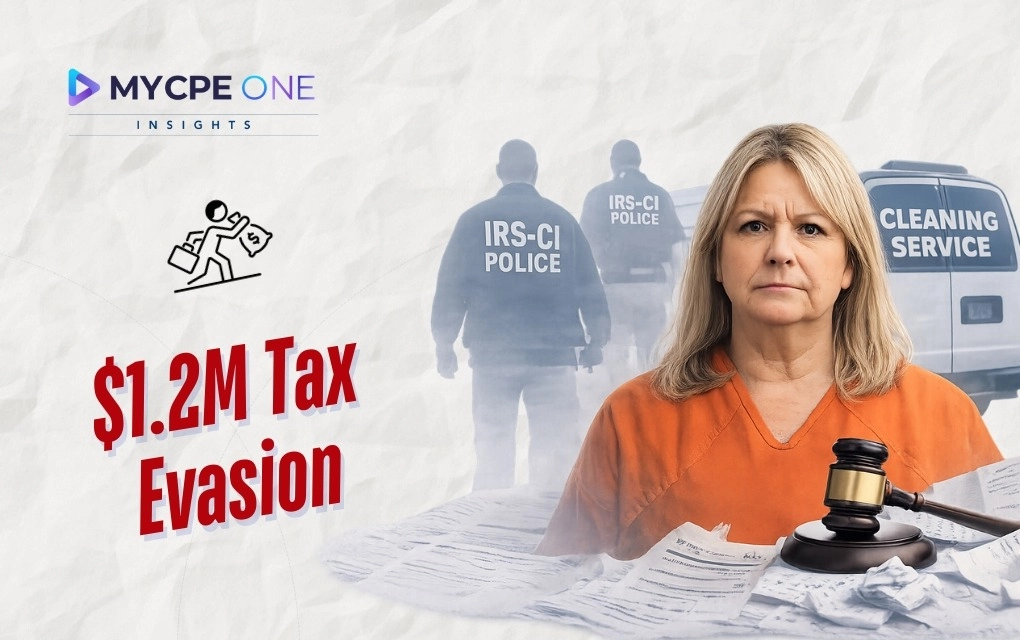
Every tax season, someone decides payroll taxes are a short-term loan. It never ends well. This time, it is Deborah Meadows, a 64-year-old former Las Vegas cleaning company owner, who pleaded guilty to willfully failing to pay over more than $1.2 million in employment taxes from 2010 through 2020. She withheld Social Security, Medicare, and federal income taxes from employees, did not remit them to the IRS, did not file required quarterly payroll returns, and later submitted altered records to a grand jury. She now faces up to five years in federal prison, with sentencing set for May 21, 2026. If you work in tax, audit, or client advisory, this is not just a headline. It is a reminder of where civil noncompliance turns into criminal exposure, and why payroll taxes remain one of the IRS’s fastest ways to escalate enforcement. Let’s break down what actually happened, what tools the government uses in cases like this, and why this matters right now as firms move through another filing season.

Why are Payroll Taxes Treated Differently?

The core issue here involves “trust fund” taxes. When an employer withholds federal income tax, Social Security, and Medicare from employee wages, that money does not belong to the business. The law treats it as held in trust for the U.S. Treasury. That includes:

  • Federal income tax withholding
  • Employee portion of Social Security and Medicare
  • Reported on Form 941, Employer’s Quarterly Federal Tax Return
  • Reconciled annually on Form W-2 and Form W-3

Employers also file:

  • Form 940 for federal unemployment tax
  • Form 944 for certain small employers instead of Form 941
  • Form 941-X to correct prior quarters
  • Schedule B for semiweekly depositors

In Meadows’ case, prosecutors allege she withheld payroll taxes for over a decade but did not file the required quarterly Forms 941 and did not remit the funds. That is not a cash flow timing issue. That is willful failure to account for and pay over trust fund taxes under Internal Revenue Code Section 7202.

When does a payroll issue turn criminal?

Most payroll tax cases start as civil collection matters. Revenue Officers assess unpaid liabilities and may assert the Trust Fund Recovery Penalty under IRC Section 6672 against responsible persons. That penalty can attach personally to owners, officers, bookkeepers, or anyone with authority over financial decisions. Civil assessments are common. Criminal prosecutions are not.

They usually appear when two elements show up:

  • Willfulness. The business had funds available but chose to pay vendors, rent, or owners instead of the IRS.
  • Obstruction. Altered records, fabricated documents, or misleading responses to subpoenas.

According to DOJ releases, Meadows allegedly submitted altered bank statements and inaccurate tax returns in response to a grand jury subpoena. That is the kind of conduct that flips a switch. Once an obstruction enters the chat, the case no longer looks like sloppy compliance. It looks intentional. IRS Criminal Investigation handled the probe. That tells you this moved well beyond routine collections. For firms advising small and mid-size businesses, here is the uncomfortable question: how many clients are floating payroll taxes for a quarter or two because “cash is tight”? In a volatile economy, it happens more than anyone wants to admit.

What should firms be watching this tax season?

Right now, firms are buried in individual and business returns. Payroll compliance sometimes takes a back seat unless you offer outsourced payroll or CFO services. This case is a good gut check. Ask yourself:

  • Are clients current on Form 941 filings?
  • Are payroll deposits matching reported liabilities?
  • Are any clients on installment agreements for payroll tax?
  • Have any responsible person interviews been scheduled by the IRS?

This is also the season when Forms W-2 and W-3 have already gone out, and Forms 941 must be reconciled to annual wage totals. Any mismatch is low hanging fruit for IRS notices. If a client has underreported deposits relative to wages, that will surface. Payroll tax issues also bleed into:

  • Form 1120 or 1120-S expense deductions
  • Form 1065 guaranteed payments
  • Schedule C self-employment tax comparisons
  • State unemployment and withholding filings

A payroll problem is rarely isolated. It tends to show up everywhere once you start pulling the thread.

Is the IRS getting more aggressive?

The IRS has publicly emphasized enforcement in areas involving willful noncompliance, particularly where government funds are involved. Trust fund taxes fund Social Security and Medicare. That gives these cases political weight. Recent enforcement patterns show that while most payroll delinquencies stay civil, the IRS refers cases for prosecution when they see long time horizons, large dollar amounts, and document manipulation. Meadows’ alleged conduct spanned from Q1 2010 through Q4 2020. That is a decade. The tax loss exceeded $1.2 million. Those numbers matter. For professionals, the lesson is not panic. It is awareness. During tax season, you are often the first person to see warning signs:

  • Persistent unpaid payroll tax balances
  • Missing quarterly filings
  • Inconsistent wage reporting
  • Clients asking how long they can “float” deposits

If something feels off, it probably is.

The Takeaway

Payroll taxes are not optional. They are not flexible financing. They are not a short-term bridge. They are trust fund money. When business owners treat withheld wages as operating capital, they step onto a slippery slope. When they alter records to hide it, the slope turns vertical. For CPAs, tax preparers, and advisors, this case serves as a reminder to tighten payroll compliance reviews, especially during filing season when you already have the data in front of you. Reconcile Forms 941 to W-2 totals. Confirm deposits match liabilities. Document advice given to clients who are behind.

No one wants to see their client’s name in a DOJ press release. And no practitioner wants to explain why warning signs were ignored. Tax season always feels like controlled chaos. Phones ring, portals fill up, deadlines stack up. It is easy to focus only on income tax returns. Still, payroll compliance sits in the background like a ticking clock. Most of the time it stays quiet. Occasionally, it does not. The professionals who stay ahead of it are the ones who sleep better at night.

Until next time…

Don’t forget to share this story on LinkedIn, X and Facebook

Subscribe now for $199 and get unlimited access to MYCPE ONE, from CPE credits to insights Magazine

📢MYCPE ONE Insights has a newsletter on LinkedIn as well! If you want the sharpest analysis of all accounting and finance news without the jargon, Insights is the place to be! Click Here to Join

Unlock Annual Access to News & CPE Subscription

You’ve reached the 3 free-content piece limit. Unlock unlimited access to all News & CPE resources.
Subscribe Today.

News & Updates

  • Exclusive News & Insights
  • Latest Regulatory Updates
  • Accounting Industry Trends
  • Expert Insights
  • AI-Driven Audio & Summaries
  • Infographics & Videos
  • CPE-Approved Articles
  • Digital Magazine
  • Benchmarking Blogs

Unlimited CPE Access for 1 Year

  • 15,000+ Hours of Content
  • 500+ Subject Areas
  • Mandatory Ethics Courses
  • 250+ Compliance Packages
  • 50+ Virtual Conferences and Events Access
  • Format: Live, Audio, Video, E-Books
  • Audio Based Courses & Podcasts
  • Add External Certificates with AI
  • AI Compliance Tracking and Report
  • Instant Certification and Fast Reporting
  • Mobile App Access (iOS and Android)
  • Dedicated Support System
  • Practical Training Programs
  • AI Academy Access
  • Tax Academy Access
  • Audit Academy Access
  • Leadership Academy Access