Join 250,000+
professionals today
Add Insights to your inbox - get the latest
professional news for free.
Join our 250K+ subscribers
Subscribe14 MAY 2026 / ACCOUNTING & TAXES
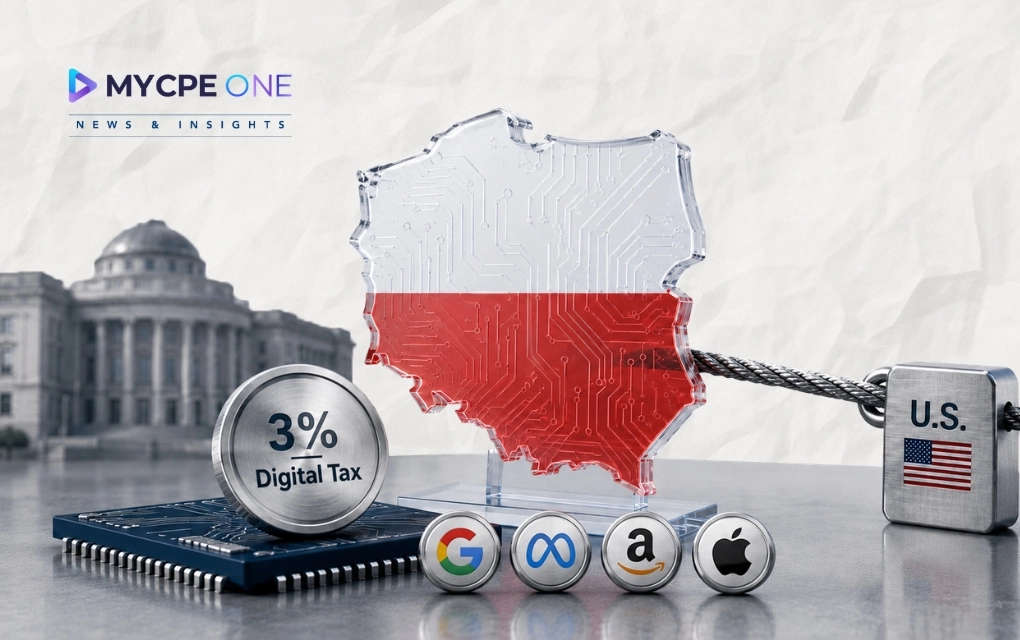
Poland is pushing for a new digital service tax of up to 3% on selected digital revenue earned in the country, targeting big tech companies involved in digital advertising and e-commerce, among others. The move is seen as an effort to ensure tax fairness, with Deputy Prime Minister Krzysztof Gawkowski saying it could raise roughly PLN 2.5 billion ($680 million to $685 million) annually for innovation and technology development, while potentially risking retaliatory tariffs or trade restrictions from the U.S.
Poland has decided to walk into a room most countries lately tiptoe around: taxing Big Tech while Donald Trump is back in the White House. Warsaw is pressing ahead with plans for a digital services tax, or DST, of up to 3% on selected digital revenue earned inside Poland. The proposal targets large online platforms involved in digital advertising, user data monetization, e-commerce marketplaces, and platform intermediation services. Depending on the draft version cited, the thresholds sit around €750 million to €1 billion in global revenue and roughly PLN 25 million ($6.7 million to $7 million) in Poland-sourced revenue. That may sound like another European tax policy debate. It is not. This one sits right at the intersection of tax fairness, U.S. trade pressure, Chinese e-commerce expansion, and Europe’s growing frustration with digital market dominance. In other words, this thing could get spicy fast.
Poland’s leadership says the logic is straightforward: global platforms generate billions from Polish users while paying relatively modest taxes locally. Google Poland reportedly generated PLN 1.53 billion ($384 million) in revenue in 2024 while paying about PLN 38 million ($9.5 million) in tax. Facebook Poland reportedly generated PLN 1.82 billion ($457 million) and paid around PLN 10.6 million ($2.66 million) in corporate tax. Much of the advertising business for these firms flows through Ireland, where the corporate tax rate remains significantly lower than Poland’s 19%. That detail matters because it cuts to the center of the argument. Poland believes value gets created where users, advertisers, and data exist, not simply where intellectual property or invoicing entities sit on paper.
Deputy Prime Minister Krzysztof Gawkowski has framed the measure as a way to create fairer competition for local businesses and raise roughly PLN 2.5 billion ($680 million to $685 million) annually for domestic innovation and technology development. And honestly, this is not exactly a new European idea. France, Italy, Austria, and other countries already rolled out versions of digital taxes years ago. Poland is arriving late to the party, not inventing the playlist.
Well, yes. But also no.
The United States clearly sees these taxes as aimed squarely at American firms like Google, Meta, Amazon, and parts of Apple and Microsoft. U.S. officials already warned that Poland could face retaliation, including tariffs or trade restrictions, if the legislation moves forward. President Trump recently warned countries imposing digital taxes that they risk “substantial additional tariffs” and possible restrictions involving U.S. technology exports. That is not exactly subtle diplomacy. That is closer to “FAFO” foreign policy.
Source: Bloomberg
But Poland insists the tax is not nationality-based. Officials argue the proposal also responds to the rapid expansion of Chinese e-commerce giants, especially Temu. Earlier this year, Temu reportedly overtook Allegro as Poland’s most visited e-commerce platform, raising concerns about local taxation, reporting obligations, and competitive imbalance. That changes the framing significantly. This is not simply Europe versus Silicon Valley. Poland is also trying to defend domestic firms against massive low-cost marketplace expansion coming from Asia. That explains why officials repeatedly describe the tax as an issue of economic sovereignty rather than just revenue collection.
The European Union previously explored broader digital taxation frameworks, but recent reports suggest Brussels backed away from aggressive action while trying to secure better trade terms with the Trump administration. Translation: Europe blinked a little. Poland apparently decided not to wait around. That creates an awkward dynamic inside Europe itself. Germany’s Finance Minister Lars Klingbeil recently argued that American digital platforms hold too much market power and damage democratic discourse and consumer protection. At the same time, several European governments remain nervous about provoking another trans-Atlantic trade mess.
Meanwhile, multinational companies continue pushing for an OECD led global solution rather than country by country DST rules. Booking.com warned that fragmented digital taxes could create double, triple, or even quadruple taxation exposure. And that concern is legitimate. Once every country builds its own digital tax formula, compliance turns into a spreadsheet nightmare with legal invoices attached.
Even inside Poland, support is uneven. Finance Minister Andrzej Domański previously described the chances of implementation as “very, very low.” President Karol Nawrocki’s camp reportedly worries the measure could damage U.S. relations and push investment toward countries like Ireland or the Czech Republic. There is also concern that domestic firms could indirectly absorb the cost anyway. Former Digital Affairs Minister Janusz Cieszyński warned the proposal might hit Polish marketplace businesses harder than expected, especially companies like Allegro. That is the dirty little secret of many digital taxes: the economic burden rarely stays where lawmakers initially point it.
Platforms may increase advertising fees. Sellers may pay higher commissions. Consumers may eventually eat the cost through pricing. Somewhere, a controller will stare at a quarterly variance report and mutter, “Well, there’s the problem.”
Poland’s digital tax proposal is bigger than a 3% levy. It reflects a broader global shift toward taxing digital value closer to where customers and users actually live. Warsaw believes it is defending tax fairness and economic sovereignty. The United States sees discrimination against American companies. Big Tech sees compliance headaches and investment risk. Europe still looks divided on how aggressive it wants to be. For CPAs, tax leaders, and multinational finance teams, the real takeaway is simple: digital taxation is no longer theoretical policy chatter. It is becoming operational reality, one country at a time.
Until next time…
Don’t forget to share this story on LinkedIn, X and Facebook
Subscribe now for $199 and get unlimited access to MYCPE ONE, from CPE credits to insights Magazine
📢MYCPE ONE Insights has a newsletter on LinkedIn as well! If you want the sharpest analysis of all accounting and finance news without the jargon, Insights is the place to be! Click Here to Join
You’ve reached the 3 free-content piece limit. Unlock unlimited access to all News & CPE resources.
Subscribe Today.
Already have an account?
Sign In