Join 250,000+
professionals today
Add Insights to your inbox - get the latest
professional news for free.
Join our 250K+ subscribers
Subscribe12 FEB 2026 / ACCOUNTING & TAXES
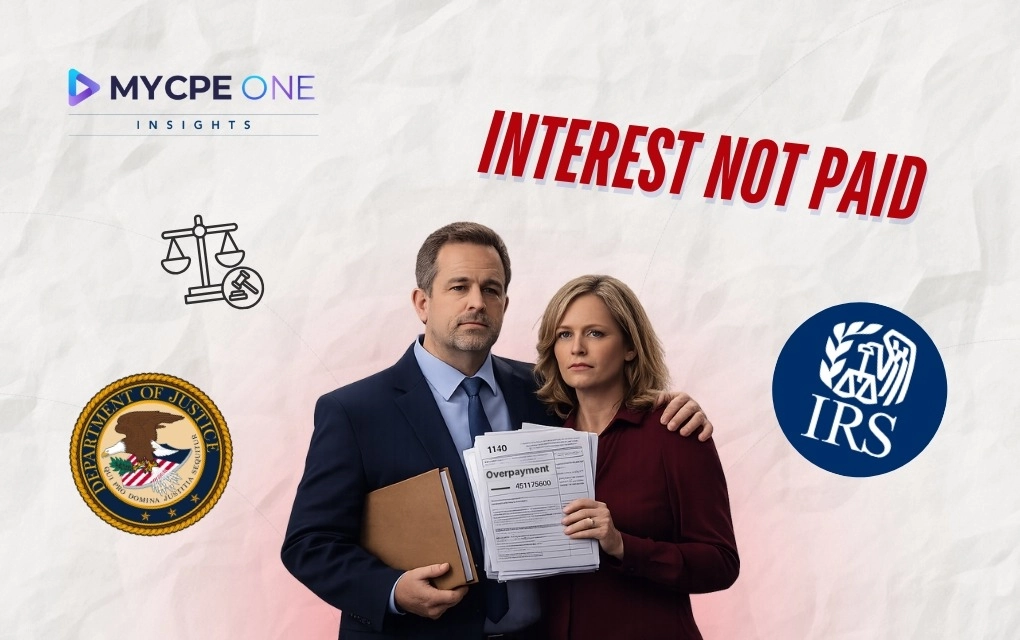
A New York couple, Martin Fleisher and Andrea Bierstein, have filed a class-action lawsuit against the Internal Revenue Service (IRS) alleging it failed to pay overpayment interest during the Covid-19 pandemic. The case, Fleisher v. United States, claims the IRS did not properly implement mandatory disaster relief measures, potentially exposing the U.S government to millions in unpaid overpayment interest, and questioning how the IRS handled tax administration during the pandemic.
When COVID hit, the IRS didn’t just fall behind. It quietly became the world’s biggest interest-free bank. Taxpayers overpaid. Refunds stalled. Deadlines got pushed. And for years, most people just shrugged and moved on because, honestly, everyone had bigger problems. Now a New York couple is asking a question that sounds simple but carries a nasty price tag for the government: If the IRS held my overpayment longer because it extended deadlines, why didn’t it owe me interest? That question is now the heart of Fleisher v. United States, a new class-action lawsuit that could force the IRS to pay millions in unpaid overpayment interest from the Covid era.
Before we get to the lawsuit, it helps to remember what 2020 actually looked like from a tax administration standpoint. The IRS shut its offices. Mail piled up. Processing times exploded. Refund backlogs became normal. Even basic notices went out late, sometimes years late. For many firms, it felt like running compliance work through a fog machine. At the same time, the IRS repeatedly used its disaster authority under IRC § 7508A to postpone deadlines. This wasn’t a one-time extension. It turned into a rolling series of relief windows across 2020, 2021, 2022, and into 2023. Those postponements mattered because the IRS interest rules work off timing. And timing is everything in tax.
Under IRC § 6611, the IRS generally pays interest on overpayments. But the Code also includes “interest-free” windows, where the government can hold an overpayment for a period without paying interest, depending on when the return was filed and when the overpayment arose. In normal years, these rules stay boring. Covid made them expensive.
On February 9, 2026, Martin Fleisher and Andrea Bierstein, New York residents, filed a class-action lawsuit in the U.S. District Court for the Southern District of New York. The case name is Fleisher v. United States. Their claim: the IRS failed to pay overpayment interest during COVID because it did not properly implement mandatory disaster relief measures. Specifically, they argue the IRS should have suspended “interest-limiting exemptions” under IRC § 6611 when the agency extended deadlines under disaster authority. This is not a “the IRS was slow” complaint. It’s a “the IRS applied the law wrong” complaint.
And it’s built around a very pointed accusation: the IRS allegedly ignored a 2019 amendment to the Robert T. Stafford Disaster Relief and Emergency Assistance Act, which the plaintiffs say should have triggered mandatory tax relief during federally declared disasters and emergencies.
The lawsuit invokes:
The plaintiffs are also seeking class certification for all U.S.-based taxpayers who were denied interest due to how the IRS handled these Covid postponements. If the court certifies the class, this stops being a niche case and turns into a serious liability event.
This is where the story gets real for tax professionals. The IRS didn’t do something flashy like change a form or publish a big announcement saying “we’re not paying interest.” Instead, the alleged move was quieter and more bureaucratic, which is exactly how IRS controversies tend to happen.
But those regulations explicitly exclude taxpayer-favorable items, including overpayment interest. So, from the IRS perspective, the relief system is designed to stop taxpayers from getting penalized for missing deadlines, not to create new entitlements like overpayment interest. From the plaintiffs’ perspective, that approach becomes unlawful if Congress amended the Stafford Act in a way that made relief mandatory and broader. That’s the entire fight. Not “did Covid happen?” but “what does disaster relief legally require the IRS to do?”
Right now, the case is in its early stages. The next major milestone is whether a judge certifies it as a class action. That decision matters more than the final ruling in some ways. If the class is certified, the IRS faces national exposure. The case becomes a magnet for similar claims. More taxpayers get involved. More firms start reviewing old overpayment interest computations. If the class is not certified, the case becomes more limited. The plaintiffs could still win individually, but the IRS’s financial exposure shrinks dramatically. This case also fits into a broader pattern of Covid-era IRS disputes that never really went away. Other cases have challenged interest and penalty treatment during COVID extensions, including disputes like Kwong v. United States. Courts have also questioned IRS interpretations of extension authority in cases like Abdo v. Commissioner. The common thread: emergency relief lasted so long that taxpayers started asking whether the IRS treated those years like “special rules” when it benefited the agency, and “normal rules” when it benefited taxpayers. That’s a bad look, even if the IRS is technically right.
The next key step is class certification. If granted, the case becomes a national issue. If denied, it remains narrower but still influential. If the plaintiffs win, the IRS could owe millions in back interest. If the IRS wins, the current interpretation stands, and overpayment interest during disaster postponements remains limited absent clear congressional direction. Either way, the bigger story is not just about interest. It is about how emergency tax administration gets unwound. COVID forced the IRS to improvise. Now the courts are reviewing the fine print. For professionals, the takeaway is straightforward: do not assume that the COVID chapter is closed just because filing seasons moved on. Some of those years are still sitting in the system, waiting for someone to ask whether the numbers were calculated correctly.
Until next time…
Don’t forget to share this story on LinkedIn, X and Facebook
Subscribe now for $199 and get unlimited access to MYCPE ONE, from CPE credits to insights Magazine
📢MYCPE ONE Insights has a newsletter on LinkedIn as well! If you want the sharpest analysis of all accounting and finance news without the jargon, Insights is the place to be! Click Here to Join
You’ve reached the 3 free-content piece limit. Unlock unlimited access to all News & CPE resources.
Subscribe Today.
Already have an account?
Sign In