MYCPE ONE
MYCPE ONE LOGO

Join 250,000+
professionals today

Add Insights to your inbox - get the latest
professional news for free.

MYCPE ONE insights

Is Trump’s Gas Tax Holiday a Fix or a Fiscal Detour?

Join our 250K+ subscribers

Join our 250K+ subscribers

Subscribe

12 MAY 2026 / ACCOUNTING & TAXES

Is Trump’s Gas Tax Holiday a Fix or a Fiscal Detour?

Is Trump’s Gas Tax Holiday a Fix or a Fiscal Detour?

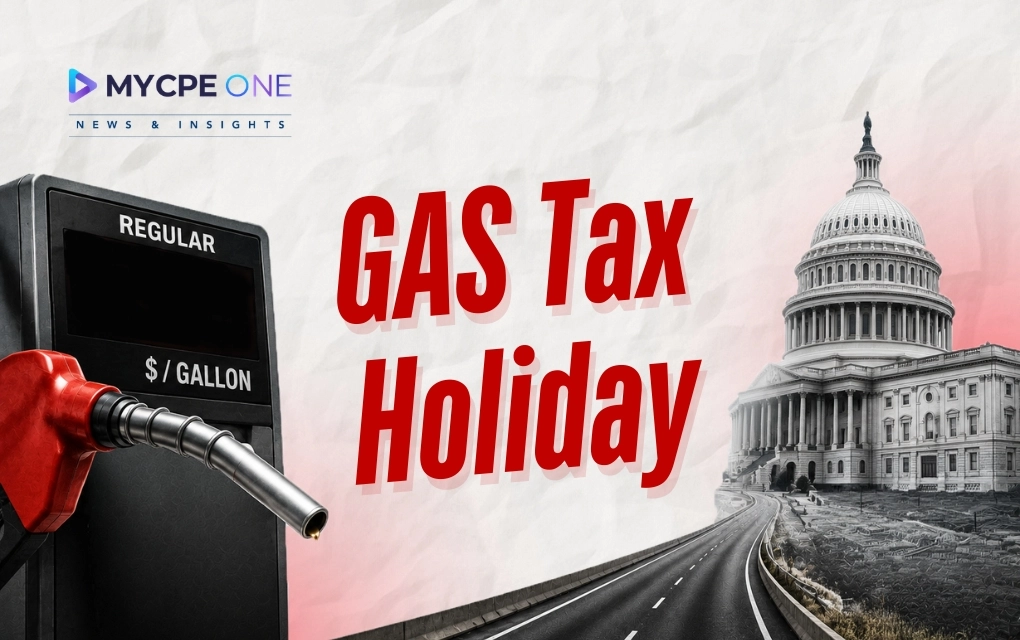
The federal gas tax has quietly sat in the background of American life since 1993, like that old office printer nobody notices until it jams five minutes before a filing deadline. Now, with gas prices climbing past $4.50 a gallon nationwide after the Iran conflict sent oil markets into panic mode, President Donald Trump wants to hit pause on it. The proposal sounds simple: temporarily suspend the federal gasoline tax of 18.4 cents per gallon and the diesel tax of 24.4 cents per gallon. The pitch is even simpler. Americans feel squeezed, midterm elections sit around the corner, and every extra dollar at the pump reminds voters of it. For households filling SUVs twice a week or CPA firms reimbursing staff mileage during audit travel season, fuel costs have become one more expense that refuses to chill out. Still, the math behind the proposal tells a more complicated story.

Is this relief or just political aspirin?

Trump argues that even modest savings matter while energy prices remain elevated during the Iran conflict. He is not wrong on the emotional side of the issue. Gas prices have become one of the most visible indicators of economic stress in America. Consumers may not track Treasury yields or deficit projections, but they definitely notice when filling the tank suddenly costs $80. The White House also understands the timing. Polling now ties inflation frustration directly to presidential approval ratings. A gas tax holiday gives lawmakers something immediate and visible to point to, especially ahead of the 2026 midterms.

Source: Bloomberg

Congress would still need to approve the suspension. Republican Senator Josh Hawley has already signaled support, while some Democrats previously floated similar ideas earlier this year. That bipartisan overlap matters. When gas prices spike hard enough, ideology tends to take the back seat while voters stare at the numbers blinking on the pump like a Vegas slot machine gone bad. The challenge is scale. Analysts estimate the average driver would save roughly $2 to $4 per fill-up. Helpful? Sure. Transformational? Not exactly. One tax partner at a mid-sized Houston CPA firm put it bluntly in a client roundtable last week: “Nobody changes vacation plans over two bucks.” That may explain why economists across the spectrum remain cautious.

Where does the highway money go?

The federal gas tax does not just disappear into Washington’s general checking account. It funds the Highway Trust Fund, which supports interstate highways, bridge repairs, and transit infrastructure. That fund already runs under pressure. The tax rate has remained unchanged since the Clinton administration in 1993, despite decades of inflation and more fuel-efficient vehicles reducing collections. Electric vehicles complicate things further because EV owners largely avoid gasoline taxes altogether while still using public roads.

Today, Congress routinely supplements the Highway Trust Fund with borrowed money and general revenues. Suspending the gas tax, even temporarily, widens that gap further. According to estimates from the Committee for a Responsible Federal Budget, a one-month suspension would cost roughly $3.5 billion. A six-month holiday could push the figure near $21 billion. Some economic activity could offset a portion of the loss through increased spending elsewhere, though debt servicing costs would likely erase much of that benefit. That is where finance professionals start paying closer attention. A tax cut funded through additional borrowing during elevated interest-rate conditions creates a very different fiscal picture than similar measures did a decade ago. Treasury financing costs now carry far more weight. Every additional borrowing package lands in a higher-rate environment where debt servicing itself has become one of Washington’s fastest-growing expenses.

Will drivers even feel the difference?

The current surge in gas prices comes primarily from geopolitical risk tied to Iran and fears around global energy supply disruptions. The federal gas tax represents only a small slice of the overall retail price. That uncertainty matters for businesses too. Logistics firms, regional accounting practices with traveling audit teams, and small businesses operating vehicle fleets care less about short-term political gestures and more about stable fuel forecasting. Volatility creates budgeting headaches, especially during an already uncertain economic cycle. There is also no guarantee that every penny of the tax suspension reaches consumers directly. Fuel retailers and distributors operate within highly reactive commodity markets. Some analysts warn portions of the savings may get absorbed elsewhere in the supply chain instead of fully lowering pump prices. That concern is not theoretical. Similar fuel-tax relief efforts globally have produced mixed results depending on market conditions.

Canada recently suspended parts of its federal fuel excise taxes through Labor Day. Some provinces saw measurable relief. Others experienced only modest declines because underlying oil prices stayed elevated. It is a reminder that gasoline prices behave more like stock tickers than stable utility bills.

Could this become a bigger tax debate?

The gas tax holiday conversation has reopened broader questions around how America funds infrastructure in an economy shifting toward EV adoption and cleaner transportation. The current system increasingly looks outdated. Some lawmakers now support mileage-based user fees. Others favor expanded EV taxes. Some want broader infrastructure funding through corporate taxes or deficit financing instead of fuel-based collections. That debate is not going away.

For now, Trump’s proposal functions more as immediate economic relief than long-term transportation reform. It acknowledges voter frustration, attempts to soften inflation pressure, and gives Congress a politically attractive short-term option during a tense election cycle. Whether it materially changes household finances is another question entirely. Right now, the average American driver is probably less concerned about fiscal theory and more focused on whether the gas pump stops before the credit card limit does.

Until next time…

Don’t forget to share this story on LinkedIn, X and Facebook

Subscribe now for $199 and get unlimited access to MYCPE ONE, from CPE credits to insights Magazine

📢MYCPE ONE Insights has a newsletter on LinkedIn as well! If you want the sharpest analysis of all accounting and finance news without the jargon, Insights is the place to be! Click Here to Join

Unlock Annual Access to News & CPE Subscription

You’ve reached the 3 free-content piece limit. Unlock unlimited access to all News & CPE resources.
Subscribe Today.

News & Insights

  • Exclusive News & Insights
  • Latest Regulatory Updates
  • Accounting Industry Trends
  • Expert Insights
  • AI-Driven Audio & Summaries
  • Infographics & Videos
  • CPE-Approved Articles
  • Digital Magazine
  • Benchmarking Insights

Unlimited CPE Access for 1 Year

  • 15,000+ Hours of Content
  • 500+ Subject Areas
  • Mandatory Ethics Courses
  • 250+ Compliance Packages
  • 50+ Virtual Conferences and Events Access
  • Format: Live, Audio, Video, E-Books
  • Audio Based Courses & Podcasts
  • Add External Certificates with AI
  • AI Compliance Tracking and Report
  • Instant Certification and Fast Reporting
  • Mobile App Access (iOS and Android)
  • Dedicated Support System
  • Practical Training Programs
  • AI Academy Access
  • Tax Academy Access
  • Audit Academy Access
  • Leadership Academy Access