MYCPE ONE
MYCPE ONE LOGO

Join 250,000+
professionals today

Add Insights to your inbox - get the latest
professional news for free.

MYCPE ONE insights

Florida Tax Preparer Built a $4 Million PPP Scheme

Join our 250K+ subscribers

Join our 250K+ subscribers

Subscribe

11 MAY 2026 / ACCOUNTING & TAXES

Florida Tax Preparer Built a $4 Million PPP Scheme

Florida Tax Preparer Built a $4 Million PPP Scheme

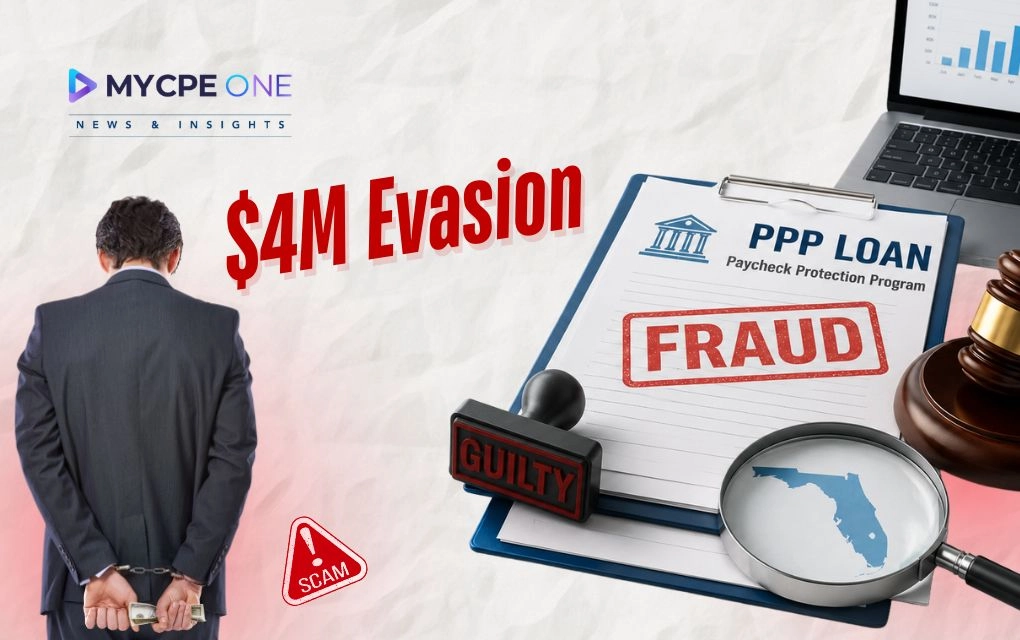
When the pandemic hit, the U.S. government opened the money faucet fast. For legitimate small businesses, the Paycheck Protection Program (PPP) became a lifeline. For fraudsters, it became something else entirely, a nationwide treasure hunt with weak controls, rushed approvals, and banks trying to process applications faster than accountants could refresh IRS guidance PDFs. Now, years later, federal prosecutors are still unpacking what happened during that chaotic period. The latest reminder comes from South Florida, where tax preparer Roody Metelus, owner of JRS Tax Services LLC, admitted to helping push more than $4.1 million in fraudulent PPP loan applications through the system. The case reads like a masterclass in how pandemic fraud exploded: fake businesses, inflated income, recycled tax forms, referral networks, and clients chasing “free money.” And for accounting professionals, this story hits close to home because the alleged fraud did not happen through some shadowy offshore operation. It allegedly happened through a local tax office that looked legitimate from the outside.

Fake Businesses, Real Money

According to federal court filings, Roody Metelus, a 47-year-old Broward County tax preparer, allegedly built the scheme around one simple idea: turn regular wage earners into fake sole proprietors on paper. Between January and March 2021, prosecutors say Metelus submitted more than 200 fraudulent PPP applications to an out-of-state bank. Many applicants reportedly did not own businesses at all. Some allegedly worked regular W-2 jobs. Others were referred to him by friends who promised they could “get them money.” The alleged strategy was surprisingly simple. Prosecutors say Metelus prepared false IRS tax documents from 2019 and 2020, including fabricated Schedule C forms showing business income between $95,000 and $99,000.

The $99K Sweet Spot

That income range allegedly mattered because PPP rules capped eligible sole proprietor income at $100,000, allowing applicants to qualify for loans close to the maximum available amount, roughly $20,000 per applicant. In other words, the numbers allegedly sat just low enough to avoid looking suspicious, but high enough to maximize payouts. Any CPA reading those figures probably hears internal alarm bells immediately.

One applicant allegedly received a PPP loan tied to a fake “personal trainer” business despite not being a trainer or business owner. Another reportedly signed documents prepared by Metelus because he believed the loan would not need repayment. Prosecutors say Metelus charged fees, sometimes around $1,500 in cash, and occasionally took a percentage of the loan proceeds.

IRS Still Has Receipts

Federal agencies are still aggressively chasing PPP fraud cases because investigators believe the abuse went far deeper than originally understood. Prosecutors say Roody Metelus and his co-conspirators sought more than $4.1 million in fraudulent loans, with roughly 116 applications funded, totaling about $2.3 million. Metelus has now pleaded guilty to conspiracy to commit wire fraud and faces up to five years in federal prison, along with $2.3 million in restitution.

The government also got smarter after the pandemic chaos settled down. Investigators now compare bank filings, payroll records, IP addresses, referral networks, and suspicious income patterns across applications. And fraud schemes usually leave obvious fingerprints behind. When hundreds of applicants suddenly report nearly identical income figures and business structures, investigators start connecting dots pretty fast. As IRS-CI Special Agent Ron Loecker bluntly put it: “Tax fraud is fraud, and this defendant is now a felon.

What Should Firms Watch?

For CPA firms, tax professionals, and financial advisors, the lessons here are painfully practical.

  • First, documentation matters more during chaotic periods, not less. When clients panic, practitioners cannot lower verification standards just to move faster. That pressure existed during PPP. It existed during ERC filings. It will exist again during the next economic emergency.
  • Second, firms should pay close attention to referral pipelines and client acquisition behavior. Prosecutors say some applicants came through referrals promising access to easy money. That should immediately raise questions inside any legitimate practice.
  • Third, professionals should remember that regulators often review emergency-era filings years later, after emotions cool down and investigators gain access to better analytics tools.
  • Lastly, a lot of firms operated in survival mode during the pandemic. Staff worked insane hours. Guidance changed constantly. Clients wanted answers immediately. Under those conditions, weak internal controls can quietly become career-ending decisions.

And there is another uncomfortable truth here: every fraud case involving a tax preparer damages trust across the profession. Most accountants worked overtime during the pandemic trying to help businesses survive.

Final Takeaway

The pandemic may be over, but the enforcement wave clearly is not. Federal agencies continue reviewing PPP applications, ERC claims, and relief-era tax filings years after the money went out, and more prosecutions will likely follow as investigators gain access to stronger analytics tools and broader interagency data sharing. What makes the Metelus case striking is how ordinary the alleged fraud looked. Prosecutors say it revolved around fabricated tax forms, fake business income, and people chasing quick cash during a crisis, not some Hollywood-style cybercrime operation. Sometimes financial fraud is not “Wolf of Wall Street.” Sometimes it is just somebody in a tax office promising clients “free money.” And years later, the IRS still comes back looking for the paperwork.

Until next time…

Don’t forget to share this story on LinkedIn, X and Facebook

Subscribe now for $199 and get unlimited access to MYCPE ONE, from CPE credits to insights Magazine

📢MYCPE ONE Insights has a newsletter on LinkedIn as well! If you want the sharpest analysis of all accounting and finance news without the jargon, Insights is the place to be! Click Here to Join

Unlock Annual Access to News & CPE Subscription

You’ve reached the 3 free-content piece limit. Unlock unlimited access to all News & CPE resources.
Subscribe Today.

News & Updates

  • Exclusive News & Insights
  • Latest Regulatory Updates
  • Accounting Industry Trends
  • Expert Insights
  • AI-Driven Audio & Summaries
  • Infographics & Videos
  • CPE-Approved Articles
  • Digital Magazine
  • Benchmarking Blogs

Unlimited CPE Access for 1 Year

  • 15,000+ Hours of Content
  • 500+ Subject Areas
  • Mandatory Ethics Courses
  • 250+ Compliance Packages
  • 50+ Virtual Conferences and Events Access
  • Format: Live, Audio, Video, E-Books
  • Audio Based Courses & Podcasts
  • Add External Certificates with AI
  • AI Compliance Tracking and Report
  • Instant Certification and Fast Reporting
  • Mobile App Access (iOS and Android)
  • Dedicated Support System
  • Practical Training Programs
  • AI Academy Access
  • Tax Academy Access
  • Audit Academy Access
  • Leadership Academy Access