MYCPE ONE
MYCPE ONE LOGO

Join 250,000+
professionals today

Add Insights to your inbox - get the latest
professional news for free.

MYCPE ONE insights

How Two Men Allegedly Built a $100M IRS Fraud Scheme

Join our 250K+ subscribers

Join our 250K+ subscribers

Subscribe

21 APR 2026 / ACCOUNTING & TAXES

How Two Men Allegedly Built a $100M IRS Fraud Scheme

How Two Men Allegedly Built a $100M IRS Fraud Scheme

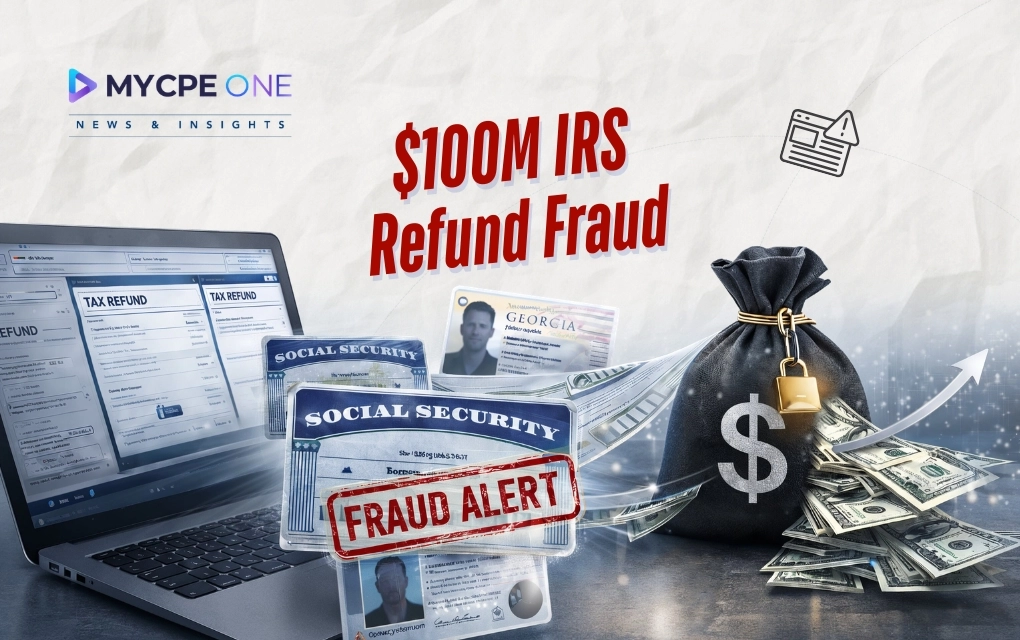
Think your clients’ Social Security numbers are locked down tighter than Fort Knox? Yeah… about that. Turns out, two guys allegedly cracked the system wide open and went on a $100 million joyride with the IRS. This isn’t your average tax scam. It’s a five-year, cross-border operation that read like a playbook for modern fraud, blending identity theft, system loopholes, and old-school money laundering. And for anyone in accounting or tax, this one hits way too close to home. Let’s break down what really went down, how they pulled it off, and why this case is a straight-up warning shot for the profession.

A $100M Scheme Hiding in Plain Sight

Between 2018 and 2023, Akinade Raheem out of Atlanta and Abayomi Eletu, operating between the UK and Nigeria, allegedly filed more than 300 fraudulent tax returns, trying to claim over $100 million in refunds from the IRS. That number alone should make you pause. But here’s the kicker, this wasn’t brute-force fraud. It was calculated. They didn’t just target random individuals. Prosecutors say they went after accountants and taxpayers, meaning they were fishing where the data is richest. Names, addresses, Social Security numbers, everything needed to impersonate legitimate filers. Then they did something smart and scary. They created IRS online accounts using stolen identities and pulled even more sensitive taxpayer information directly from the system. That’s not just fraud. That’s system exploitation.

Not Their First Rodeo

This wasn’t amateur hour. The scheme had layers, and each one solved a different problem in the fraud chain. First, they changed victims’ mailing addresses to locations they controlled. Then they doubled down by filing change-of-address requests with the U.S. Postal Service, redirecting IRS communications. When the IRS tried to verify identities before releasing refunds, they allegedly stepped in, posing as the taxpayers and approving the payouts. Refunds were then split across multiple prepaid debit cards, avoiding large, suspicious transactions.

And once the money landed? Classic laundering tactics. They bought money orders under reporting thresholds, then converted those into assets, including used cars from auction sites (some shipped overseas) and designer goods. If you’re thinking “this sounds like a movie,” you’re not wrong. But it worked. For years.

So Where Did the System Slip Up?

Here’s the uncomfortable truth. This case isn’t just about two bad actors. It exposed cracks in identity verification and taxpayer data access systems. The IRS did send verification letters. That’s a control. But it relied heavily on accurate mailing addresses. Once those were compromised, the control collapsed. Digital account creation also became an entry point. If fraudsters can create accounts using stolen identities and extract taxpayer data, that’s a serious vulnerability. And the use of prepaid debit cards? That’s been a known loophole for years, yet it still played a central role here. This wasn’t one failure. It was a chain of small gaps that added up to a massive exposure.

Why This Hits Different for Professionals

Let’s not sugarcoat it. This one should make every CPA, tax preparer, and accounting firm sit up straight. Because the entry point wasn’t just random taxpayers. It was professional data. If your systems, client records, or processes aren’t airtight, you’re not just dealing with a compliance issue. You’re potentially the front door to fraud. Start with the basics. Monitor IRS account activity. Unexpected address changes? That’s a red flag. Clients receiving notices they didn’t expect? Another one. Encourage clients to use IRS Identity Protection PINs, one of the simplest tools to block fraudulent filings. And then there’s cybersecurity. Not surface-level compliance, but real controls: multi-factor authentication, restricted access, and regular system audits. Because if client data gets compromised, the liability risk escalates quickly.

What’s Next?

This case is still unfolding, but one thing is clear. This isn’t the end of schemes like this. It’s just the latest version. Expect the IRS to tighten verification processes, introduce stronger authentication, and possibly expand AI-driven fraud detection systems. But fraudsters evolve. If it’s not prepaid cards, it’ll be crypto-based refund channels or AI-powered impersonation tactics. The tools are getting sharper on both sides. For professionals, that means staying reactive isn’t enough. You need to stay ahead of the curve.

Two individuals allegedly turned stolen identities into a $100 million fraud attempt against the IRS. That’s not just a headline. That’s a stress test of the tax system. And for financial professionals, this is the real question: Would you catch this early, or after the damage is done? This case is your warning shot. Tighten controls. Educate clients. Audit your systems. Because in today’s environment, protecting data isn’t optional. It’s mission critical. Stay plugged into stories like this. They’re not just news. They’re real-world playbooks for both fraudsters and the professionals working to stop them.

Until next time…

Don’t forget to share this story on LinkedIn, X and Facebook

Subscribe now for $199 and get unlimited access to MYCPE ONE, from CPE credits to insights Magazine

📢MYCPE ONE Insights has a newsletter on LinkedIn as well! If you want the sharpest analysis of all accounting and finance news without the jargon, Insights is the place to be! Click Here to Join

Unlock Annual Access to News & CPE Subscription

You’ve reached the 3 free-content piece limit. Unlock unlimited access to all News & CPE resources.
Subscribe Today.

News & Updates

  • Exclusive News & Insights
  • Latest Regulatory Updates
  • Accounting Industry Trends
  • Expert Insights
  • AI-Driven Audio & Summaries
  • Infographics & Videos
  • CPE-Approved Articles
  • Digital Magazine
  • Benchmarking Blogs

Unlimited CPE Access for 1 Year

  • 15,000+ Hours of Content
  • 500+ Subject Areas
  • Mandatory Ethics Courses
  • 250+ Compliance Packages
  • 50+ Virtual Conferences and Events Access
  • Format: Live, Audio, Video, E-Books
  • Audio Based Courses & Podcasts
  • Add External Certificates with AI
  • AI Compliance Tracking and Report
  • Instant Certification and Fast Reporting
  • Mobile App Access (iOS and Android)
  • Dedicated Support System
  • Practical Training Programs
  • AI Academy Access
  • Tax Academy Access
  • Audit Academy Access
  • Leadership Academy Access