Join 250,000+
professionals today
Add Insights to your inbox - get the latest
professional news for free.
Join our 250K+ subscribers
Subscribe13 FEB 2026 / ACCOUNTING & TAXES
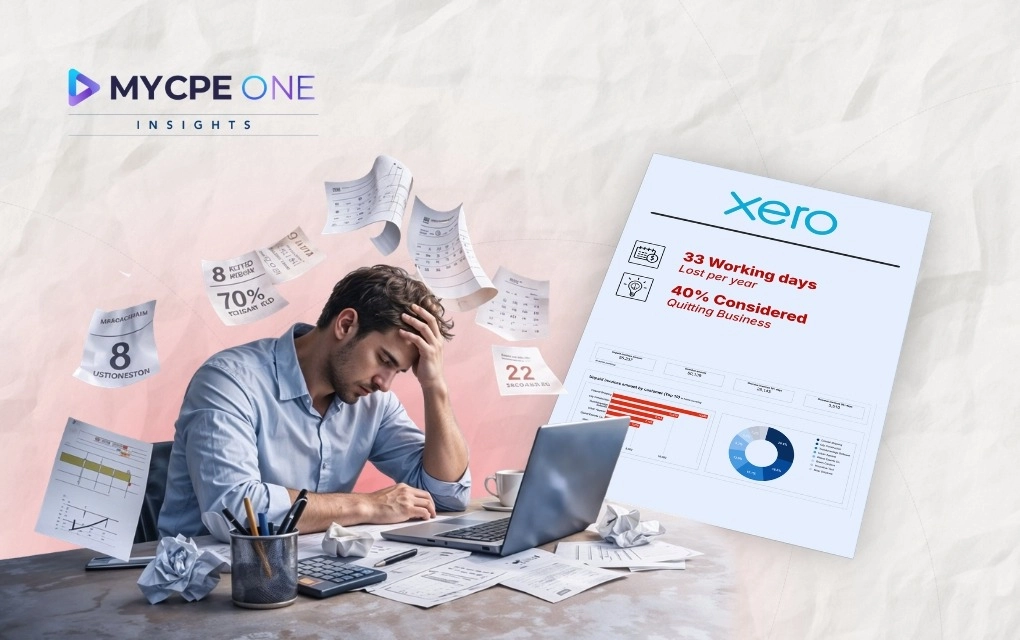
According to Xero’s 2026 Emotional Tax Return report, stress is costing US small business owners the equivalent of 33 working days a year, impacting productivity. The report highlights rising costs and unpredictable demand as major stressors, and reveals that 70% of owners identify financial management as a stressor, suggesting a rise in fear and avoidance around managing finances.
It starts the way most small business problems start. Not with a crisis, not with a headline, just with a number that keeps you up at 2:17 a.m. Cash in looks light. Expenses look heavy. You tell yourself you will sort it out tomorrow. Tomorrow turns into a week. A week turns into a month. And before you know it, stress becomes part of the operating model. Xero’s 2026 Emotional Tax Return reportputs a hard number on something many of us see in practice but rarely quantify: stress is costing U.S. small business owners the equivalent of 33 working days a year. That is more than a month of productivity lost, not to market shocks or tax law changes, but to mental load.
According to the report, 81% of U.S. small business owners say this year has been more stressful than previous years. Rising costs at 44% and unpredictable demand at 28% top the list of stress drivers. Those are not abstract concerns. They show up in real decisions. A local construction client delays hiring because material costs keep moving. A retail owner hesitates to expand inventory because demand feels shaky. A service firm sits on pricing changes because it is not sure how clients will react. The stress is not dramatic. It is persistent. Owners spend an average of eight hours a week feeling stressed or worried about their business. That is a full workday lost each week. Over a year, it compounds into more than a month. Peter Drucker famously said, “What gets measured gets managed.” Stress has rarely been measured in operating hours. Now it has.
Source: Accounting Today
70% of owners identify financial management as a stressor. That should make every CPA pause. We tend to assume clients avoid their books because they are disorganized or inattentive. The data suggests something else: fear. 40% of owners have considered quitting their business entirely. Fifty-six percent have been caught off guard by a tax outcome. 23% have faced an unexpectedly large tax bill due to uncertainty around claims or expenses. That is not just compliance risk. That is a confidence risk.
Source: Emotional Tax Return 2026 Report
I think about a mid-sized landscaping business I worked with a few years back. Strong revenue, loyal customers, solid margins on paper. Yet the owner dreaded tax season. He admitted he would rather “sit in a middle seat on a cross-country flight” than open his tax projection email. It was not ignorance. It was anxiety about being surprised. Xero’s report notes that 34% fear making mistakes and 28% feel stressed by chasing paperwork. Add in real cash flow pressure, and you have a recipe for avoidance. And avoidance is expensive.
Nearly three-quarters of owners (74%) say stress has hurt their professional performance. The consequences are concrete:
That list reads like a business case study in stalled momentum.
When an owner hesitates to pursue a contract because they are unsure about working capital, that is a missed opportunity. When they delay a pricing review because they do not trust the numbers, it slows growth. When they overwork to cope, as 28% report doing, fatigue sets in and judgment slips. Stress also shows up physically. 61% report getting less sleep since starting their business, and 23% lose five or more hours of sleep a night. If you have ever tried to reconcile accounts after three hours of sleep, you know how that goes.
Warren Buffett often reminds investors that temperament matters as much as intelligence. The same applies to business owners. You cannot make sound capital allocation decisions when you are running on fumes.
Here is the part that should concern our profession most: only 9% seek advice from an accountant or advisor when stressed. Yet 43% hide business stress from their family or partner. 28% say they become short-tempered under stress. 78% report missing important life moments to keep the business running. This is not just about efficiency tools. It is about isolation. The report describes owners sacrificing sleep, social events, holidays, hobbies, and even family dinners. We see the financial statements. We rarely see the human statement. As professionals, we often position ourselves as compliance partners. This data suggests we may need to think more like operating advisors.
If a client feels dread opening their books, what does that say about our communication cadence? If 56% have been surprised by a tax outcome, are we forecasting early enough? Are we translating projections into plain English? A quick quarterly projection call can prevent a year-end shock. A mid year pricing discussion can offset rising input costs. A dashboard that shows rolling cash flow can turn guesswork into planning. None of that requires revolutionary change. It requires intentional touchpoints.
The Emotional Tax Return report puts numbers to what many practitioners have long sensed: financial stress is not seasonal. It is structural. Owners are losing sleep, time, opportunities, and in some cases, confidence. 40% have considered quitting. That is not hyperbole. That is a warning signal. For professionals in accounting and finance, the opportunity is not to sell software or services. It is to reframe our role. Are we giving clients real-time visibility into cash flow? Are we setting expectations early about tax outcomes? Are we normalizing conversations about financial anxiety instead of waiting for a crisis call in March? Stress may never disappear from small business ownership. But unmanaged stress that steals 33 working days a year is a cost no one can afford. The numbers are now visible. The next move belongs to us.
Until next time…
Don’t forget to share this story on LinkedIn, X and Facebook
Subscribe now for $199 and get unlimited access to MYCPE ONE, from CPE credits to insights Magazine
📢MYCPE ONE Insights has a newsletter on LinkedIn as well! If you want the sharpest analysis of all accounting and finance news without the jargon, Insights is the place to be! Click Here to Join
You’ve reached the 3 free-content piece limit. Unlock unlimited access to all News & CPE resources.
Subscribe Today.
Already have an account?
Sign In