Join 250,000+
professionals today
Add Insights to your inbox - get the latest
professional news for free.
Join our 250K+ subscribers
Subscribe29 AUG 2025 / ACCOUNTING & TAXES
CPE Approved
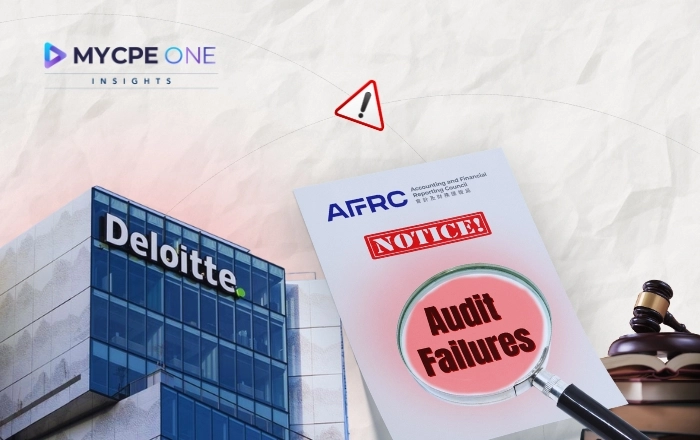
Hong Kong's Accounting and Financial Reporting Council (AFRC) has fined Deloitte and two partners, Samuel Wong and Mak Chi-lung, a total of HK$1.9 million ($245,000) for deficiencies in audits of Tianhe Chemicals Group and Sound Global that failed to identify significant overstatements of revenues and bank balances. Under AFRC's expanded regulatory reach in partnership with China's Ministry of Finance, Hong Kong-based accounting firms and their partners face larger personal liabilities and damaged reputations for audit work deemed to fall short on diligence and professional skepticism.
Hong Kong’s accounting cops just sent Deloitte a pricey reminder that sloppy audit work isn’t cheap. The Accounting and Financial Reporting Council (AFRC) fined the firm and two of its partners a total of HK$1.9 million (approximately US$245,000) after identifying multiple deficiencies in audits dating back to 2011–2013. It’s not exactly pocket change, and for professionals watching from the sidelines, there’s plenty to unpack. The same theme of regulators tightening the screws isn’t limited to Hong Kong; just recently, the PCAOB closed the door on a Hong Kong audit firm after repeated failures tied to its work on Luckin Coffee, showing this isn’t an isolated crackdown.
Samuel Wong and Mak Chi-lung probably aren’t loving the headlines. Wong handled Tianhe Chemicals Group’s audits from 2011 to 2013, right before its flashy HK$3.52 billion IPO, while Mak oversaw Sound Global’s 2012–2013 audits. Both companies appeared solid at the time, but Tianhe was delisted in 2020 after overstating its revenue by 6.7 billion yuan (approximately US$936 million), and Sound Global followed suit in 2022 after its chairman inflated bank balances by 2.18 billion yuan. According to the AFRC, the partners dropped the ball on revenue recognition procedures, failing to dig deep enough to spot the misstatements, a shortfall the regulator’s head of discipline, Hester Leung, said poses a direct threat to investor interests.
Revenue recognition is one of those accounting areas where the devil really is in the details. If a company books sales too early or inflates its cash, the entire financial picture becomes distorted. In Tianhe’s case, it meant investors bought into an IPO based on revenue that didn’t exist. For Sound Global, it was fake bank balances propping up the story.
Both cases highlight the same root problem: the auditors didn’t apply enough professional skepticism. Think of it like being handed a steak that looks perfect on the outside but hasn’t been cooked inside. If you don’t cut it open, you’ll never know. Deloitte stated that it cooperated fully with the AFRC and emphasized that there was no finding of deliberate misconduct; however, this doesn’t erase the fact that the audits were, in fact, undercooked.
The AFRC’s action was part of its first batch of cases since teaming up with China’s Ministry of Finance in 2019, a move that gave regulators access to mainland audit papers —a no-brainer, given that many Hong Kong–listed firms are based there. Looking ahead, stronger cross-border cooperation, clearer rules in high-risk areas such as revenue recognition, and sharper use of technology, including data analytics and AI, could help prevent repeats. Will it catch every trick? Probably not, but it should raise enough red flags to avoid the all-too-familiar “we didn’t see it” defense.
For auditors, this case serves as a reminder that revenue recognition isn’t a place to coast; professional skepticism must be exercised every time, even when management’s story appears polished. Audit checklists are one thing, but judgment and persistence are what keep you out of the regulator’s crosshairs. For accountants, it shows how fragile trust really is: misstated revenue isn’t just a technical slip; it can wreck investor confidence and reputations, much like ignoring a crack in a foundation that later collapses. For partners, the Wong and Mak fines serve as a clear warning that personal liability is a real concern, with regulators increasingly willing to hold individuals accountable. At the end of the day, it’s a no-brainer: quality audits safeguard clients, investors, and your own license.
The Deloitte fines may look modest next to billion-dollar scandals, but the message is loud and clear: weak audit work will cost you, both in money and credibility. Regulators in Hong Kong are taking it up a notch, and the ripple effect could reach well beyond Asia. For professionals, the heads-up is simple: treat revenue recognition with zero chill, because it’s where careers, companies, and investor trust either hold steady or fall apart. Want more timely updates that cut through the noise? Subscribe to our newsletter and stay ahead of the story.
Get your CPE Credit from here.
Until next time…
Don’t forget to share this story on LinkedIn, X and Facebook
Subscribe now for $199 and get unlimited access to MYCPE ONE, from CPE credits to insights Magazine
📢MYCPE ONE Insights has a newsletter on LinkedIn as well! If you want the sharpest analysis of all accounting and finance news without the jargon, Insights is the place to be! Click Here to Join
Transforming Finance & Accounting Operations for Enterprises!
We help 100+ clients streamline F&A operations with our full-suite outsourcing services-eliminating the need for in-house teams. Partner with us for Top-tier finance & accounting talent, Cutting-edge technology, and World-class infrastructure.
Our Full-Suite F&A Services Include:
We collaborate with CPA and accounting firms to drive real business value.
Schedule a no-obligation discovery callYou’ve reached the 3 free-content piece limit. Unlock unlimited access to all News & CPE resources.
Subscribe Today.
Already have an account?
Sign In