Join 250,000+
professionals today
Add Insights to your inbox - get the latest
professional news for free.
Join our 250K+ subscribers
Subscribe02 FEB 2026 / ACCOUNTING & TAXES
CPE Approved

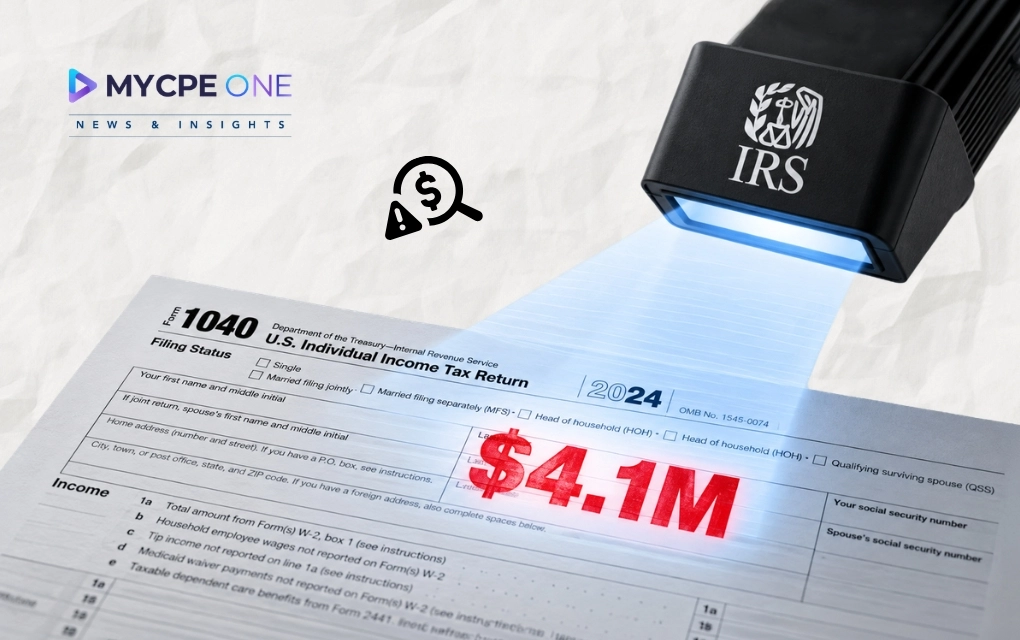
Tax authorities are grappling with how to approach the use of artificial intelligence (AI) agents that perform tasks replacing human labor, and the ramifications this could have on tax revenue. As approximately 85% of the U.S.'s federal tax revenue is tied to labor income, the potential loss of income tax, payroll taxes, unemployment contributions, and local levies if AI replaces human workers is looming, with a recent study estimating a cost of around $2.7 billion annually if 10% of U.S. administrative workers are replaced by AI.
A few years ago, state tax departments were still arguing about whether Netflix counted as an “amusement.” Now they are staring down AI agents that review contracts, reconcile books, underwrite loans, and answer client emails at 2 a.m. without overtime, benefits, or payroll tax filings. Same anxiety, bigger stakes. AI did not quietly slip into the workplace. It kicked the door open. Firms rolled it out to save time, trim costs, and deal with chronic staffing gaps. Governments are starting to ask the uncomfortable follow-up question: if AI does the work, where does the tax base go? That question is no longer academic. It is already showing up in revenue forecasts, legislative drafts, and state tax audits.
The fear driving this debate is simple math. Labor taxes still carry the load. In the U.S., roughly 85% of federal tax revenue ties back to labor income, either through income tax or payroll contributions. When a firm replaces a $60,000 employee with an AI agent, the government does not just lose income tax. It loses payroll taxes, unemployment contributions, and local levies tied to employment. Multiply that across administrative roles, junior analysts, paralegals, and entry-level accounting staff, and the numbers stop being hypothetical. One recent industry study estimated that replacing just 10% of U.S. administrative workers could cost states roughly $2.7 billion annually. That is real money, not Monopoly cash.
Still, reality is messier. AI is not wiping out entire jobs overnight. In most firms, it handles tasks, not roles. A tax senior still reviews returns. A controller still signs off on close. AI drafts, flags, and accelerates. That nuance matters, and regulators know it. The problem is that tax law does not handle nuance well.
Tax systems were built for two categories: people who work and companies that sell things. AI agents sit awkwardly in between. Are they software? Are they services? Are they labor substitutes? That classification question already creates winners and losers. In a recent multi-state analysis, two AI companies offering nearly identical automation services faced wildly different tax outcomes. One structured its offering as taxable SaaS and paid tax in more than 20 states. The other positioned itself as a managed professional service and paid tax in just four. Same output, different wrapper, millions of dollars apart.
This is not tax evasion. It is perfectly legal. And it should make state tax authorities nervous. We have seen this movie before. E-commerce broke sales tax rules for nearly two decades. Digital services taxes followed once governments realized how much revenue slipped through the cracks. AI agents look like the next chapter.
The idea refuses to die. Bill Gates floated it years ago. Senator Bernie Sanders has echoed it. Nobel laureate Edmund Phelps wrote about it. Every few months, someone drags the term “robot tax” back into the spotlight. So far, no major tax authority has pulled the trigger. The IMF has been blunt, special taxes on AI risk are slowing productivity and investment. The OECD leans toward broader digital economy reforms instead of AI-specific levies. Even policymakers sympathetic to labor concerns worry about defining what exactly gets taxed. That definition problem is not trivial. Is an AI agent a tool, like Excel? A service provider, like outsourced bookkeeping? Or a profit engine in its own right? Ask ten regulators, and you get ten answers. That uncertainty alone keeps legislatures cautious.
Yes, and that history matters. Digital services taxes spread fast once governments realized how much revenue large tech firms generated without local physical presence. The UK’s 2% DST has pulled in roughly £800 million a year. Cities like Chicago expanded amusement taxes to streaming and now collect over $250 million annually. These taxes survived lawsuits, trade pressure, and loud criticism. Once revenue shows up, it tends to stick. AI fits the same pattern. It creates value across borders, blurs traditional sourcing rules, and concentrates profits. The difference is speed. AI adoption is moving faster than regulators can draft definitions. That lag creates arbitrage opportunities now, and political pressure later.
Tax, legal, and compliance teams are already asking how AI tools affect nexus, sourcing, and characterization. Is an AI-powered contract review tool software, or a legal service? Is outcome-based pricing more defensible than seat licenses? Does embedding AI into a service change the tax treatment? These questions sound technical, but they drive real exposure. Firms that lock in favorable structures today may be grandfathered if new rules arrive. Firms that ignore it may wake up to assessments they never modeled. This is not panic mode, but it is not business as usual either.
This is where the debate gets uncomfortable.
Even if governments found a clean way to tax AI agents, the revenue would not automatically fix workforce disruption. New jobs often appear later, require different skills, and cluster in different regions. History shows that productivity gains do not always translate into shared prosperity. Economists like Daron Acemoglu and Simon Johnson have warned that automation boosted profits for decades without lifting wages proportionally. AI risks repeating that pattern unless policy choices change. Some argue the better fix is rebalancing capital and labor taxation, not singling out AI. Capital tax rates have fallen steadily while labor taxes stayed sticky. That imbalance encourages automation, not employment. Taxing AI directly may feel satisfying, but it may miss the bigger structural issue.
Not tomorrow. Probably not with a clean “AI agent tax” either. But the odds that AI remains invisible to tax authorities over the next decade are slim. More likely, we see incremental moves, expanded digital tax concepts, tighter service definitions, and fewer gray areas to hide in. AI does not need a W-2 to affect the tax base. Governments know that now. The smarter question for professionals is not whether AI will be taxed, but where the pressure shows up first and how fast it spreads. That is the part worth losing sleep over, not the sci-fi headlines. For now, AI is still treated like a tool. History suggests that once a tool starts printing money at scale, the tax code eventually notices.
Click here to get your CPE Credit.
Until next time…
Don’t forget to share this story on LinkedIn, X and Facebook
Subscribe now for $199 and get unlimited access to MYCPE ONE, from CPE credits to insights Magazine
📢MYCPE ONE Insights has a newsletter on LinkedIn as well! If you want the sharpest analysis of all accounting and finance news without the jargon, Insights is the place to be! Click Here to Join
You’ve reached the 3 free-content piece limit. Unlock unlimited access to all News & CPE resources.
Subscribe Today.
Already have an account?
Sign In