Join 250,000+
professionals today
Add Insights to your inbox - get the latest
professional news for free.
Join our 250K+ subscribers
Subscribe31 DEC 2025
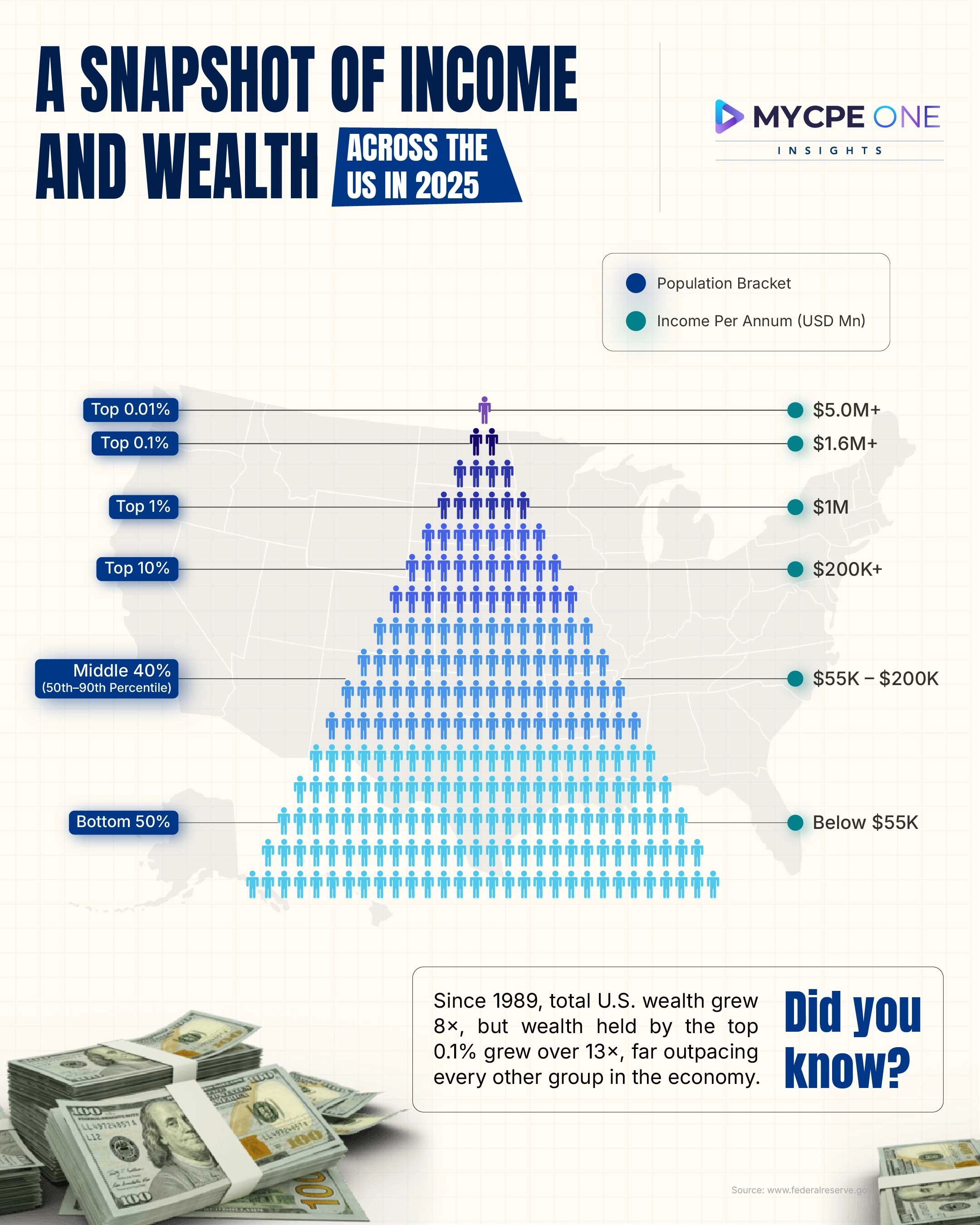
US household wealth grew from $20 trillion in 1989 to over $165 trillion by 2025, however, the wealth distribution skewed towards the top 0.1%, who experienced an over thirteenfold increase. Factors such as equity market gains, reduced mortgage leverage for high-wealth households, and an increase in wealth controlled by individuals aged 70 and older contributed to this trend, emphasizing the importance of asset access and market timing in modern wealth outcomes.
U.S. household wealth expanded from roughly $20 trillion in 1989 to more than $165 trillion by 2025, reflecting decades of economic growth and rising asset values. However, the distribution of that wealth has shifted steadily toward the top over time. Since 1989, the wealth held by the top 0.1% increased more than thirteenfold, far outpacing overall wealth growth of just over eight times. In contrast, households in the 50th to 90th percentiles saw their share of total wealth fall by more than five percentage points, despite substantial gains in absolute dollars. Even at its strongest point in 2022, the bottom half of households never exceeded 3% of total wealth.
Asset composition helps explain this divergence. Equity markets delivered outsized gains over the past decade, particularly after 2020. Because stocks and private business holdings make up a significantly larger share of wealth for top households, market surges disproportionately benefited higher percentiles. Lower-wealth households rely more on housing and wages, both of which grew more slowly after adjusting for inflation. Debt trends further widened gaps. While high-wealth households reduced mortgage leverage as asset values rose, households lower in the distribution accumulated hundreds of billions of dollars in consumer debt, increasing financial strain as interest rates climbed.
Age also plays a role. Americans aged 70 and older now control more than 30% of total household wealth, reflecting long-term asset accumulation and favorable market timing. Together, these trends show that modern wealth outcomes are increasingly shaped by asset access and timing rather than income growth alone.
Until next time…
Don’t forget to share this story on LinkedIn, X and Facebook
Subscribe now for $199 and get unlimited access to MYCPE ONE, from CPE credits to insights Magazine
📢MYCPE ONE Insights has a newsletter on LinkedIn as well! If you want the sharpest analysis of all accounting and finance news without the jargon, Insights is the place to be! Click Here to Join
You’ve reached the 3 free-content piece limit. Unlock unlimited access to all News & CPE resources.
Subscribe Today.
Already have an account?
Sign In