MYCPE ONE
MYCPE ONE LOGO

Join 250,000+
professionals today

Add Insights to your inbox - get the latest
professional news for free.

MYCPE ONE insights

The Student Loan System Just Took a Hard Turn

Join our 250K+ subscribers

Join our 250K+ subscribers

Subscribe

13 MAR 2026 / FINANCE

The Student Loan System Just Took a Hard Turn

The Student Loan System Just Took a Hard Turn

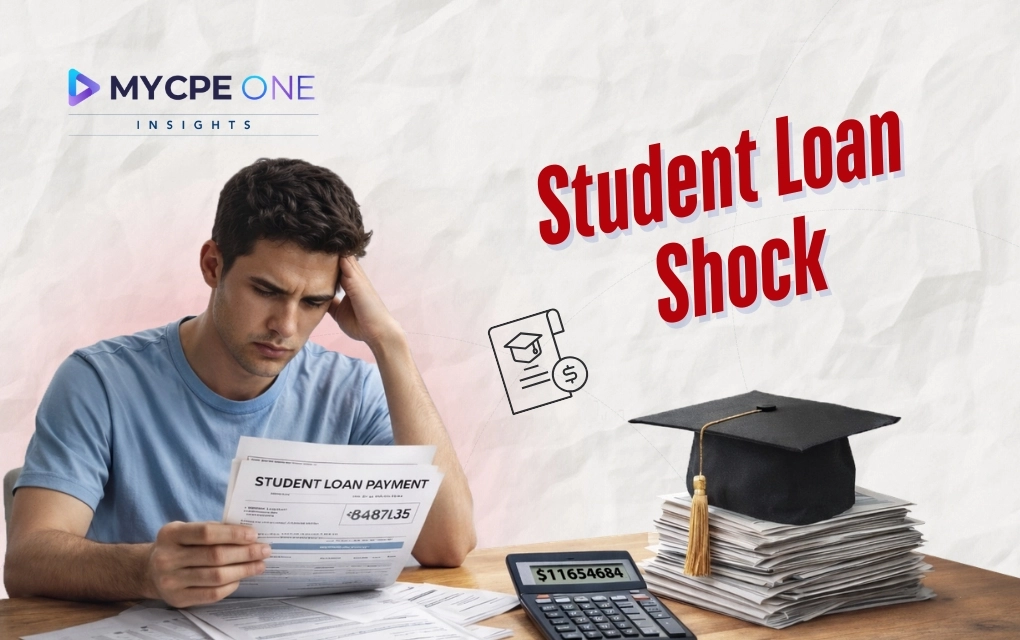
The student loan system has always been complicated. Lately it feels more like a courtroom drama mixed with a billing error that nobody can quite fix. For years, federal repayment plans tried to soften the blow of $1.7 trillion in student debt. The SAVE plan, launched in 2023, promised lower payments, limits on runaway interest, and faster loan forgiveness for many borrowers. Millions signed up. Now the plan is gone after a federal appeals court ruling, repayment options are shrinking, collections are ramping up, and millions of borrowers are staring at higher bills. For accountants, finance leaders, and policy watchers, this episode says a lot about how fragile federal debt policy can be when courts, Congress, and the executive branch pull in different directions.

So, the government built a repayment plan

To understand the current mess, it helps to rewind a bit. The SAVE plan, short for Saving on a Valuable Education, arrived during the Biden administration as the newest income driven repayment program. It aimed to reduce monthly payments, cap interest growth, and accelerate forgiveness for certain borrowers after 10 to 25 years. More than 7 million borrowers enrolled. For many of them, payments dropped dramatically. A borrower earning around $40,000 could see a monthly payment near $40 under SAVE. Under other plans, that same borrower might owe more than $200. Critics immediately challenged the program. Republican led states argued the Education Department exceeded its authority and shifted too much cost onto taxpayers. Litigation followed.

In 2024, a federal injunction froze the program. Millions of borrowers ended up in administrative forbearance. They did not have to make payments, but interest continued to accrue for many accounts. Borrowers waited. Servicers waited. Even the Education Department looked stuck. Then Congress added another layer of complexity. Legislation passed in 2025 set the SAVE plan on a path to phase out by 2028, while directing the department to build a new income driven option called the Repayment Assistance Plan, or RAP. So, by early 2026 the plan already had one foot in the grave. The courts simply finished the job.

What happens when a court wipes out a major repayment program?

Earlier this year, the Eighth Circuit Court of Appeals issued a short but decisive ruling. The court reversed a lower court decision and ordered a final judgment that effectively vacated the SAVE plan regulations. In plain English, the program is done. That decision impacts roughly 7 to 8 million borrowers who were enrolled in SAVE. Many of them have not made payments since mid 2024 because of the legal injunction. Now they will soon have to move into other repayment programs. And those programs are generally more expensive.

Advocacy groups warn that monthly payments could quadruple for some borrowers. A typical single borrower with a college degree could see payments jump from roughly $0 or $50 per month under SAVE to more than $400 under alternative repayment plans. The Department of Education has not yet released a full transition roadmap. Borrowers will likely receive a limited window, possibly 30 to 60 days, to choose a new plan before repayment resumes. If that sounds messy, well, that is because it is. Servicers already struggle with application backlogs and repayment system changes. Now millions of borrowers must move plans at once. If you run a CPA firm with younger staff or clients carrying student loans, you may soon hear a familiar phrase: “Wait, why did my payment just jump like that?”

Are collections about to make a comeback?

Repayment changes are only part of the story. At the same time courts dismantled SAVE, the federal government restarted aggressive collections against borrowers already in default. According to the Department of Education, more than 5 million borrowers currently sit in default. Officials expect that number could reach 10 million by the end of the year. The government has strong tools here, and it does not need a court order to use them. Treasury Offset allows the federal government to intercept tax refunds, federal contractor payments, and certain federal benefits. Wage garnishment can take up to 15% of a borrower’s paycheck through their employer. That combination can hit borrowers hard. Imagine losing your entire tax refund and part of your salary in the same year.

Some relief programs still exist, including loan rehabilitation and consolidation. But borrowers must act quickly after receiving notice. The window to respond can be as short as 30 to 60 days. For financial professionals advising clients, this is one area worth watching closely. Default resolution strategies may soon become part of routine financial planning conversations.

What does this mean for the long-term student debt problem?

Even if the SAVE plan survived, the broader student debt system still faces structural problems. The United States currently has about 45 million borrowers with roughly $1.7 trillion in student loan balances. Since 2007, total student debt has grown about 144%. Several long term drivers explain that growth. Federal loan programs expanded access to credit for higher education. That helped millions attend college, which is the good news.

The downside is that easy credit allowed tuition to rise quickly. Universities knew federal loans would cover much of the cost. State funding for higher education also declined in many places. Public universities shifted more of the burden to students through higher tuition and fees. Parent PLUS and Graduate PLUS loans added another wrinkle. These programs allow borrowing up to the full cost of attendance, often without meaningful ability to repay underwriting. Some parents take these loans late in their careers with interest rates that exceed many mortgages. Add in questionable outcomes from certain for profit institutions, and you get a system where both borrowers and taxpayers carry real risk. No single repayment plan fixes those structural issues.

So, what’s next?

In the short term, the biggest question is operational. How will the Education Department move millions of SAVE borrowers into other repayment programs without creating another servicing meltdown? That transition will likely play out over the next several months. The next question is policy. Congress directed the creation of the Repayment Assistance Plan. Details remain limited, but early proposals suggest borrowers could stay in repayment for as long as 30 years before qualifying for forgiveness. That is significantly longer than many current income driven options.

Finally, there is the political angle. Student debt policy has become one of the most polarizing financial issues in Washington. Court rulings, executive action, and legislation continue to collide. For borrowers, it can feel like the rules change every few months. For accountants, advisors, and finance professionals, the takeaway is simple. Student loans are no longer just a personal finance issue. They affect household cash flow, credit profiles, retirement planning, and even labor mobility. And right now, millions of borrowers are about to learn that the payment they planned for may not be the one they actually get. That realization is likely coming soon to a paycheck near you.

Until next time…

Don’t forget to share this story on LinkedIn, X and Facebook

Subscribe now for $199 and get unlimited access to MYCPE ONE, from CPE credits to insights Magazine

📢MYCPE ONE Insights has a newsletter on LinkedIn as well! If you want the sharpest analysis of all accounting and finance news without the jargon, Insights is the place to be! Click Here to Join

Unlock Annual Access to News & CPE Subscription

You’ve reached the 3 free-content piece limit. Unlock unlimited access to all News & CPE resources.
Subscribe Today.

News & Updates

  • Exclusive News & Insights
  • Latest Regulatory Updates
  • Accounting Industry Trends
  • Expert Insights
  • AI-Driven Audio & Summaries
  • Infographics & Videos
  • CPE-Approved Articles
  • Digital Magazine
  • Benchmarking Blogs

Unlimited CPE Access for 1 Year

  • 15,000+ Hours of Content
  • 500+ Subject Areas
  • Mandatory Ethics Courses
  • 250+ Compliance Packages
  • 50+ Virtual Conferences and Events Access
  • Format: Live, Audio, Video, E-Books
  • Audio Based Courses & Podcasts
  • Add External Certificates with AI
  • AI Compliance Tracking and Report
  • Instant Certification and Fast Reporting
  • Mobile App Access (iOS and Android)
  • Dedicated Support System
  • Practical Training Programs
  • AI Academy Access
  • Tax Academy Access
  • Audit Academy Access
  • Leadership Academy Access