Join 250,000+
professionals today
Add Insights to your inbox - get the latest
professional news for free.
Join our 250K+ subscribers
Subscribe11 MAR 2026 / FINANCE
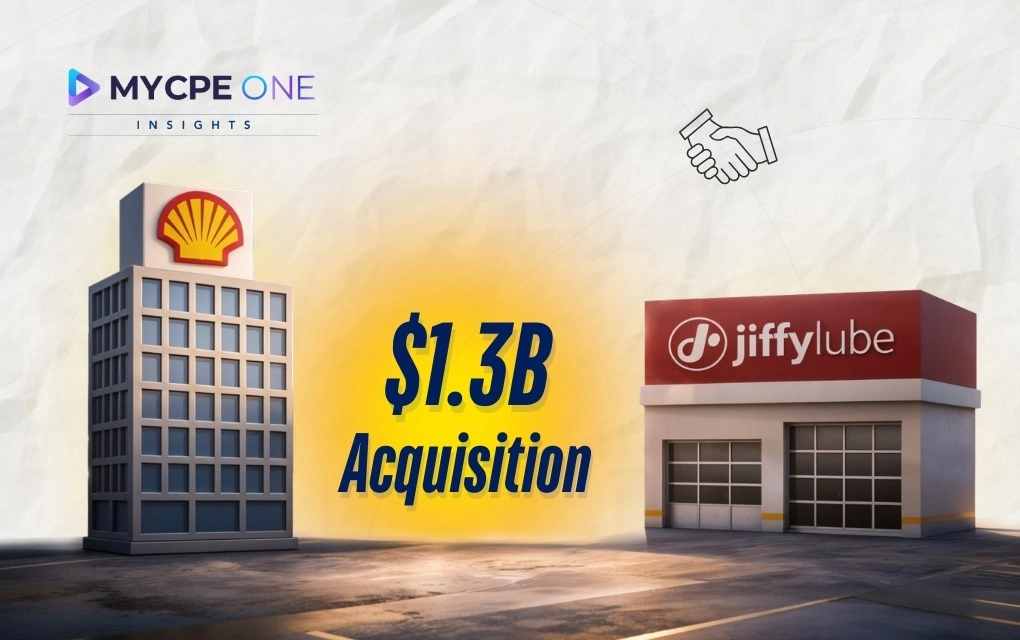
Shell has agreed to sell its Jiffy Lube International and Premium Velocity Auto businesses to Monomoy Capital Partners for $1.3bn. This divestment will allow Shell to focus more on businesses that support its core energy strategy and offer higher returns on capital, reflecting a broader shift among energy companies towards tighter portfolios and strategic alignment.
Every large corporation eventually faces the same quiet question during portfolio reviews: which assets still earn their keep, and which ones simply sit there because they always have? Shell’s decision to sell Jiffy Lube International and Premium Velocity Auto for $1.3 billion looks less like a dramatic exit and more like one of those boardroom moments when someone says, “Nice business… but is it really ours?” The answer, at least for Shell, appears to be no. The oil major announced in March 2026 that its U.S. lubricants subsidiary, Pennzoil Quaker State Company, had agreed to sell the Jiffy Lube brand and operations to an affiliate of Monomoy Capital Partners, a private equity firm focused on middle-market industrial and consumer businesses. The deal is expected to close in the second half of 2026, pending regulatory approvals and standard closing conditions.
At first glance, it might seem odd. Jiffy Lube is not a struggling brand. In fact, it remains one of the most recognizable automotive service chains in North America. Yet the deal tells a much bigger story about corporate strategy, capital allocation, and how energy companies are reshaping their portfolios.
Jiffy Lube has been part of Shell’s lubricants ecosystem for more than 20 years. The brand operates over 2,000 service centers across the United States, with additional licensed locations in Canada. Premium Velocity Auto, which is included in the transaction, runs more than 360 locations across 20 states and is the second-largest Jiffy Lube franchisee. From a business standpoint, the operation performs well. Shell itself notes that Jiffy Lube represents roughly 6.5% of its lubricants volume in the U.S. and Canada. That is a meaningful slice of demand flowing through its oil products. But that statistic also explains the decision. Six and a half percent is helpful, not essential.
Under CEO Wael Sawan, Shell has been shifting toward what executives describe as a “value over volume” approach. In practical terms, that means shedding businesses that do not directly support the company’s core energy strategy or deliver the highest returns on capital. Shell executives described the Jiffy Lube sale as a way to monetize an asset that is not central to the company’s lubricants portfolio in the United States. The proceeds can then be redirected toward areas that management believes produce stronger long-term returns. In other words, the chain still works. It simply no longer fits the strategic blueprint.
Look closer and the deal reveals something subtle but important. Shell is not exiting lubricants. It is exiting retail service operations. The company will retain its core lubricant brands, including Pennzoil, Quaker State, Rotella, and other Shell products, along with the manufacturing, marketing, and distribution infrastructure that supports those brands in the United States and Canada. Even more telling, the transaction includes a long-term lubricants supply agreement between Shell and Monomoy. That means Jiffy Lube locations will continue using Shell products after the sale. So, Shell walks away from the service counter but keeps the oil flowing through the system.
For accountants and finance professionals, that distinction matters. The company is essentially separating product economics from retail operations. Manufacturing and brand ownership tend to generate scalable margins. Store networks require operational oversight, labor management, real estate decisions, and franchise support. One side looks like an energy company. The other looks like a consumer services business. Shell appears to have decided which side it prefers.
Private equity firms often view businesses through a very different lens than large multinationals. Monomoy Capital Partners manages more than $5 billion in assets and specializes in acquiring middle-market companies with strong operational potential. Instead of focusing primarily on energy markets, it concentrates on improving operating efficiency, expanding platforms, and increasing profitability at the business level. For Monomoy, Jiffy Lube represents a ready-made operating platform.
The brand already has:
The addition of Premium Velocity Auto also gives the firm direct control over a significant number of locations inside that network. That creates opportunities to optimize store operations, improve margins, and expand services such as brakes, batteries, and tire replacements. In other words, what looks peripheral to Shell looks like a growth platform to a private equity operator. Same business. Completely different strategy.
To understand the scale of the decision, it helps to look at the numbers. Shell, one of the world’s largest energy companies, generated approximately $273.7 billion in revenue in 2025, according to financial reporting data. The company reported $17.8 billion in net income attributable to shareholders and roughly $56 billion in adjusted EBITDA for the year. Against that backdrop, a $1.3 billion asset sale barely moves the needle in terms of overall revenue. But that is exactly why companies like Shell review smaller business lines carefully. If an operation contributes modestly to overall performance but requires significant management attention, selling it can simplify the portfolio.
Monomoy, by contrast, is not a public operating company. It is an investment firm, so it does not report annual revenue in the same way. Instead, the firm reports assets under management of more than $5.3 billion and typically targets businesses generating $100 million to $2 billion in annual revenue. That range makes Jiffy Lube an ideal acquisition for the firm’s investment strategy.
The exact tax consequences have not yet been disclosed publicly, but the general framework is fairly predictable. If Shell’s U.S. subsidiary sells the Jiffy Lube business above its tax basis, the company would recognize a taxable capital gain under U.S. corporate tax rules. The current federal corporate tax rate sits at 21%, although state taxes and transaction costs could affect the final tax bill. Because Shell has owned the business for more than two decades, the tax basis of the assets could be relatively low, meaning the recognized gain might be significant. However, multinational companies often structure transactions carefully to optimize tax outcomes. Until the deal closes and the final structure becomes public, the precise tax impact remains uncertain.
For the buyer, the picture looks different. If Monomoy acquires the assets in a way that allows a step-up in tax basis, the firm may be able to amortize intangible assets such as trademarks, goodwill, and franchise relationships over time. Those deductions can reduce taxable income in future years and improve after-tax returns. It is a standard playbook in private equity acquisitions.
In the short term, customers will likely notice little change. Jiffy Lube locations will keep operating, and Shell lubricants will likely remain in use due to the long-term supply agreement. Over time, the deal reflects a broader shift. Large energy companies are tightening portfolios and focusing capital on businesses that deliver stronger returns and clearer strategic alignment. Retail service chains, even profitable ones, do not always meet that threshold. Private equity firms see the opportunity differently. For Monomoy, Jiffy Lube offers a recognizable brand, steady demand for vehicle maintenance, and room to improve store operations and expand services.
Until next time…
Don’t forget to share this story on LinkedIn, X and Facebook
Subscribe now for $199 and get unlimited access to MYCPE ONE, from CPE credits to insights Magazine
📢MYCPE ONE Insights has a newsletter on LinkedIn as well! If you want the sharpest analysis of all accounting and finance news without the jargon, Insights is the place to be! Click Here to Join
You’ve reached the 3 free-content piece limit. Unlock unlimited access to all News & CPE resources.
Subscribe Today.
Already have an account?
Sign In