Join 250,000+
professionals today
Add Insights to your inbox - get the latest
professional news for free.
Join our 250K+ subscribers
Subscribe12 MAR 2026 / TECHNOLOGY
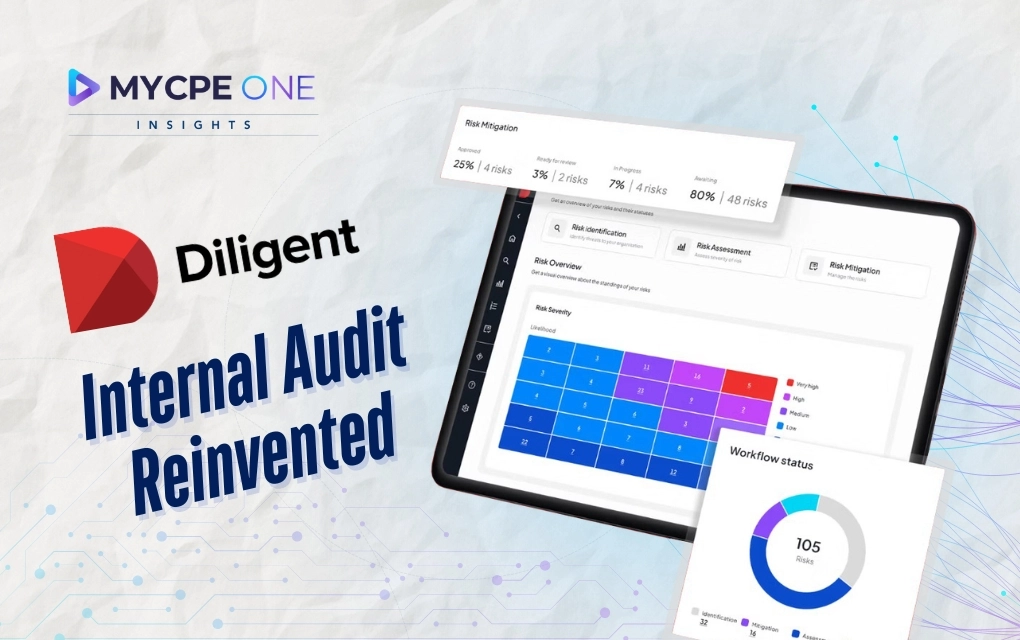
Diligent has launched AuditAI, a new suite of artificial intelligence (AI) tools designed to streamline internal audits. Its capabilities promise to cut administration times by approximately 70%, transforming the auditing process from coordinating documentation to providing continuous, risk-aligned assurance, potentially hastening issue identification and resolution within the company, and effectively bridging the gap between the board's understanding and the internal audit's execution.
Every March, internal audit teams feel it. Tax returns are moving, refunds are pending, cash forecasts are tight, and someone on the board wants reassurance that controls are holding up. Controllers are juggling quarter close. CFOs are watching liquidity like hawks. And internal audit? They are still chasing evidence through email threads that should have died in 2014. Now layer AI on top of that. At the Institute of Internal Auditors’ Great Audit Minds 2026 conference, Diligent introduced AuditAI, a new suite of agentic AI tools aimed squarely at internal audit. The promise is simple: stop spending weeks coordinating documentation and start delivering continuous, risk-aligned assurance. For firms and corporate audit teams heading into refund season and year-end compliance cycles, that shift matters.
Most internal audit teams still spend a disproportionate amount of time on administration. Planning scopes. Generating request lists. Following up on missing evidence. Reconciling prior-year findings. Chasing updates through email chains that read like a courtroom transcript. Diligent says early adopters of AuditAI have reduced audit administration time by roughly 70%, cutting coordination hours from about 120 down to 35. Even if that number flexes in practice, the direction is clear: less manual coordination, more analysis.
AuditAI automates core pieces of the audit lifecycle:
In plain English: fewer spreadsheets, fewer “just checking in” emails, and a tighter audit trail. For internal audit managers who have spent the last month herding documentation like cattle, that is not trivial.
During refund cycles, especially when significant refunds are pending, liquidity assumptions get tested. Deferred tax assets, valuation allowances, and cash projections suddenly sit under a brighter spotlight. If the IRS delays refunds or adjusts positions, boards want clarity fast.
An internal audit often reviews:
When AuditAI connects risk signals to audit actions, it potentially shortens the time between “we see smoke” and “we documented the control response.” Diligent positions the tool as moving from sample-based testing to continuous, risk-aligned assurance. That matters when tax positions evolve quickly or when refund receivables sit on the balance sheet for months.
Picture a mid-size public company waiting on a multi-million-dollar federal refund. Treasury assumes receipt in Q2. AuditAI flags regulatory changes affecting documentation requirements. It suggests control updates and generates targeted evidence requests automatically. Instead of spending two weeks coordinating support, the audit team tests and reports within days. That speed can prevent a messy conversation in the audit committee meeting. And during busy season, nobody wants that heat.
This launch does not stand alone. Workiva rolled out expanded AI capabilities at the same IIA conference. According to its 2026 Executive Benchmark Survey, 76% of internal audit teams are already testing their organizations’ AI models. CFOs, CIOs, and CSOs increasingly align on data governance. AI is not sitting on the sidelines anymore. The profession has talked about continuous monitoring for two decades. The ambition was always there. The tooling lagged. Now vendors are pushing toward real-time risk visibility, automated evidence mapping, and year-round audit readiness. One Workiva executive framed it bluntly: detect the smoke before it becomes fire. That sentiment echoes in Diligent’s integration with Smart Prep 360 in Diligent Boards. Smart Prep 360 reviews board and committee materials to surface accounting anomalies, control gaps, repeat findings, and potential fraud indicators. AuditAI translates those board-level signals into concrete audit actions and tracks remediation through closure.
The gap between what the board sees and what the internal audit executes narrows. That changes the internal audit conversation from reactive reporting to forward-looking assurance. If you are an internal audit leader, you can feel the direction of travel. The question is not whether AI shows up in your workflow. It is how much control you retain when it does.
One of the more practical claims around AI-driven GRC platforms is the idea of smoothing out the year-end scramble. If evidence mapping happens automatically, if controls update dynamically when risk profiles shift, and if reports draft themselves with contextual data, then audit season looks different. External auditors may gain secure, controlled access to real-time data rather than waiting for static PBC lists. Internal teams spend less time reconciling versions and more time validating judgment areas. That reduces friction. It also increases transparency. Still, let’s keep our feet on the ground.
AI-generated request lists do not eliminate judgment. Automated control suggestions do not absolve management of responsibility. Regulators will still ask who reviewed the output, who approved changes, and how bias or error was mitigated. Internal audit leaders need defensibility. Diligent emphasizes structured workflows, approvals, and traceability to preserve that. That is essential. In the real world, “the AI said so” does not hold up in front of regulators. So, the real opportunity is not replacing auditors. It is reallocating time. If teams cut administrative drag by even 30 to 40%, they can redirect capacity toward advisory work, emerging risks, AI governance, and strategic oversight. That is where the profession earns its keep.
Internal audit has long sat between compliance enforcer and strategic advisor. Tools like AuditAI aim to shift that balance. In the middle of tax season, when refunds are pending and cash forecasts face scrutiny, speed and clarity count. Automated evidence workflows and continuous, risk-aligned assurance can cut administrative drag and surface issues earlier for management and the board. The larger shift is cultural. Internal audit moves closer to real-time risk translation for the C-suite. That demands disciplined oversight and clear accountability around AI outputs. Tax season will not ease up. Controls will still require testing. The difference may come down to this: does your team spend its time chasing documentation, or explaining risk in plain English to decision-makers?
Until next time…
Don’t forget to share this story on LinkedIn, X and Facebook
Subscribe now for $199 and get unlimited access to MYCPE ONE, from CPE credits to insights Magazine
📢MYCPE ONE Insights has a newsletter on LinkedIn as well! If you want the sharpest analysis of all accounting and finance news without the jargon, Insights is the place to be! Click Here to Join
You’ve reached the 3 free-content piece limit. Unlock unlimited access to all News & CPE resources.
Subscribe Today.
Already have an account?
Sign In