Join 250,000+
professionals today
Add Insights to your inbox - get the latest
professional news for free.
Join our 250K+ subscribers
Subscribe27 AUG 2025 / ACCOUNTING & TAXES
CPE Approved
A Los Angeles man, Melvin Louis Hughes, has been indicted for allegedly scamming the US Internal Revenue Service (IRS) out of around $6.2m. Claiming hundreds of millions in refunds through trusts and estates, mostly fictional, Hughes is also alleged to have recruited others to his fraudulent scheme, before IRS’s fraud detection machinery identified the irregularities.
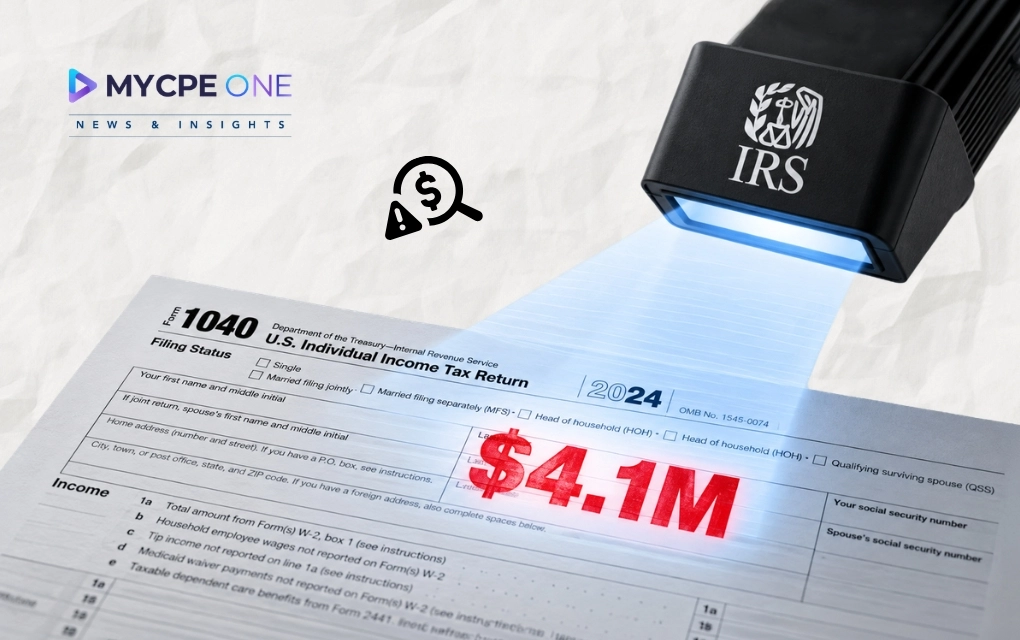
Every tax season, accountants joke that somebody, somewhere, is trying to pull a fast one on the IRS. But one Los Angeles man allegedly took that quip and ran with it, straight into federal court. Picture this: claiming hundreds of millions in refunds by typing numbers into tax forms that had all the grounding of Monopoly money. That’s the story prosecutors are now telling about Melvin Louis Hughes, a California resident accused of orchestrating a scheme so audacious it makes “creative accounting” look like child’s play. And the wild part? He didn’t just dream it up once; he allegedly kept filing year after year, turning routine tax paperwork like Form 1041 into his personal lottery ticket until the IRS’s fraud-detection tech finally caught the scent.
Hughes, prosecutors say, leaned heavily on Form 1041, the U.S. Income Tax Return for Estates and Trusts. Normally, trustees file these to report actual income, deductions, and legitimate withholdings. Hughes allegedly decided that if he wrote down massive “withheld” amounts, without any real cash backing them, the IRS might just send back fat refunds. Spoiler: for a while, it worked. From 2016 onward, Hughes reportedly claimed more than $360 million in refunds through trusts and estates that existed mostly on paper. Later, he tacked on another $370 million in bogus claims through individual tax returns. Out of this mountain of fabricated filings, the IRS actually issued him around $6.2 million. That was enough to secure a $1.84 million Malibu house, two Tesla vehicles, and half-million dollars in cryptocurrency. Talk about taking it up a notch.
But Hughes didn’t stop at treating himself. He allegedly recruited at least 17 others, charging fees for teaching them the techniques of fake refund filings. Some were even instructed to make “donations” to a trust he managed, which funneled nearly $870,000 into his own pockets. As prosecutors see it, he was playing both roles, taxpayer and tax preparer, with little regard for crossing lines.
Contrary to the old jokes about the agency being slow, investigators caught the irregularities through their high-tech filters. Every year, the IRS runs millions of returns through its Electronic Fraud Detection System, which red-flags questionable withholding numbers. Hughes’s filings, with massive fictitious withholdings, lit up like a Christmas tree. Once flagged, IRS Criminal Investigation specialists began their investigation with forensic accounting, data matching, and even interagency support from the FBI and Treasury inspectors. They tracked refunds, cross-checked claims against third-party information, and followed the money trail from bank wires to real estate deeds. At the end of that chase, about $13 million in fraudulent refunds were identified, and a federal indictment was unsealed in Los Angeles this summer.
For now, Hughes faces charges of mail fraud, making false claims, filing fraudulent returns, and assisting others in doing the same. If convicted, he’s staring at a long menu of prison terms: up to 20 years for mail fraud alone and several three- to five-year counts stacked on top. As one federal judge once said about tax crimes, “The math is simple: cheat now, pay later.”
First, that the IRS isn’t asleep at the wheel. With electronic detection systems and forensic auditors ready to dive deep, even years-long schemes can and do unravel. Second, professionals advising clients should be aware that bad actors often misuse legitimate forms, such as the 1041 in this case, in ways that can tarnish honest practices. A heads-up to clients about fraudulent “refund mills” or too-good-to-be-true pitches could prevent messy entanglements.
There’s also the reputational angle. While Hughes allegedly lured in 17 others, the fact that fees were disguised as charitable “donations” serves as a reminder that fraudsters often cloak their schemes in the language of legitimacy. Advisors need to be skeptical, document rigorously, and remain vigilant for clients who suddenly claim they’ve found a “no-brainer” way to eliminate taxes. If it sounds like free money, the IRS is probably already keeping a close eye on it.
Looking ahead, this case highlights a broader trend: fraud detection powered by data analytics is becoming increasingly sharper. The IRS has already reported blocking over $10 billion in suspicious refunds in past years. Add in machine learning, third-party data matching, and more aggressive criminal prosecutions, and it’s clear the agency is taking it up a notch. For financial professionals, that means compliance advice has never been more valuable. Whether it’s warning clients away from shady “trust-based” schemes or double-checking large refund claims, the cost of ignoring red flags is rising. And with cryptocurrency, real estate, and luxury goods often tied to illicit refunds, professionals may find themselves playing a key role in spotting laundering patterns before the IRS knocks on a client’s door.
So, the next time a client says, “Hey, I heard about a way to get the IRS to send me millions,” remember Hughes’s Malibu house and Teslas. They may look nice in a driveway, but the price tag could include a one-way ticket to federal prison. As Benjamin Franklin put it, “An ounce of prevention is worth a pound of cure”, especially when the IRS is the one handing out the medicine. Stay ahead of the numbers. Get the latest tax, audit, and finance stories delivered straight to your inbox with MYCPE ONE Insights.
Get Your CPE Credit From Here
Until next time…
Don’t forget to share this story on LinkedIn, X and Facebook
Subscribe now for $199 and get unlimited access to MYCPE ONE, from CPE credits to insights Magazine
📢MYCPE ONE Insights has a newsletter on LinkedIn as well! If you want the sharpest analysis of all accounting and finance news without the jargon, Insights is the place to be! Click Here to Join
Website Services for CPA & Accounting Firms - Starting $69/month.
Is your website attracting clients—or turning them away? MYCPE ONE’s Website Development Services, starting at just $69/month, create high-converting, professional websites tailored for accounting firms like yours.
With over 400 designs to choose from and a dedicated webmaster, we handle it all for you—no DIY required.
Get started today and create a website that works for your firm with MYCPE ONE!
Make a lasting impression. Boost conversions. Stay secure.
You’ve reached the 3 free-content piece limit. Unlock unlimited access to all News & CPE resources.
Subscribe Today.
Already have an account?
Sign In