MYCPE ONE
MYCPE ONE LOGO

Join 250,000+
professionals today

Add Insights to your inbox - get the latest
professional news for free.

MYCPE ONE insights

The Family Business Caught Between Tax Evasion and PPP Fraud

Join our 250K+ subscribers

Join our 250K+ subscribers

Subscribe

01 JUN 2026 / ACCOUNTING & TAXES

The Family Business Caught Between Tax Evasion and PPP Fraud

The Family Business Caught Between Tax Evasion and PPP Fraud

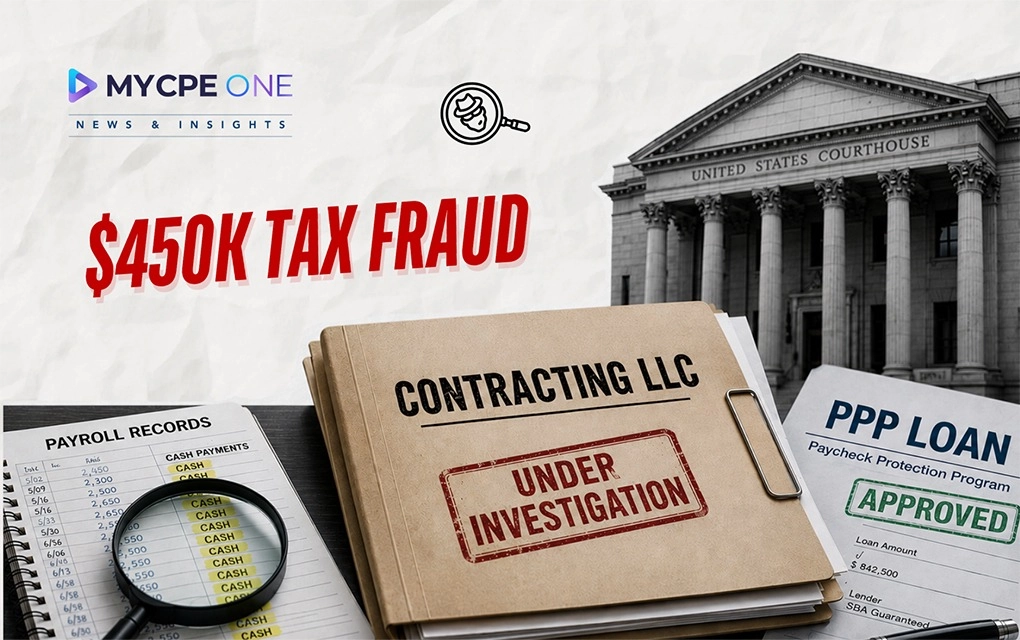
What starts as a few angry customer reviews rarely ends with federal criminal charges. Yet that's exactly what happened in South Jersey, where complaints about unfinished landscaping projects ultimately exposed something much bigger than missed deadlines and abandoned job sites. Federal prosecutors say a father-and-son contracting team operated a years-long scheme involving cash payrolls, unreported income, payroll tax fraud, and even fraudulent COVID-era relief funding. Now both men have pleaded guilty, owe hundreds of thousands of dollars in restitution, and face the possibility of prison sentences later this year. For accountants, payroll professionals, and business advisors, the case offers a striking reminder that compliance failures rarely stay isolated. One shortcut often leads to another, and eventually the entire house of cards comes down.

How Did a Landscaping Business End Up in Federal Court?

The story centers on Stephens Contracting, a landscaping and construction company operating in Elmer, New Jersey. Long before federal charges were filed, customers were sounding alarms. Beginning in 2022, homeowners took to social media and local news outlets claiming they had paid thousands, and in some cases tens of thousands, of dollars for projects that were never completed. One frustrated customer described years of problems, while another said the company seemed "untouchable."

Whether those complaints directly triggered the investigation remains unclear. What is clear is that federal investigators eventually uncovered a much broader pattern of alleged financial misconduct hidden behind the family-run business. That investigation ultimately led to guilty pleas from William Brent Stephens, 58, and his son Zackary Sulpizi, 30.

What's the Big Deal About Cash Payrolls?

According to court filings, cash was at the center of the operation. Federal prosecutors say Sulpizi opened multiple business and personal bank accounts, deposited customer checks into personal accounts, and regularly withdrew cash to pay employees every two weeks. Cash payroll itself is not illegal. Plenty of legitimate businesses pay workers in cash. The problem arises when wages are not properly reported and employment taxes are not remitted to the IRS. Between 2019 and 2022, Sulpizi admitted to paying approximately $446,573 in cash wages while failing to file payroll tax returns and failing to pay approximately $34,162 in employment taxes.

His father admitted to paying approximately $718,237 in wages while failing to collect and pay over approximately $54,946 in payroll taxes. For the IRS, payroll taxes receive special attention because employers are holding money that belongs to the government. Failure to remit those funds often becomes a major enforcement priority.

Was the PPP Loan the Smoking Gun?

The tax violations were only part of the government's case. During the pandemic, Congress created the Paycheck Protection Program (PPP) under the CARES Act to help businesses keep workers employed during an unprecedented economic crisis. According to prosecutors, Sulpizi attempted to cash in on that program despite allegedly lacking the payroll expenses he claimed to have. In May 2021, he submitted a PPP loan application claiming employees and payroll expenses that investigators say did not exist. To support the application, he allegedly created IRS forms containing false information and represented them as documents previously filed with the IRS.

Those forms were never actually submitted to the agency. The lender approved approximately $16,935 in federal relief funds based on the application. While the dollar amount is relatively modest compared to some pandemic fraud cases, federal authorities continue to aggressively pursue PPP-related fraud regardless of size. The government's position is straightforward: taxpayer-funded emergency relief was intended for struggling businesses, not businesses built on fabricated records.

When One Lie Turns Into Five

Sulpizi admitted failing to report approximately $389,650 in business income, resulting in roughly $74,920 in unpaid taxes. Stephens admitted failing to report approximately $1.17 million in income, leading to approximately $288,297 in unpaid taxes. Stephens also pleaded guilty to bankruptcy fraud for concealing assets and income during bankruptcy proceedings and admitted making false statements to IRS investigators. What began as a tax case ultimately expanded into a broader fraud prosecution involving tax evasion, payroll tax violations, bank fraud, bankruptcy fraud, and false statements to federal agents.

What Can Financial Professionals Learn From This Mess?

For CPAs, payroll administrators, controllers, bookkeepers, and business advisors, this case reads like a textbook collection of red flags.

First, cash payroll does not eliminate payroll tax obligations. Every wage payment remains subject to reporting and employment tax requirements.

Second, mixing business and personal accounts is a major warning sign. Depositing customer revenue into personal accounts creates both accounting and compliance risks while making financial records difficult to verify.

Third, PPP documentation must be legitimate and supportable. Creating forms solely to obtain financing crosses the line from aggressive accounting into potential fraud.

Fourth, bankruptcy filings require complete transparency. Omitting assets, income streams, or transactions can transform financial distress into criminal exposure.

Finally, family-owned businesses require the same internal controls as any other organization. Informal processes and blurred personal-business boundaries often create the conditions for compliance failures.

The Bottom Line

What began as customer complaints about unfinished landscaping projects ultimately exposed cash payrolls, hidden income, unpaid taxes, fraudulent PPP claims, and concealed assets. The result: more than $450,000 in tax-related losses, multiple felony guilty pleas, and a reminder that the IRS and DOJ continue to aggressively pursue tax and pandemic-relief fraud. For business owners, the lesson is clear: payroll compliance, accurate tax reporting, and honest financial disclosures are legal obligations, not optional paperwork. What starts as a shortcut can quickly become a federal case.

Until next time…

Don’t forget to share this story on LinkedIn, X and Facebook

Subscribe now for $199 and get unlimited access to MYCPE ONE, from CPE credits to insights Magazine

📢MYCPE ONE Insights has a newsletter on LinkedIn as well! If you want the sharpest analysis of all accounting and finance news without the jargon, Insights is the place to be! Click Here to Join

Unlock Annual Access to News & CPE Subscription

You’ve reached the 3 free-content piece limit. Unlock unlimited access to all News & CPE resources.
Subscribe Today.

News & Updates

  • Exclusive News & Insights
  • Latest Regulatory Updates
  • Accounting Industry Trends
  • Expert Insights
  • AI-Driven Audio & Summaries
  • Infographics & Videos
  • CPE-Approved Articles
  • Digital Magazine
  • Benchmarking Blogs

Unlimited CPE Access for 1 Year

  • 15,000+ Hours of Content
  • 500+ Subject Areas
  • Mandatory Ethics Courses
  • 250+ Compliance Packages
  • 50+ Virtual Conferences and Events Access
  • Format: Live, Audio, Video, E-Books
  • Audio Based Courses & Podcasts
  • Add External Certificates with AI
  • AI Compliance Tracking and Report
  • Instant Certification and Fast Reporting
  • Mobile App Access (iOS and Android)
  • Dedicated Support System
  • Practical Training Programs
  • AI Academy Access
  • Tax Academy Access
  • Audit Academy Access
  • Leadership Academy Access