Join 250,000+
professionals today
Add Insights to your inbox - get the latest
professional news for free.
Join our 250K+ subscribers
Subscribe05 NOV 2025 / ACCOUNTING & TAXES
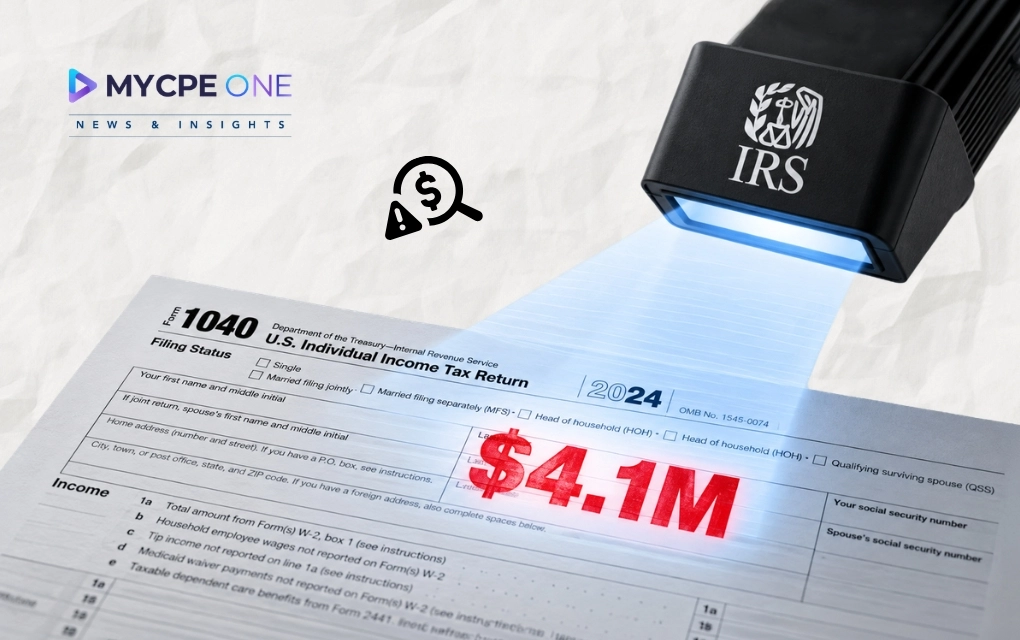
Newly-elected Mayor of New York, Zohran Mamdani, has unveiled a major economic plan with adjustments to corporate and high-income tax rates aiming to fund expanded public programs. However, finance professionals are skeptical if the estimated revenue of $9 billion a year - $5 billion from higher corporate taxes and $4 billion from a surcharge on million-dollar incomes - is realistic or will cause businesses to relocate, potentially leading to a financial shortfall in the city's budget.
It’s said that New York is the city that never sleeps. Lately, it’s also the city that never stops calculating. With talk of higher corporate and millionaire taxes on the table, finance professionals across Manhattan are running the numbers and wondering if this math really checks out. Imagine pitching a client on a business plan with billions in new spending and “trust me, the money will appear.” You’d get the look. The same one your audit manager gives when your trial balance is off by $9 billion. New York’s newly elected mayor, Zohran Mamdani, has outlined an ambitious economic plan that includes adjustments to corporate and high-income tax rates. His administration’s agenda focuses on funding expanded public programs through these tax measures, setting the stage for one of the city’s most closely watched fiscal experiments in years.
Here’s the gist: the mayor wants to fund free childcare, rent freezes, public buses, and even city-run grocery stores, a concept that’s historically about as profitable as a fax repair business. To cover all that, he’s banking on roughly $9 billion in new annual revenue: $5 billion from higher corporate taxes and $4 billion from a 2 percent surcharge on million-dollar incomes. The problem? Those numbers might have been calculated using optimism instead of Excel.
For context, New York’s current corporate tax rate sits around 7.25 percent, already among the highest in the country. Raising it to 11.5 percent would make it the most expensive place in the U.S. for corporations to operate. That’s the kind of tax rate that sends CFOs reaching for Zillow listings in Florida faster than you can say “income apportionment.”
The income side isn’t much simpler. The proposed 2 percent tax on incomes over $1 million could theoretically raise a billion. If no one adjusted behavior, relocated, or, you know, did what high-net-worth individuals tend to do when tax season rolls around: call their accountants. Let’s do a little napkin math. In 2023, roughly 34,700 New Yorkers reported income over $1 million, totaling $144 billion. Even if you taxed every dollar of that, which no serious economist would, you’d only get around $2.9 billion, not the $4 billion headline number. That’s before you account for the “I live in New Jersey now” crowd.
At these rates, New York’s top earners would be looking at a combined marginal rate north of 53 percent, federal, state, and local included. That’s above what most economists call the “Laffer danger zone,” where the curve starts to, well, curve back on you. Or as one analyst put it: “You can’t tax income that leaves town.”
Now, for everyone’s favorite accounting question, who bears the tax burden? Corporations write the check, sure. But economists estimate 30 to 70 percent of that cost is passed along to workers (in lower wages) and consumers (in higher prices). So even if a policy promises that “only corporations will pay,” the practical effect is like a restaurant adding a “kitchen fee”. You’re footing part of the bill whether you notice it or not. Add to that the mobility factor: between 2018 and 2023, 18 Fortune 500 companies left states like California, New Jersey, New York, and Illinois for lower-tax havens such as Texas and Florida. Multiply that by a few hundred thousand high-skill jobs, and suddenly your revenue forecast starts looking like an overstated receivable.
It’s easy to fall in love with the idea of “just tax the rich more” until you open the city’s balance sheet. New York’s 2025 budget clocks in at $90 billion, massive, yes, but already stretched thin across infrastructure, pensions, and social services. Even a 2–3 percent annual revenue bump from economic growth barely keeps up with inflation and higher costs. Relying on high-income taxpayers for stability is a bit like leaning too far back in your chair; it works until it doesn’t. One wealthy taxpayer leaving can cost the city the equivalent of hundreds of lower-income taxpayers’ contributions. And those leaving tend to take their businesses, philanthropy, and spending with them. As any CPA will tell you, “cash flow is reality.” Vision doesn’t pay invoices.
No one’s against a fairer tax system or stronger social safety nets. The question isn’t whether those goals are noble; it’s whether the math is sustainable. Raising rates without a clear plan for economic retention is like hiking the tolls on a bridge and being shocked when traffic drops. In the words of the late Justice Oliver Wendell Holmes Jr., “Taxes are what we pay for civilized society.” Sure. But even civilization has a budget. Maybe New York can afford to dream big. Or maybe it just needs a better accountant. Tax plans are like forecasts; they look great in spreadsheets until behavior enters the equation. Whether you’re advising clients or managing budgets, the key isn’t just how much you tax, but how people respond to it. The lesson here? Always check the assumptions before you sign off, because in New York, even the math has a hustle.
Until next time…
Don’t forget to share this story on LinkedIn, X and Facebook
Subscribe now for $199 and get unlimited access to MYCPE ONE, from CPE credits to insights Magazine
📢MYCPE ONE Insights has a newsletter on LinkedIn as well! If you want the sharpest analysis of all accounting and finance news without the jargon, Insights is the place to be! Click Here to Join
Unlimited CPE for Just $199/Year!
Get CPE credits by reading or listening to approved content. Enjoy unlimited CPE for CPA (US), EA, CMA, CIA, CFE, SHRM, HRCI, and 100+ other designations—all for just $199 per year! (Learn More)
Team Subscriptions Available – Starting at Just $199/Year!
Schedule a no-obligation callYou’ve reached the 3 free-content piece limit. Unlock unlimited access to all News & CPE resources.
Subscribe Today.
Already have an account?
Sign In