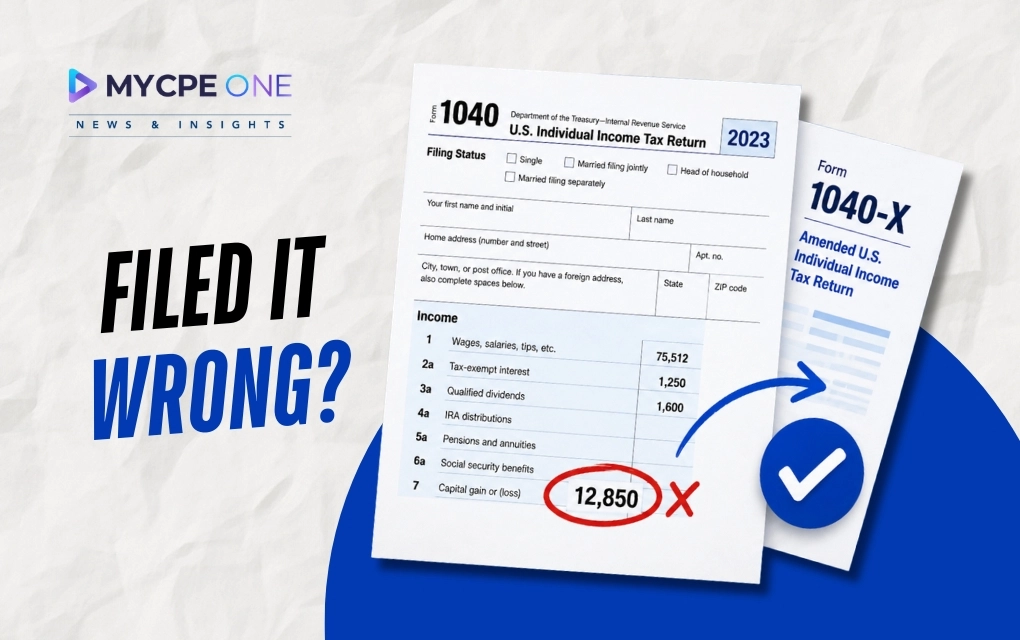
Errors on a tax return can lead to additional tax, interest, penalties, and inquiries from the IRS. The type of error, whether it changes tax liability, when it was discovered, and if the original filing was an honest mistake or intentional misconduct will impact the appropriate response. It is crucial for taxpayers to review their returns, identify errors, assess their effects, and determine the best course of action- a qualified amended return, regular amended return, or no immediate action. Errors that change tax owed, refund due, or information used could lead to significant financial repercussions and should be addressed with professional help. It is also vital to document decisions for future reference.
Realizing that a filed tax return contains an error can make even a calm taxpayer reach for the aspirin. Maybe a Form 1099 went missing. Perhaps a deduction was overstated. A retirement contribution may have appeared on the return even though the payment...
Subscribe now for $199 and get unlimited access to MYCPE ONE, from CPE credits to insights Magazine
📢MYCPE ONE Insights has a newsletter on LinkedIn as well! If you want the sharpest analysis of all accounting and finance news without the jargon, Insights is the place to be! Click Here to Join
Unlock Annual Access to News & CPE Subscription
You’ve reached the 3 free-content piece limit. Unlock unlimited access to all News & CPE resources. Subscribe Today.
Experience MYCPE ONE at its best! Upgrade your browser for a more interactive, user-friendly interface, and stay ahead in your professional development journey.







-1792748463.webp)