MYCPE ONE
MYCPE ONE LOGO

Join 250,000+
professionals today

Add Insights to your inbox - get the latest
professional news for free.

MYCPE ONE insights

Florida Man’s Tax Fraud Scheme Ends With Prison Time

Join our 250K+ subscribers

Join our 250K+ subscribers

Subscribe

08 DEC 2025 / ACCOUNTING & TAXES

Florida Man’s Tax Fraud Scheme Ends With Prison Time

Florida Man’s Tax Fraud Scheme Ends With Prison Time

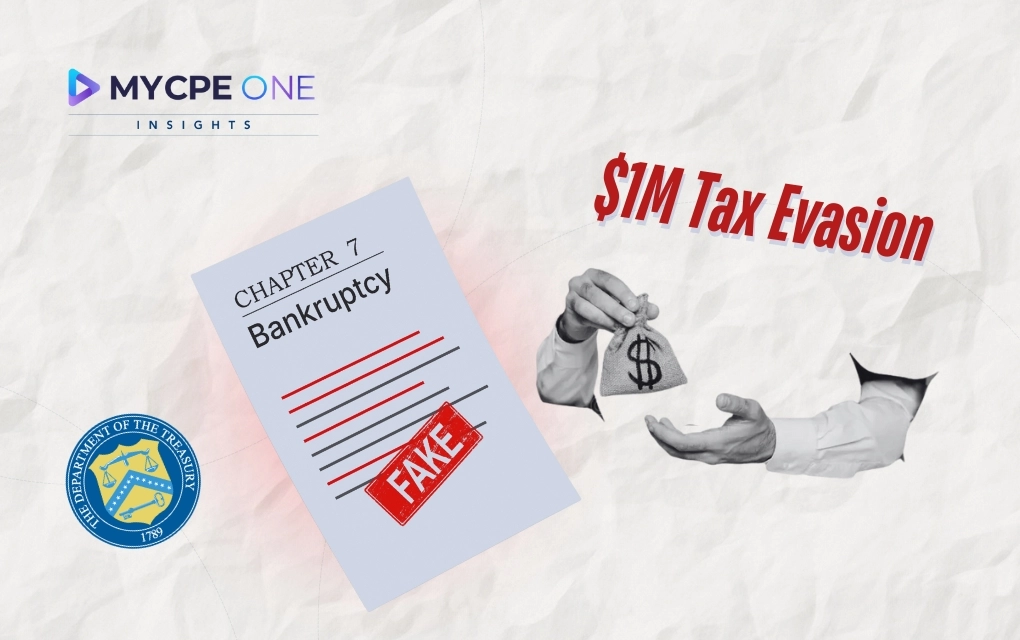
Paul Archer thought he had found the perfect hiding spot for a million-dollar tax bill. Spoiler: he hadn’t. The former Maine resident turned Florida man tried to tuck his cash behind shell companies, family bank accounts, and a couple of crypto exchanges like he was rearranging furniture before guests arrived. The IRS saw right through it. And now Archer has a two-year prison sentence, three years of supervised release, and a bruised reputation to show for it. It started back in 2013 to 2015, when Archer ran a booming online marketing business focused on software installation. The work paid well, pulling in several million dollars. Then came 2016, an IRS audit, and a tax tab of roughly one million dollars. A tough bill, sure, but plenty of people work through settlements or structured payments. Archer chose door number two. He spent years moving assets like someone testing how many cups they could stack before it all fell over.

Hiding Money like it was a Weekend Project

Using two LLCs, Max Tune Up and Stealth Kit, Archer rerouted income in every direction except the one labeled “U.S. Treasury.” Between April 2018 and November 2019, Stealth Kit’s account alone processed over two million dollars in wire transfers. He also shifted an investment account into the LLC’s name so he could keep trading stocks and collecting dividends without the IRS watching too closely. Then there was the crypto chapter. Prosecutors say Archer pushed several hundred thousand dollars through two different exchanges, picking up Bitcoin and bouncing between trading platforms. Crypto can feel anonymous, but as plenty of taxpayers have learned the hard way, anonymity has limits. If you leave a trail, investigators will follow it.

When Archer filed for Chapter 7 bankruptcy in 2019, he took the scheme up a notch. In his petition, he claimed to have less than fifty thousand dollars in assets, one checking account, no business interests, and zero recent transfers. It was the financial version of saying “nothing to see here.” But federal investigators found plenty to see. They uncovered money flowing into accounts under his father’s and spouse’s names, crypto positions hovering around three hundred thousand dollars, and electronic payment activity across PayPal and other platforms. One Assistant U.S. Attorney described the bankruptcy proceeding as “misrepresentation after misrepresentation after misrepresentation.” That’s three strikes in baseball terms. And unlike in baseball, Archer did not get to keep playing the rest of the inning.

How the House of Cards Fell Apart

This wasn’t a quick catch. The IRS and FBI followed digital breadcrumbs for years. They traced wire transfers, examined payment processors, compared bankruptcy filings to bank records, and matched crypto activity to Archer’s personal footprint. The system is far from perfect, but it’s a lot like the old saying: “You can’t cheat the scoreboard.” Eventually, everything lines up. Even in bankruptcy court, details didn’t add up. Archer claimed poverty while traveling to Barcelona. He said he held a single checking account while moving money through LLCs like a shell-shuffling trick. And his denials about business ties fell apart as investigators matched signatures, deposits, and ownership records.

By November 2022, prosecutors brought charges. Archer pleaded guilty to tax evasion and fraudulent concealment in bankruptcy. Other charges, including false testimony and withholding records, were dropped under a plea agreement. His sentence: twenty-four months behind bars and strict computer monitoring once released. For someone who once built a thriving online business, that restriction may sting more than the prison time.

A Case Study for Professionals

If you work in accounting, tax, or finance, this case reads like a highlight reel of what not to do.

  • First, the IRS doesn’t operate on vibes. It works on math. If someone owes a million in federal taxes, moving the money to relatives or LLCs is not a workaround. It’s evidence.
  • Second, bankruptcy filings are sworn statements. When assets appear in a client’s Venmo history but not in their schedules, there’s a problem waiting to happen. Digital platforms keep receipts. So do the courts.
  • Third, crypto is not a dark alley. Exchanges report. Transfers can be traced. Blockchain analysis is now a standard tool, not a niche skill for tech agencies. If your clients think Bitcoin is invisible, it’s time for a serious talk.
  • Last, emotional stories help with sentencing but not with math. Archer spoke in court about childhood trauma and personal growth, and those may be true and meaningful. But the judge still saw a pattern stretching from 2016 through 2019. Intent matters. Patterns matter. Paper trails matter even more.

Where this goes From Here

Archer begins serving the rest of his sentence in January. He’ll owe restitution, face computer monitoring, and be banned from self-employment during probation. His father can’t hire him, a consequence of using family accounts to hide assets. As for the broader picture, cases like this remind professionals that fraud evolves with technology, and compliance must evolve too. Crypto, online payment systems, digital marketing income, multi-entity structures, and bankruptcy filings all create places where taxpayers can try to hide money. They also create places where investigators can find it.

So, the next time a client says something like “Can’t I just move it to another account?” or “Crypto isn’t traceable, right?” you might think of Archer. And you might ask the same question investigators ask every time: If this were legit, why hide it? That question tends to get people thinking. And it might save them about two years of their life.

Until next time…

Don’t forget to share this story on LinkedIn, X and Facebook

Subscribe now for $199 and get unlimited access to MYCPE ONE, from CPE credits to insights Magazine

📢MYCPE ONE Insights has a newsletter on LinkedIn as well! If you want the sharpest analysis of all accounting and finance news without the jargon, Insights is the place to be! Click Here to Join

Digital Marketing Services for CPA & Accounting Firms - Starting $399/month.

Struggling to attract new clients? MYCPE ONE’s Digital Marketing Services help accounting firms stand out, generate leads, and grow revenue effortlessly.

With expertise in SEO, paid ads, social media, and targeted PPC, MYCPE ONE maximizes your marketing efforts to deliver high ROI and broader industry reach.

Invest in digital marketing for your firm todaysee the difference with MYCPE ONE!
Stand out. Generate leads. Grow revenue.

Schedule a call today!

Unlock Annual Access to News & CPE Subscription

You’ve reached the 3 free-content piece limit. Unlock unlimited access to all News & CPE resources.
Subscribe Today.

News & Updates

  • Exclusive News & Insights
  • Latest Regulatory Updates
  • Accounting Industry Trends
  • Expert Insights
  • AI-Driven Audio & Summaries
  • Infographics & Videos
  • CPE-Approved Articles
  • Digital Magazine
  • Benchmarking Blogs

Unlimited CPE Access for 1 Year

  • 15,000+ Hours of Content
  • 500+ Subject Areas
  • Mandatory Ethics Courses
  • 250+ Compliance Packages
  • 50+ Virtual Conferences and Events Access
  • Format: Live, Audio, Video, E-Books
  • Audio Based Courses & Podcasts
  • Add External Certificates with AI
  • AI Compliance Tracking and Report
  • Instant Certification and Fast Reporting
  • Mobile App Access (iOS and Android)
  • Dedicated Support System
  • Practical Training Programs
  • AI Academy Access
  • Tax Academy Access
  • Audit Academy Access
  • Leadership Academy Access