Join 250,000+
professionals today
Add Insights to your inbox - get the latest
professional news for free.
Join our 250K+ subscribers
Subscribe30 JAN 2026 / ACCOUNTING & TAXES
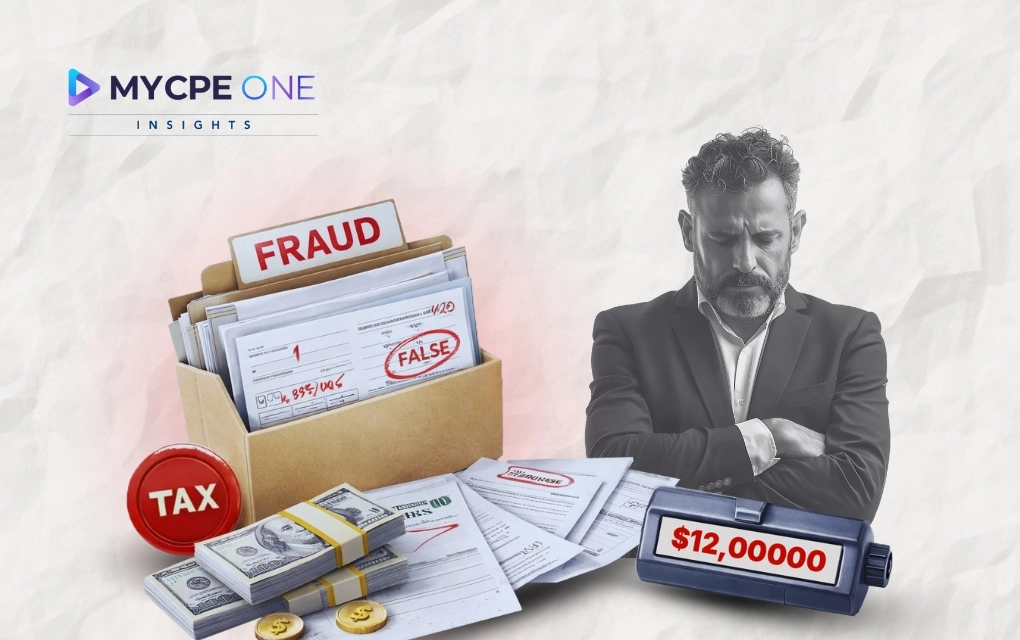
Former tax preparer Damaris Beltre has pled guilty in a federal court to defrauding the IRS and the Small Business Administration for nearly $12 million by pushing false COVID tax credits, fake dependents, and inflated payroll figures. The IRS Criminal Investigation's pursuit of Beltre’s case serves as a reminder that pandemic-relief leniency is over and individuals found guilty of similar fraud could face hefty sentences.
Every CPA has seen a return that makes you pause, lean back, and say, “That can’t be right.” On Long Island, one tax preparer built an entire business on that feeling and rode it all the way to a federal guilty plea. Damaris Beltre, a former tax preparer in Freeport, New York, admitted in federal court to running a multi-year scheme that pushed false COVID credits, fake dependents, and inflated payroll figures through the tax system. The result was nearly $12 million in losses to the IRS and the Small Business Administration, plus a client base that now gets to explain those returns to Criminal Investigation. This case is not flashy. No shell companies in the Cayman Islands. No complex transfer pricing maze. Just aggressive fraud, volume, and confidence that the system would not catch up fast enough. It did.
From early 2021 through April 2024, Beltre personally prepared or supervised the preparation of individual income tax returns loaded with false dependents, inflated motor fuel credits, and COVID-era tax credits that clients clearly did not qualify for. The playbook was simple.
Clients paid more than $1 million in preparation fees, often as a percentage of the refund. That structure alone should make any professional uneasy. When compensation rises with the aggressiveness of the position, objectivity leaves the room. Federal investigators later confirmed that nearly $11 million in refunds were improperly issued. That does not count the tax the IRS never collected because liabilities were artificially driven down. For perspective, this was not one or two bad returns slipping through. This was scale.
The government tested the operation in April 2023 using an undercover agent. Prepared accurately, the return would have shown about $205 due. Beltre filed a return claiming more than $14,000 back and charged $2,200 to do it. That single return said everything prosecutors needed to know.
The timing matters. Between 2020 and 2022, pandemic relief programs created a perfect storm. New credits rolled out quickly. Guidance evolved in real time. IRS enforcement lagged while systems strained under volume. Many firms were underwater just trying to file clean returns on deadline. That environment created opportunity, and some preparers treated it like a free for all. In Beltre’s case, the fraud extended beyond individual returns. From April 2020 through July 2022, she filed false payroll reports and tax filings to secure roughly $1 million in Paycheck Protection Program loans for corporate clients. The SBA relied heavily on self-reported data, and bad actors knew it.
Proceeds from both schemes paid personal debts, funded a home in the Caribbean, and covered luxury purchases. No reinvestment in the practice. No compliance buffer. Just cash out. For firms that played it straight, this period was exhausting. For firms that did not, it was lucrative until it was not.
The guilty plea lands at a moment when IRS Criminal Investigation is actively reminding the profession that pandemic-era leniency is over. IRS-CI maintains a conviction rate north of 90%. When they bring a case, it is usually airtight. Wire fraud counts, aiding and assisting charges, and a restitution bill approaching $12 million signal that prosecutors see this as willful, repetitive conduct, not sloppy compliance. The sentencing exposure is real. Beltre faces up to 53 years in prison, though no one expects anything close to that. What matters more is the message. Fraud that touched COVID programs draws particular scrutiny, even years later.
Clients are also collateral damage. Anyone whose return included fabricated credits or dependents is now on the hook for amended filings, penalties, interest, and potentially their own interviews with agents. That clean refund turned into a very messy problem.
This case will not end with one sentencing.
The IRS has already signaled continued focus on preparer misconduct, refund fraud, and pandemic relief abuse through at least 2026. Technology is improving. Pattern detection is sharper. Volume fraud leaves a paper trail, even when individual returns look small. There is also a broader professional reckoning happening. Trust in preparers took a hit during the pandemic. Regulators, banks, and clients are all asking tougher questions about documentation, controls, and who signs what. This is not about scaring honest practitioners. It is about reminding everyone that aggressive positions scale risk just as fast as they scale revenue.
Until next time…
Don’t forget to share this story on LinkedIn, X and Facebook
Subscribe now for $199 and get unlimited access to MYCPE ONE, from CPE credits to insights Magazine
📢MYCPE ONE Insights has a newsletter on LinkedIn as well! If you want the sharpest analysis of all accounting and finance news without the jargon, Insights is the place to be! Click Here to Join
You’ve reached the 3 free-content piece limit. Unlock unlimited access to all News & CPE resources.
Subscribe Today.
Already have an account?
Sign In