MYCPE ONE
MYCPE ONE LOGO

Join 250,000+
professionals today

Add Insights to your inbox - get the latest
professional news for free.

MYCPE ONE insights

Georgia Man Nailed in $16M COVID Unemployment Scam

Join our 250K+ subscribers

Join our 250K+ subscribers

Subscribe

19 AUG 2025 / ACCOUNTING & TAXES

Georgia Man Nailed in $16M COVID Unemployment Scam

Georgia Man Nailed in $16M COVID Unemployment Scam

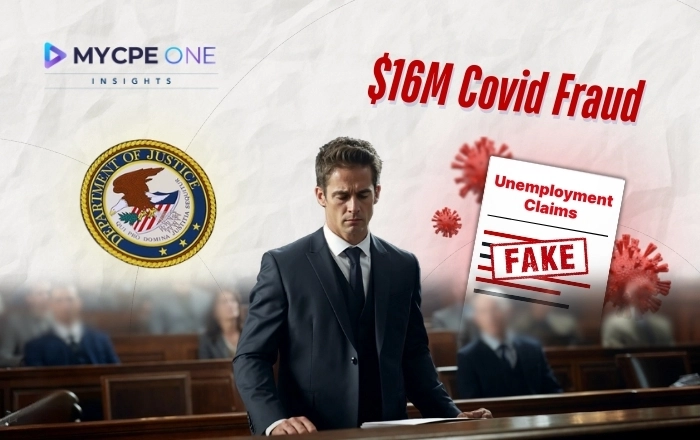
Pandemic relief funds were meant to be a lifeline, but for some, they became a jackpot. Earlier this summer, the FBI uncovered the largest COVID tax credit fraud in U.S. history, Kristerpher Turner and his associates duped the IRS into paying out $93 million in fake refunds by exploiting weak verification systems. The case even spiraled into violence, with Turner paralyzed after a botched murder attempt by his own partners. If that wasn’t staggering enough, another scheme in Georgia shows just how far fraudsters were willing to go. Enter Malcolm Jeffrey, a Cordele man who turned a defunct trucking company into a front for $16 million in stolen unemployment benefits, until a federal jury saw through the scam. Both stories drive home the same lesson: when money moves fast, fraudsters move faster. But in the rush, they also leave behind red flags, the kind professionals need to spot if they want to protect clients, reputations, and the system itself.

Pandemic Relief and the Fraud Gold Rush

Rewind to 2020. Relief packages like the Families First Coronavirus Response Act and expanded unemployment programs were designed to keep businesses alive and workers afloat. But speed trumped scrutiny. Paperwork often got priority over proof, leaving wide gaps for exploitation. In California, Turner and his crew flooded the IRS with sham claims, inventing businesses and stealing identities to claim credits. Overwhelmed, the IRS processed them without adequate checks. Refunds worth tens of millions poured out like candy on Halloween.

Meanwhile, in Georgia, Malcolm Jeffrey was running his own hustle. Using his shuttered company, Down N Dirty Transportation LLC, he opened an employer account and filed unemployment claims for “workers” who didn’t exist. Those fake employees weren’t random names, they were stolen identities, pieced together into lists. Over time, Jeffrey and his co-conspirators filed about 7,000 bogus claims, siphoning over $16 million from the Georgia Department of Labor. The playbook was simple but devastating: trust without verification. And when systems are set up to “pay first, ask later,” fraudsters don’t hesitate to test the boundaries.

When the House of Cards Collapsed

Fraud looks solid at first, but it always caves under its own weight. Jeffrey’s operation funneled stolen funds into prepaid debit cards mailed to addresses around Cordele. Thousands of claims, all tied to a dormant company, eventually triggered suspicion. Investigators from DOL-OIG, USPS-OIG, IRS-CI, USPIS, HSI, and DHS-OIG started pulling threads. Too many claims, not enough real workers, and a defunct company at the center, it didn’t take long for the scam to unravel. A federal jury convicted Jeffrey of conspiracy to commit mail fraud, exposing him to a 20-year prison sentence.

The IRS case collapsed in even more dramatic fashion. Paranoia among Turner’s partners led to an attempted murder in broad daylight. He survived, paralyzed, but the FBI gained ironclad evidence. What started as “easy money” ended in indictments, trials, and long prison terms. Both sagas share the same arc: once agencies connected the dots, the paper trail told the story. Fraudsters are clever, but fake payrolls and bogus claims always leave footprints.

From Free-for-All to Crackdown

For Jeffrey, the near future is sentencing. For Turner and his crew, it’s likely decades behind bars. But the real story lies in what comes next for the system itself. COVID-era fraud has become a case study in oversight failures, and a wake-up call for regulators.

Here’s what’s on deck:

  • Tighter verification: Real-time cross-checks between payroll filings and claims.
  • AI-powered fraud detection: Algorithms built to flag suspicious spikes.
  • Stricter onboarding: Relief programs adopting “Know Your Client” rules for businesses.
  • Inter-agency teamwork: Once reactive, now standard operating procedure.

Translation: the wild west days are over. Fraud prevention is being rebuilt, smarter and stricter.

Takeaways for Professionals and Accountants

For accountants, auditors, and compliance officers, these stories aren’t just courtroom drama, they’re playbooks on what not to miss.

  • Watch your clients’ claims: If a brand-new “consulting firm” suddenly files for large unemployment credits with no payroll history, that’s not just unusual, it’s a liability.
  • Verify, verify, verify: Whether it’s unemployment filings, tax credits, or payroll reimbursements, documentation should be airtight. Missing W-2s or inflated employee lists are classic red flags.
  • Stay updated on fraud trends: From PPP loans to Employee Retention Credits, scams evolve fast. Knowing the patterns can help you spot them before auditors do.
  • Protect your license (and reputation): If something feels off, step back. Being associated with fraudulent claims can do lasting damage to your career.

During the pandemic, professionals weren’t just number crunchers, they were gatekeepers. And when gatekeepers miss the red flags, everyone pays.

Final Thoughts

The pandemic created urgency, and urgency created cracks. Jeffrey in Georgia and Turner in California slipped through those cracks, draining millions. But convictions show the same truth: fraud may run fast, but justice eventually catches up. For professionals, the mandate is clear: fraud always leaves fingerprints. The challenge isn’t spotting it after the fact; it’s learning to recognize the patterns before the checks go out. Because in the world of pandemic relief, what looked like easy money is now turning into hard time.

Until next time…

Don’t forget to share this story on LinkedIn, X and Facebook

Subscribe now for $199 and get unlimited access to MYCPE ONE, from CPE credits to insights Magazine

📢MYCPE ONE Insights has a newsletter on LinkedIn as well! If you want the sharpest analysis of all accounting and finance news without the jargon, Insights is the place to be! Click Here to Join

Digital Marketing Services for CPA & Accounting Firms - Starting $399/month.

Struggling to attract new clients? MYCPE ONE’s Digital Marketing Services help accounting firms stand out, generate leads, and grow revenue effortlessly.

With expertise in SEO, paid ads, social media, and targeted PPC, MYCPE ONE maximizes your marketing efforts to deliver high ROI and broader industry reach.

Invest in digital marketing for your firm todaysee the difference with MYCPE ONE!
Stand out. Generate leads. Grow revenue.

Schedule a call today!

Unlock Annual Access to News & CPE Subscription

You’ve reached the 3 free-content piece limit. Unlock unlimited access to all News & CPE resources.
Subscribe Today.

News & Updates

  • Exclusive News & Insights
  • Latest Regulatory Updates
  • Accounting Industry Trends
  • Expert Insights
  • AI-Driven Audio & Summaries
  • Infographics & Videos
  • CPE-Approved Articles
  • Digital Magazine
  • Benchmarking Blogs

Unlimited CPE Access for 1 Year

  • 15,000+ Hours of Content
  • 500+ Subject Areas
  • Mandatory Ethics Courses
  • 250+ Compliance Packages
  • 50+ Virtual Conferences and Events Access
  • Format: Live, Audio, Video, E-Books
  • Audio Based Courses & Podcasts
  • Add External Certificates with AI
  • AI Compliance Tracking and Report
  • Instant Certification and Fast Reporting
  • Mobile App Access (iOS and Android)
  • Dedicated Support System
  • Practical Training Programs
  • AI Academy Access
  • Tax Academy Access
  • Audit Academy Access
  • Leadership Academy Access