MYCPE ONE
MYCPE ONE LOGO

Join 250,000+
professionals today

Add Insights to your inbox - get the latest
professional news for free.

MYCPE ONE insights

Hawaii Couple Convicted in $200K IRS Refund Fraud

Join our 250K+ subscribers

Join our 250K+ subscribers

Subscribe

09 MAR 2026 / ACCOUNTING & TAXES

Hawaii Couple Convicted in $200K IRS Refund Fraud

Hawaii Couple Convicted in $200K IRS Refund Fraud

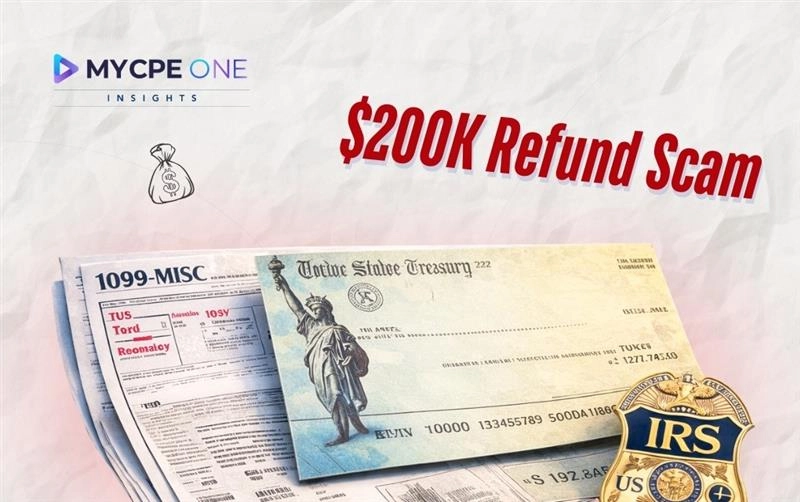
Every tax fraud story starts with a small piece of paper that someone assumes nobody will question. In this case, that paper was a fabricated IRS Form 1099-MISC, and it turned into a nearly $200,000 refund from the U.S. Treasury. A federal jury in Honolulu recently convicted Beverly Braumuller-Hawver and Scott Hawver of ʻEwa Beach, Hawaiʻi, for participating in a conspiracy that deceived the IRS and then attempted to hide the proceeds through business accounts, transfers, and legal maneuvers. What began as a single amended return eventually unfolded into a multi-state tax fraud operation involving more than 200 participants across 19 states. For accountants and tax professionals, the mechanics of the scheme feel oddly familiar. The playbook did not rely on complicated technology or digital wizardry. It leaned on something much simpler; the assumption that a tax document filed with the IRS is truthful until proven otherwise. Like many financial crimes, the plan initially looked slick on the surface. But once investigators began pulling out the thread, the paper trail told a very different story.

How One Fabricated Form Turned into a Six-Figure Refund

Between February 2015 and November 2018, prosecutors say the Hawvers paid a promoter for fraudulent tax paperwork designed to generate large refunds. Using those materials, they filed an amended federal return for the 2014 tax year and attached a fabricated Form 1099-MISC claiming that a mortgage company paid $749,163 in income and withheld $424,163 in federal taxes. That withholding entry was the heart of the scheme. When tax filings show taxes already withheld at the source, the IRS processes refunds assuming the withholding actually occurred. In this case, the withholding was completely fictional, yet it triggered a refund of $192,845 from the U.S. Treasury. From a compliance perspective, the tactic is a classic refund fraud play. Create the illusion that taxes were prepaid and claim the difference back as a refund. It is the financial equivalent of a plot twist in “Catch Me If You Can,” where the deception hinges on paperwork that looks just legitimate enough to pass the first glance.

Where Did the Money Go After the IRS Issued the Refund?

Once the Treasury check arrived, the next phase began quickly. Trial evidence showed the couple deposited the refund into a newly opened bank account and transferred approximately $170,000 within days to an account connected to BeverlyB Music LLC, a business they operated. The money moved again almost immediately, with more than $70,000 paid to co-conspirators who helped create the fraudulent paperwork and organize the scheme. Another $22,000 was wired to a jeweler to purchase gold and silver coins, a move that investigators often view as an attempt to convert cash into harder-to-trace assets. To someone watching the transactions in real time, it might have looked like routine business activity. But to financial investigators, each transfer created another documented checkpoint in the trail of funds. As IRS Criminal Investigation officials often say, every time money moves, there is a receipt somewhere in the system. Think less Hollywood heist film and more “The Big Short,” where the real story hides inside financial records and transactions.

How Did This Refund Scheme Grow into a Nationwide Operation?

The Hawvers were not operating alone. Their case formed part of a broader conspiracy marketed as the “Escrow Trust Refund” program, which attracted participants across the country by promising large refunds generated through specialized paperwork. The Hawaiʻi branch of the operation was organized by Rosemarie Lastimado-Dradi, who recruited participants and collected 25 percent to 40 percent of the fraudulent refunds as payment. Investigators say the network used a mix of business entities, shell accounts, and purported trusts to move and distribute the proceeds. Federal authorities eventually dismantled the operation through a series of prosecutions. Promoters connected to the national scheme received prison sentences of up to 11 years, while Lastimado-Dradi herself was sentenced in January 2026 to nine years in prison. Other participants tied to the Hawaiʻi branch received sentences ranging from 20 months to four years. For regulators and investigators, the case highlights how refund schemes can spread across jurisdictions once promoters start pitching them as legitimate tax strategies that promise easy money.

Learnings for Professionals

For accountants, auditors, and tax preparers, this case lands close to home because the warning signs resemble situations professionals sometimes see in client files. Refund fraud schemes rarely look dramatic at the start. They often appear as routine tax paperwork paired with unusually large claims. When something feels off, it is worth slowing down and asking a few careful questions.

  • Firstly, unusually large withholding claims, especially when reported through documents like Form 1099-MISC issued by third parties, should immediately raise questions.
  • Secondly, the involvement of third-party “tax programs” or promoters promising large refunds in exchange for fees is another clear red flag.
  • Thirdly, professionals should verify whether the reported withholding aligns with the client’s actual income and financial activity, and whether the issuing company can be independently confirmed.
  • Fourthly, the movement of funds can reveal a lot. Rapid transfers through newly opened accounts, payments to promoters, or quick conversion of refunds into assets often appear in fraud investigations.
  • Finally, when taxpayers respond to IRS inquiries with scripted correspondence, repetitive legal filings, or tactics meant to delay collection, it often signals that the underlying tax position may not hold up under scrutiny.

Bottom Line

Tax refund fraud often begins with a document that looks routine and ends with investigators reconstructing the entire financial trail. In this Hawaiʻi case, a single fabricated tax form triggered a six-figure refund, followed by transfers, asset purchases, and years of legal maneuvering. Eventually the paperwork told the full story. For professionals who work with tax filings every day, the takeaway is straightforward. Large withholding claims, promoter-driven strategies, and rapid financial movements deserve a closer look. Because in the tax world, the trail of records usually catches up with the scheme sooner or later.

Until next time…

Don’t forget to share this story on LinkedIn, X and Facebook

Subscribe now for $199 and get unlimited access to MYCPE ONE, from CPE credits to insights Magazine

📢MYCPE ONE Insights has a newsletter on LinkedIn as well! If you want the sharpest analysis of all accounting and finance news without the jargon, Insights is the place to be! Click Here to Join

Unlock Annual Access to News & CPE Subscription

You’ve reached the 3 free-content piece limit. Unlock unlimited access to all News & CPE resources.
Subscribe Today.

News & Updates

  • Exclusive News & Insights
  • Latest Regulatory Updates
  • Accounting Industry Trends
  • Expert Insights
  • AI-Driven Audio & Summaries
  • Infographics & Videos
  • CPE-Approved Articles
  • Digital Magazine
  • Benchmarking Blogs

Unlimited CPE Access for 1 Year

  • 15,000+ Hours of Content
  • 500+ Subject Areas
  • Mandatory Ethics Courses
  • 250+ Compliance Packages
  • 50+ Virtual Conferences and Events Access
  • Format: Live, Audio, Video, E-Books
  • Audio Based Courses & Podcasts
  • Add External Certificates with AI
  • AI Compliance Tracking and Report
  • Instant Certification and Fast Reporting
  • Mobile App Access (iOS and Android)
  • Dedicated Support System
  • Practical Training Programs
  • AI Academy Access
  • Tax Academy Access
  • Audit Academy Access
  • Leadership Academy Access