Join 250,000+
professionals today
Add Insights to your inbox - get the latest
professional news for free.
Join our 250K+ subscribers
Subscribe22 APR 2026 / ACCOUNTING & TAXES
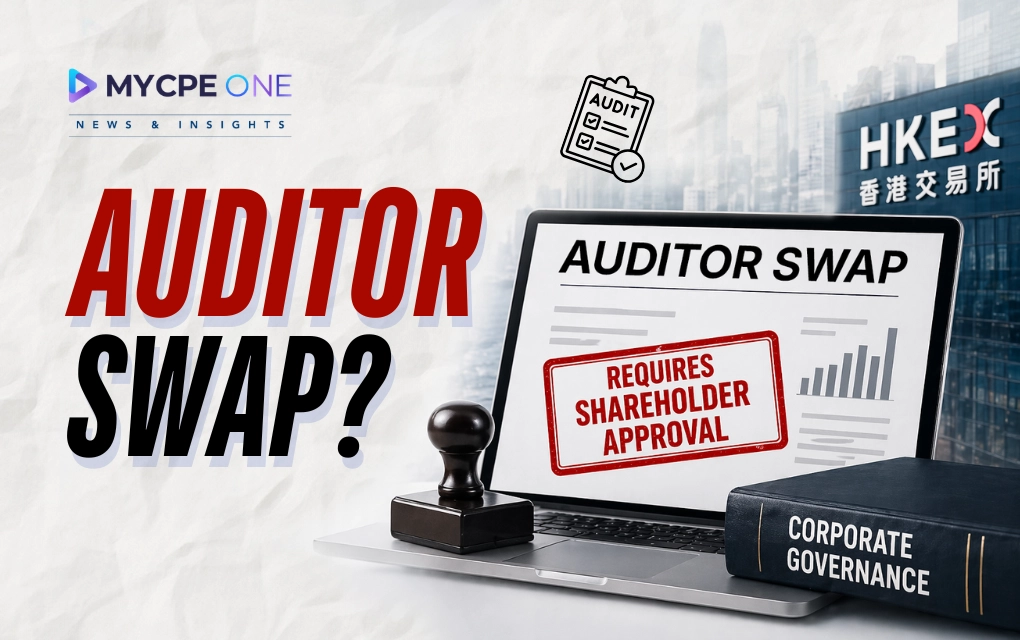
Hong Kong Exchanges and Clearing (HKEX) has implemented tougher regulations around auditor changes, aiming to restore faith in financial reporting. The revised rules require shareholder approval for appointing and removing auditors, classify any actions causing auditor resignation as formal removal, demand disclosure of specific audit fees, and increase accountability and scrutiny of financial reporting.
Think of financial reporting like a referee in a high-stakes game. If teams could swap referees mid-match just because they didn’t like a call, the whole game would fall apart. That’s essentially what Hong Kong regulators just moved to stop. In a bold governance shake-up, Hong Kong Exchanges and Clearing (HKEX) has tightened the rules around auditor changes in its $7.5 trillion market. The goal is simple but critical: restore trust in financial reporting after years of quiet maneuvering behind the scenes. And let’s be real, this isn’t just a policy tweak. It’s a signal that the old playbook is officially out of bounds.
For years, companies had a workaround that gave boards a lot of control over auditors. If an audit firm pushed too hard or raised uncomfortable questions, they could be nudged toward resignation. No shareholder vote. No immediate spotlight. Just a “casual vacancy” and a new auditor stepping in. On paper, it looked routine. In reality, it opened the door to what regulators call “opinion shopping.” The numbers tell the story. The Securities and Futures Commission flagged that auditors at 89 companies resigned within four months of reporting deadlines, with 66 citing fee disagreements. That’s not a coincidence, that’s a pattern. As regulators see it, those last-minute exits are major red flags for governance breakdowns.
HKEX has now flipped the script, and it’s a big deal. Here’s what’s changed:
In plain English, what used to happen quietly in boardrooms now has to play out in front of investors. That loophole? It didn’t just get patched; it got shut down completely.
Source: Bloomberg
This move didn’t come out of nowhere. It’s happening at a moment when confidence in financial reporting has taken some serious hits. The Evergrande saga is a big part of that story. Regulators allege the company inflated revenue by more than 560 billion yuan, roughly $82 billion, and separate investigations point to a staggering $78 billion overstatement tied to accounting manipulation. That’s not just a slip-up, that’s a wake-up call. As one market expert put it, “The alleged fraud is shocking in its scale.” The fallout didn’t stop at the company. Its auditor, PwC, faced fines and suspension in China, raising tough questions about audit oversight across the region. At the same time, Hong Kong’s IPO market has been in a slump. Regulators are trying to bring investors back, and trust is the currency that matters most. So yeah, the timing isn’t random. It’s strategic.
For listed companies, the days of quietly switching auditors are pretty much over.
And here’s the kicker, timing matters more than ever. Hong Kong rules already state that missing audited financial statements can lead to automatic trading suspension. This year alone, 39 firms had trading halted for missing deadlines. That’s a tight leash. Boards will need to get ahead of issues, manage auditor relationships better, and avoid last-minute drama.
For audit firms, this is a double-edged sword. On one hand, they now have stronger footing. It’s harder to be quietly pushed out for doing your job too well. On the other hand, expectations are climbing. Regulators are clearly watching for:
So, while auditors gain protection, they also step into a brighter spotlight. Standing firm is no longer optional; it’s expected.
Zoom out, and this move is about more than just auditors; it’s about who controls trust in the market. Hong Kong is in a race with global financial hubs for capital, listings, and investor confidence. And right now, governance isn’t just a compliance checkbox; it’s a competitive strategy. By tightening these rules, HKEX is sending a clear message: if you want investor money, your numbers better be clean and your process transparent. That’s how credibility gets rebuilt. Now, here’s where it gets interesting: the US has been running a tighter playbook on this for years.
Under SEC and PCAOB oversight:
So, while the US doesn’t require shareholder approval for every auditor change, it makes it really hard to pull off any behind-the-scenes moves. Different rulebooks, same endgame: keep financial reporting honest and make sure no one’s gaming the system.
In the short term, expect fewer sudden auditor exits and more structured, well-documented decision-making around audit changes. But the bigger shift goes beyond process. These rules are likely to reduce opportunistic behavior in financial reporting, strengthen auditor independence, and improve the overall quality of disclosures coming out of listed companies. More importantly, this is about rebuilding trust, something Hong Kong’s markets have been working to regain. Because at the end of the day, it’s not just about who signs the audit report, it’s about whether investors actually believe it. And in today’s market, that belief is everything.
Until next time…
Don’t forget to share this story on LinkedIn, X and Facebook
Subscribe now for $199 and get unlimited access to MYCPE ONE, from CPE credits to insights Magazine
📢MYCPE ONE Insights has a newsletter on LinkedIn as well! If you want the sharpest analysis of all accounting and finance news without the jargon, Insights is the place to be! Click Here to Join
You’ve reached the 3 free-content piece limit. Unlock unlimited access to all News & CPE resources.
Subscribe Today.
Already have an account?
Sign In