Join 250,000+
professionals today
Add Insights to your inbox - get the latest
professional news for free.
Join our 250K+ subscribers
Subscribe16 MAR 2026 / ACCOUNTING & TAXES
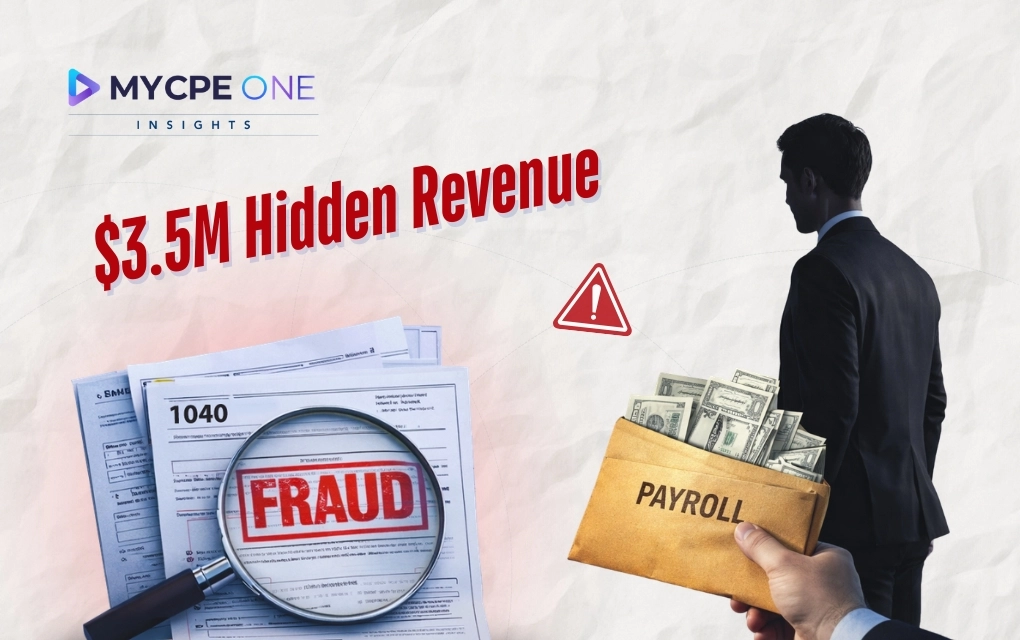
Siharath Panyanouvong, a Massachusetts-based manager of temp staffing agency Viscosity Inc., is facing federal tax charges for allegedly concealing over $3.5 million in business income from the IRS between 2017 and 2019. This case underscores the IRS's increasing focus on payroll tax fraud, particularly within industries like staffing agencies, where cash payroll schemes are prevalent and could potentially lead to large tax gaps.
A cash register rarely tells the whole story. In many small businesses, especially those that run on quick payments and tight margins, the real story sits behind the books. Sometimes it shows up as messy accounting. Sometimes it shows up as something much more serious. Federal prosecutors in Massachusetts say the latter may have happened in Lowell. A local staffing agency manager now faces criminal tax charges after allegedly hiding millions in business income from the IRS. On paper, the numbers look simple. More than $3.5 million in unreported gross receipts between 2017 and 2019. About $980,000 in federal taxes that never reached the U.S. Treasury. But the case highlights something accountants and tax professionals see all the time: when cash starts moving off the books, small problems can snowball fast.
According to federal charging documents, Siharath Panyanouvong, 56, managed Viscosity Inc., a temporary employment agency based in Lowell, Massachusetts. Prosecutors allege that between 2017 and 2019 the company deliberately failed to report more than $3.5 million in gross receipts to the Internal Revenue Service. That missing revenue forms the backbone of the case. Investigators claim Panyanouvong used the alias “Mike Pan” while cashing more than $4.5 million in customer checks. A large portion of that cash allegedly funded an off-the-books payroll for employees at the staffing agency. Some of it, prosecutors say, also went directly to him.
The alleged method is not exactly new. In cash-heavy industries such as staffing agencies, construction subcontracting, restaurants, and small retail, cash payroll schemes have existed for decades. The pattern typically looks something like this. Customers pay the business through checks or bank transfers. The checks get cashed rather than deposited into company accounts. Employees receive wages in cash instead of through reported payroll. No payroll taxes get withheld. No W-2 forms get issued. The business then files tax returns showing far less revenue than it actually collected.
Staffing agencies sit in a tricky corner of the business world. Their core business involves moving labor quickly between employers and short-term assignments. Payroll often represents the largest expense by far. That structure can create temptation when cash starts flowing. Over the past few years, federal prosecutors in Massachusetts have brought multiple cases involving staffing companies that allegedly used cash payroll schemes. In similar investigations, authorities said millions in employment taxes were avoided by paying workers off the books. The IRS Criminal Investigation Division tends to look closely at businesses where labor costs dominate the financial statements. When payroll suddenly looks unusually small relative to revenue, investigators start asking questions.
From there, the math can get uncomfortable. IRS agents often use a bank deposit analysis to reconstruct income. If deposits and known receipts exceed reported income, that gap becomes evidence of underreporting. In payroll cases, mismatches between contractor payments, unemployment filings, or worker statements can also open the door to deeper investigation. Sometimes the discovery begins with something simpler. A worker files for unemployment but cannot show reported wages. A client issues payment records that do not match the company’s tax return. Or a state labor agency flags unusual payroll filings. One loose thread is often all it takes.
The defense in the Lowell case appears ready to challenge the government’s narrative.
Panyanouvong’s attorney suggested the issue may stem from poor accounting practices rather than intentional fraud. He noted that new business owners sometimes struggle to properly track cash payments and reporting obligations. That explanation surfaces in many tax cases involving small businesses. And to be fair, the line between disorganized records and criminal tax conduct can start blurry. Small business owners sometimes rely on spreadsheets, partial bookkeeping, or informal payroll methods when operations grow faster than their accounting systems. But federal prosecutors focus on intent.
For now, the charge carries potential penalties of up to three years in prison, along with supervised release and fines. As in any criminal proceeding, the defendant remains presumed innocent unless proven guilty.
If recent enforcement trends continue, cases like this may become more common. The IRS Criminal Investigation Division has steadily increased its focus on employment tax violations over the past several years. Payroll tax fraud remains one of the agency’s top enforcement priorities because those taxes represent trust fund money collected on behalf of the government. When that money disappears, the government treats it differently from ordinary underreported income. Staffing agencies, subcontracting networks, and gig economy intermediaries often sit near the center of those investigations. The reason is simple. Labor costs move quickly, large sums pass through payroll accounts, and the systems rely heavily on accurate reporting. When reporting breaks down, the tax gap grows fast.
Until next time…
Don’t forget to share this story on LinkedIn, X and Facebook
Subscribe now for $199 and get unlimited access to MYCPE ONE, from CPE credits to insights Magazine
📢MYCPE ONE Insights has a newsletter on LinkedIn as well! If you want the sharpest analysis of all accounting and finance news without the jargon, Insights is the place to be! Click Here to Join
You’ve reached the 3 free-content piece limit. Unlock unlimited access to all News & CPE resources.
Subscribe Today.
Already have an account?
Sign In