MYCPE ONE
MYCPE ONE LOGO

Join 250,000+
professionals today

Add Insights to your inbox - get the latest
professional news for free.

MYCPE ONE insights

How $4 Million Offshore Gambling Became Tax Evasion

Join our 250K+ subscribers

Join our 250K+ subscribers

Subscribe

19 JAN 2026 / ACCOUNTING & TAXES

How $4 Million Offshore Gambling Became Tax Evasion

How $4 Million Offshore Gambling Became Tax Evasion

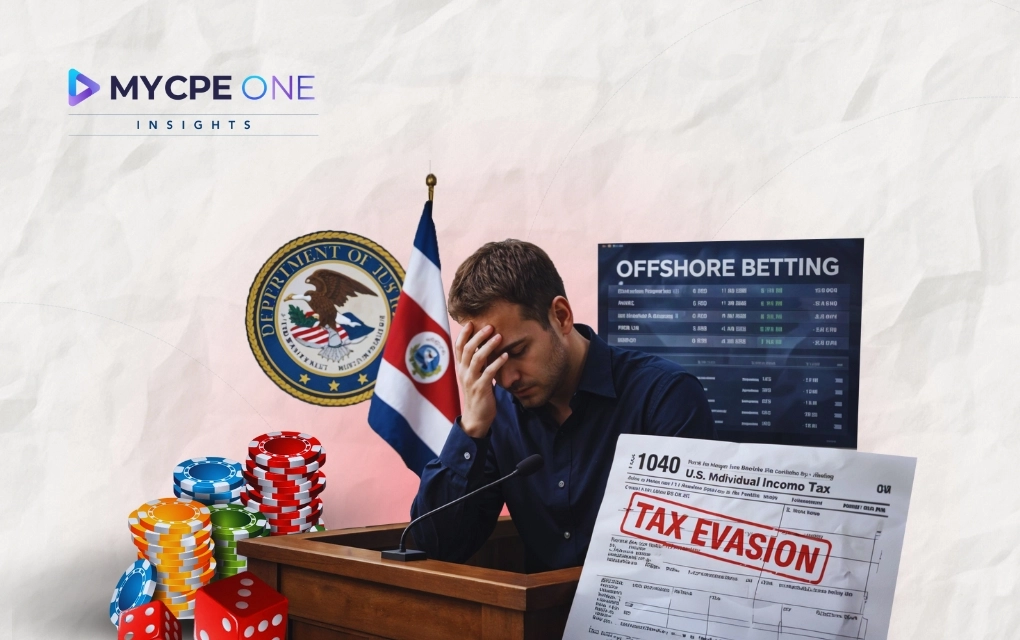
There is a line from Casino that accountants tend to appreciate more than gamblers do: “In the casino, the cardinal rule is to keep them playing and to keep them coming back.” What the movie leaves out is what happens when the money starts moving offshore, the books stop lining up, and the IRS shows up with a long memory. That is where this story lands. This week, Jason Noah Feinman of Calabasas, California, pleaded guilty in federal court to operating an illegal offshore gambling business, laundering millions in cash, and evading federal taxes on more than $4 million of income. For tax and compliance professionals, the case is less about gambling and more about how familiar financial crime patterns continue to unravel in very predictable ways. 

How the scheme was built 

The roots of the case stretch back several years, when Feinman operated a Costa Rica based business that provided the technical backbone for illegal gambling operations. His websites allowed unlicensed betting businesses to accept wagers from customers, including bettors located in California. That alone put the operation squarely in violation of both state and federal law. By keeping the infrastructure offshore, Feinman appeared to believe the business was insulated from U.S. oversight, an assumption that has not held up for a long time. 

How the money was moved 

The cash did not stay offshore. According to court filings, Feinman laundered proceeds by exchanging large amounts of cash for checks made payable to himself or his businesses. Between May 2018 and January 2024, he handed over more than $1.5 million in cash to a customer in exchange for 18 checks totaling the same amount. Prosecutors say the total amount exchanged this way fell between $1.5 million and $3.5 million. This type of cash for check activity is a classic red flag and often the point where financial investigations gain traction. 

How the tax evasion worked 

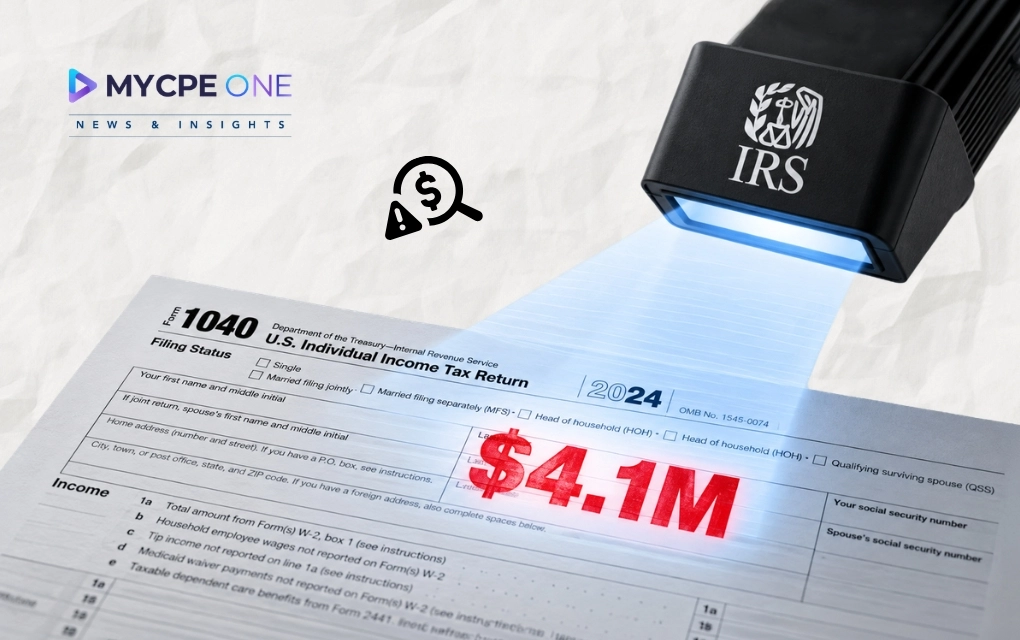
From 2018 through 2022, Feinman knew the income from his gambling business was taxable and chose not to report it. Prosecutors allege he concealed approximately $4.2 million in income from the IRS. In 2020 alone, he earned about $1.8 million yet reported no taxable income and paid no tax. That choice transformed an illegal gambling operation into a serious tax evasion case, resulting in a tax loss to the United States of up to $1.52 million. 

How it was caught and where things stand now 

The scheme unraveled through financial patterns rather than a single mistake. Repeated cash exchanges, inconsistent reporting, and movement of funds through intermediaries drew attention from IRS Criminal Investigation’s International Tax and Financial Crimes group, working alongside Homeland Security Investigations. Feinman has pleaded guilty to all charges and is scheduled to be sentenced on May 12. He faces up to 10 years in prison for money laundering and up to five years for the tax evasion and illegal gambling counts, with final sentencing to be determined by a federal judge. 

What this signals going forward 

This case fits a broader enforcement trend. Federal authorities continue to target offshore gambling operations that serve U.S. customers while avoiding U.S. tax obligations. Offshore servers do not create offshore immunity. In many cases, they shorten the enforcement timeline once money starts moving back into the United States. 

Learnings for Professionals 

For tax professionals, the lessons here are straightforward and uncomfortable. This case reinforces that illegal income remains taxable, that how money moves often matters more than how it is labeled, and that offshore structures do not erase U.S. reporting obligations when U.S. residents or customers are involved. 

  • Illegal income must be reported, and ignoring it compounds both civil and criminal exposure. 
  • Repeated cash for check exchanges, even at matching amounts, are classic audit and investigation triggers. 
  • Offshore platforms do not shield U.S. taxpayers from U.S. tax law when the business targets U.S. customers. 
  • Clients in cash heavy or high risk industries require enhanced due diligence, not casual acceptance. 
  • Clear documentation and early intervention can prevent small compliance failures from becoming criminal cases.

As The Godfather warned, “Never let anyone know what you are thinking.” In tax practice, the opposite applies. Transparency, tough conversations, and proper documentation are often the best protection available.

Conclusion

Feinman’s guilty plea is not a novel story, but it is a timely one. Illegal gambling, offshore structures, and tax evasion continue to collide in predictable ways, and enforcement agencies continue to follow the same trail: the money. For professionals, the takeaway is not fear but discipline. When cash flows, reporting breaks down, and clients insist the rules do not apply, history shows how these stories usually end.

Until next time…

Don’t forget to share this story on LinkedIn, X and Facebook

Subscribe now for $199 and get unlimited access to MYCPE ONE, from CPE credits to insights Magazine

📢MYCPE ONE Insights has a newsletter on LinkedIn as well! If you want the sharpest analysis of all accounting and finance news without the jargon, Insights is the place to be! Click Here to Join

Unlock Annual Access to News & CPE Subscription

You’ve reached the 3 free-content piece limit. Unlock unlimited access to all News & CPE resources.
Subscribe Today.

News & Updates

  • Exclusive News & Insights
  • Latest Regulatory Updates
  • Accounting Industry Trends
  • Expert Insights
  • AI-Driven Audio & Summaries
  • Infographics & Videos
  • CPE-Approved Articles
  • Digital Magazine
  • Benchmarking Blogs

Unlimited CPE Access for 1 Year

  • 15,000+ Hours of Content
  • 500+ Subject Areas
  • Mandatory Ethics Courses
  • 250+ Compliance Packages
  • 50+ Virtual Conferences and Events Access
  • Format: Live, Audio, Video, E-Books
  • Audio Based Courses & Podcasts
  • Add External Certificates with AI
  • AI Compliance Tracking and Report
  • Instant Certification and Fast Reporting
  • Mobile App Access (iOS and Android)
  • Dedicated Support System
  • Practical Training Programs
  • AI Academy Access
  • Tax Academy Access
  • Audit Academy Access
  • Leadership Academy Access