Join 250,000+
professionals today
Add Insights to your inbox - get the latest
professional news for free.
Join our 250K+ subscribers
Subscribe30 DEC 2025 / ACCOUNTING & TAXES
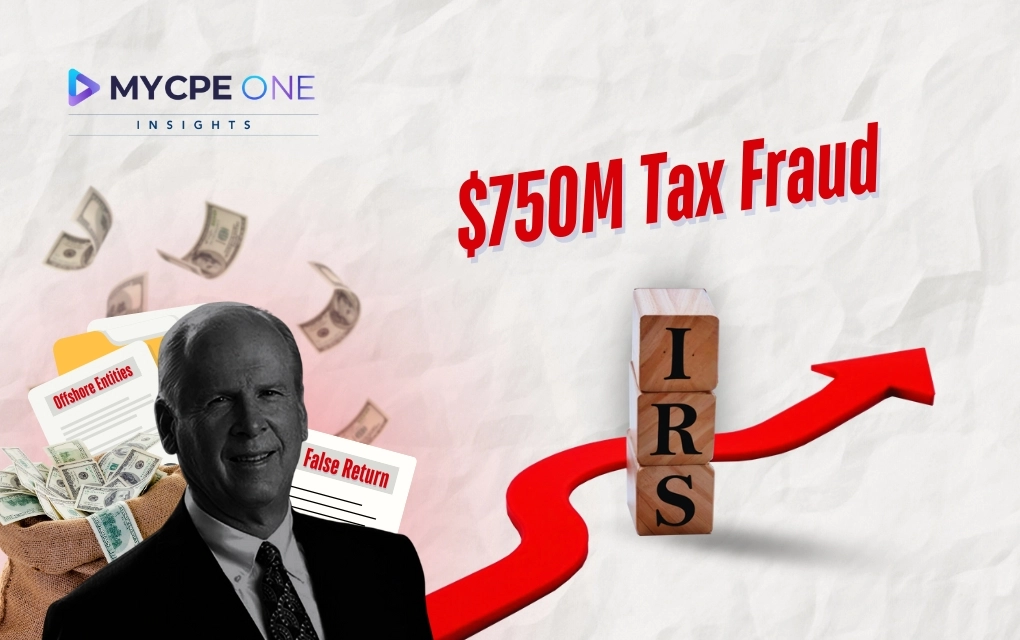
Robert Brockman's estate has agreed to pay $750 million to the IRS following what has been cited as the largest individual tax fraud case in the US. The settlement, approved by U.S. Tax Court Judge Kathleen Kerrigan, incurs Brockman’s estate with $456 million in back taxes and $294 million in penalties for income hidden using offshore entities from 2004-2018.
Robert Brockman lived like a guy clipping grocery coupons. Budget hotels. Frozen dinners. Used office furniture. Then the IRS opened the books and found a tab big enough to make even seasoned tax pros spit out their coffee. This week, Brockman’s estate agreed to pay $750 million to the IRS, closing what federal prosecutors long described as the largest individual tax fraud case in U.S. history. The man is gone. The bill is very much alive. For accountants, tax attorneys, and finance leaders, this one is less about shock value and more about what happens when aggressive planning crosses into fantasy land.
The settlement, approved Tuesday by U.S. Tax Court Judge Kathleen Kerrigan, requires Brockman’s estate to pay $456 million in back taxes and $294 million in penalties. The years covered run from 2004 through 2018. Interest may still apply, though the filing did not spell that part out. The IRS originally went after $1.4 billion, including interest. Strip out interest, and the government was still chasing $993 million. Landing at $750 million is not pocket change, but it is a reminder that even after death, the IRS does not shrug and move on.
Brockman was indicted in 2020 on 39 counts, including tax evasion, wire fraud, money laundering, and evidence tampering. Prosecutors alleged he hid roughly $2 billion in income using offshore entities in Bermuda and St. Kitts and Nevis. The phrase “web of entities” gets tossed around a lot in tax cases. Here, it was literal. Encrypted servers. Code names like “Red Fish” and “Snapper.” Nominee managers. Secret bank accounts in Switzerland. This was not a missed 1099. This was full-blown spy movie stuff.
A big chunk of the hidden income stemmed from Brockman’s early backing of Vista Equity Partners, where his stake grew into billions. Vista founder Robert F. Smith settled his own related case earlier, paying about $139 million and cooperating with authorities. That cooperation mattered. So did the IRS’s growing focus on offshore banking structures that still let U.S. taxpayers slide money around without proper reporting. One side effect of the Brockman case was renewed scrutiny of the so-called shell bank loophole, an issue compliance teams should already have on their radar.
Here’s the uncomfortable question. How many structures look clever until the facts change? Another one. How many advisers convince themselves they are still on the right side of the line because no one has knocked yet? As the saying goes, pigs get fat, hogs get slaughtered. The IRS clearly decided Brockman’s setup had gone from clever to reckless.
Brockman denied the allegations and argued he was suffering from dementia tied to Parkinson’s disease and other health issues. In May 2022, a judge ruled him competent to stand trial. He died in August 2022 at age 81, before the criminal case could play out. That did not end the matter. The civil tax case rolled on, because tax liabilities do not disappear with a death certificate. His heirs include his wife of 53 years, children, and grandchildren. The settlement now binds the estate, not the man.
For professionals advising wealthy clients, this is a sobering reminder. Estate planning does not insulate unpaid taxes. It can actually concentrate the pain. Also worth noting. Brockman was estimated by Forbes to be worth about $4.7 billion before his death. He owned an $8 million Houston mansion, a ski cabin in Aspen, a private jet, and a 209-foot yacht. Living frugally does not cancel out aggressive tax behavior. The math does not care.
Brockman reportedly viewed the IRS as corrupt and believed it unfairly targeted taxpayers. Many clients say similar things, usually right before asking if something “super aggressive but totally fine” will fly. Here’s the straight talk takeaway.
So, what should professionals ask clients right now? Are we solving a real business problem or just trying to outsmart the IRS? Would this structure still make sense if every email were read aloud in court? If the answer feels squishy, it probably is. The Brockman case is not about being rich. It is about ignoring risk until risk shows up with a calculator and a court order. And this time, the check cleared.
Until next time…
Don’t forget to share this story on LinkedIn, X and Facebook
Subscribe now for $199 and get unlimited access to MYCPE ONE, from CPE credits to insights Magazine
📢MYCPE ONE Insights has a newsletter on LinkedIn as well! If you want the sharpest analysis of all accounting and finance news without the jargon, Insights is the place to be! Click Here to Join
You’ve reached the 3 free-content piece limit. Unlock unlimited access to all News & CPE resources.
Subscribe Today.
Already have an account?
Sign In