MYCPE ONE
MYCPE ONE LOGO

Join 250,000+
professionals today

Add Insights to your inbox - get the latest
professional news for free.

MYCPE ONE insights

How a Franklin Tax Preparer Turned Refunds into Tax Fraud

Join our 250K+ subscribers

Join our 250K+ subscribers

Subscribe

21 JAN 2026 / ACCOUNTING & TAXES

How a Franklin Tax Preparer Turned Refunds into Tax Fraud

How a Franklin Tax Preparer Turned Refunds into Tax Fraud

Every tax season has its background noise. W-2s rolling in late, clients asking for extensions on February 3, and that familiar question that never goes away, “When will I get my 2026 refund?” Most years, the drama stays in the spreadsheets. This year, a Franklin, Wisconsin, tax preparer turned that routine chaos into a federal criminal case. The guilty plea from Jahnell Easly is not flashy or exotic. That is exactly why it matters.

How did this start, and why now?

Easily worked as a paid tax preparer during the 2020 through 2022 filing seasons. On paper, nothing unusual. She electronically filed about 424 federal returns. The problem was volume paired with patterns. Roughly 386 of those returns showed indicators of fraud. This was not a one-off error or aggressive interpretation. The returns consistently reported fake business income and losses, household employee wages that did not exist, and ordinary dividends pulled out of thin air. On top of that came a grab bag of refundable credits, sick and family leave credits, child and dependent care credits, fuel tax credits, Section 1341 credits, plus fabricated withholding.

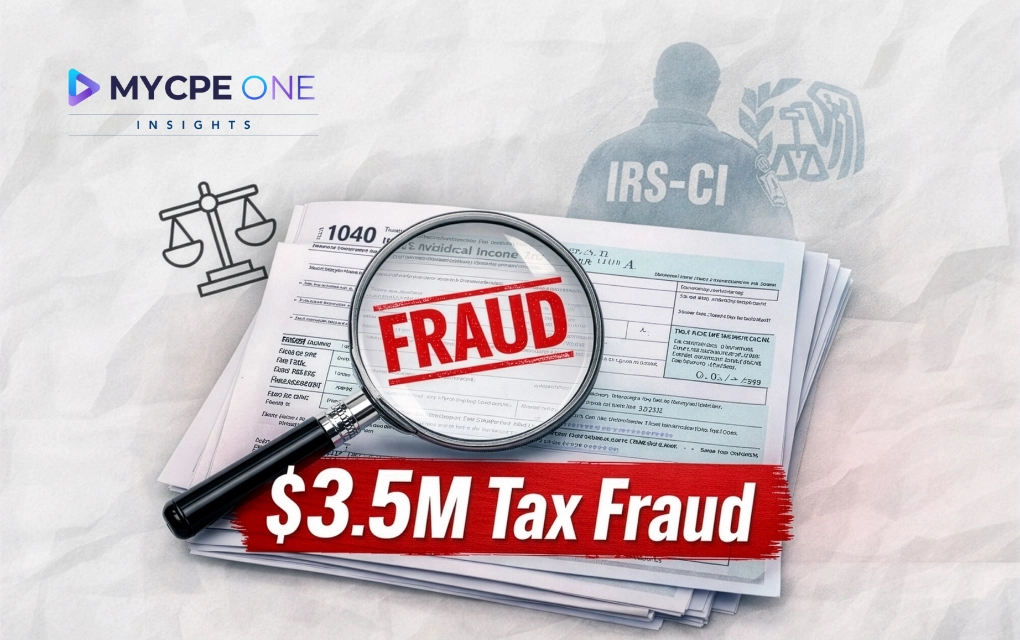
The playbook was simple. Inflate refundable credits, boost the refund, take a bigger prep fee. Rinse and repeat. According to the plea agreement, Easly intended the IRS to lose about $3.5 million and actually caused about $1.4 million in fraudulent refunds. Her personal payday was nearly $254,000 in fees and commissions she was not entitled to. That kind of consistency does not slip past filters for long.

What does this say about IRS enforcement?

The case landed in January 2026, right as filing season ramps up. That timing is not accidental. IRS Criminal Investigation continues to lean heavily on data analytics, refund pattern tracking, and preparer-level risk scoring. This was not a whistleblower story or a disgruntled client calling the hotline. The math gave it away. When one preparer produces hundreds of returns that all smell the same, the system notices. As one old audit saying goes, numbers do not lie; people do.

The prosecution also fits a broader trend. The IRS has made clear it will focus on preparers who abuse refundable credits. These credits move cash fast, especially during tight economic periods. That makes them tempting, and it puts them squarely in the agency’s crosshairs. Easley now faces up to three years in prison and a $250,000 fine, with sentencing scheduled for May 21, 2026. IRS Criminal Investigation did the legwork. The U.S. Attorney’s Office finished it. Clean and direct.

Why does this matter during the 2026 filing season?

Here is where this hits close to home for firms and practitioners. Tax season is in full swing. Clients are impatient. Refund tracking tools are getting hammered. Every preparer has already heard some version of “My neighbor already got theirs, what’s taking so long?” Cases like this slow things down for everyone. Fraudulent refund activity increases scrutiny, pushes more returns into review, and lengthens processing times. Legitimate taxpayers feel the drag even when they did everything right. For professionals, this also raises client risk. Some of Easly’s clients may not have fully understood what was filed on their behalf. Now they face audits, repayment demands, penalties, and possible identity verification headaches. That is a mess no one wants to clean up in March.

Learnings for Professionals

  • First, volume plus consistency is a red flag. High throughput is not a problem by itself. High throughput with identical credit profiles is asking for trouble.
  • Second, refundable credits require discipline. Just because software allows an entry does not mean it belongs there. Documentation matters, and so does common sense.
  • Third, clients chase refunds, not compliance. That pressure lands on preparers. Drawing a hard line early saves you grief later. A fast refund is not worth a slow investigation.
  • Fourth, firm owners should review preparer-level data internally. If one staff member’s returns consistently generate outsized refunds, ask why. Trust, but verify.
  • Lastly, reputation damage spreads faster than charges. When a preparer goes down, every legitimate firm in the area feels the side eye. That hurts referrals and raises skepticism across the board.

What happens next?

Easley’s case will move to sentencing in May. The IRS will continue clawing back fraudulent refunds where possible. Some affected taxpayers will spend the next year dealing with notices they never expected. Looking ahead, enforcement is not easing up. Refund fraud remains a priority, especially as filing volumes grow and credits stay politically popular. Expect more preparer focused cases, not fewer. For those of us in the trenches, the takeaway is straightforward. Stick to defensible positions. Document everything. Slow down when something feels off. And when clients ask when their 2026 refund is coming, give them the honest answer, not the one they want to hear. Sometimes boring is the safest strategy in the room.

Until next time…

Don’t forget to share this story on LinkedIn, X and Facebook

Subscribe now for $199 and get unlimited access to MYCPE ONE, from CPE credits to insights Magazine

📢MYCPE ONE Insights has a newsletter on LinkedIn as well! If you want the sharpest analysis of all accounting and finance news without the jargon, Insights is the place to be! Click Here to Join

Unlock Annual Access to News & CPE Subscription

You’ve reached the 3 free-content piece limit. Unlock unlimited access to all News & CPE resources.
Subscribe Today.

News & Updates

  • Exclusive News & Insights
  • Latest Regulatory Updates
  • Accounting Industry Trends
  • Expert Insights
  • AI-Driven Audio & Summaries
  • Infographics & Videos
  • CPE-Approved Articles
  • Digital Magazine
  • Benchmarking Blogs

Unlimited CPE Access for 1 Year

  • 15,000+ Hours of Content
  • 500+ Subject Areas
  • Mandatory Ethics Courses
  • 250+ Compliance Packages
  • 50+ Virtual Conferences and Events Access
  • Format: Live, Audio, Video, E-Books
  • Audio Based Courses & Podcasts
  • Add External Certificates with AI
  • AI Compliance Tracking and Report
  • Instant Certification and Fast Reporting
  • Mobile App Access (iOS and Android)
  • Dedicated Support System
  • Practical Training Programs
  • AI Academy Access
  • Tax Academy Access
  • Audit Academy Access
  • Leadership Academy Access