MYCPE ONE
MYCPE ONE LOGO

Join 250,000+
professionals today

Add Insights to your inbox - get the latest
professional news for free.

MYCPE ONE insights

How a Fraud Trial Turned into Claims of Overpayment of Taxes

Join our 250K+ subscribers

Join our 250K+ subscribers

Subscribe

12 FEB 2026 / ACCOUNTING & TAXES

How a Fraud Trial Turned into Claims of Overpayment of Taxes

How a Fraud Trial Turned into Claims of Overpayment of Taxes

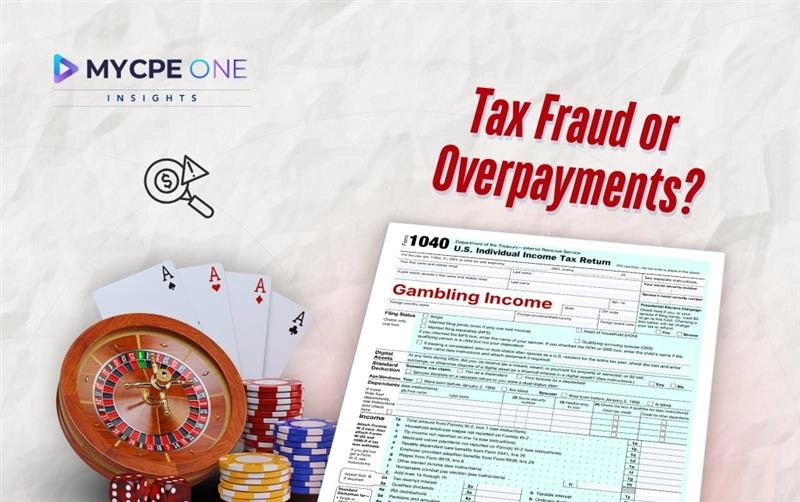
If you ever wanted a case study on how brilliance and bad documentation can collide, Tom Goldstein’s tax trial is it. Here you have a lawyer who argued more than 40 cases before the U.S. Supreme Court, co-founded SCOTUSblog, represented clients like Google, and even worked on Bush v. Gore. And now he is sitting in federal court in Greenbelt, Maryland, fighting 16 criminal counts tied to gambling income, unpaid taxes, and mortgage disclosures. This is not just about poker. It is about how a parallel financial life, layered on top of a demanding professional one, can spiral into a criminal tax case. Let’s break it down the way we would in a partner meeting: past, present, and what might be coming next.

When does a side pursuit turn into a second balance sheet?

Goldstein’s involvement in high-stakes poker reportedly intensified around 2016. He played heads-up no-limit Texas Hold’em matches against billionaires and international gamblers. Testimony in court suggests he won tens of millions in certain matches, including a reported $26 million from businessman Alec Gores in 2016. At the same time, he claims he lost heavily in other games and is down roughly $10 million overall across his poker career. That matters because gambling income reporting is brutally technical. Under U.S. tax law, gambling winnings are taxable, and losses are deductible only to the extent of winnings. The burden of proof sits squarely on the taxpayer. Contemporaneous records are not optional.

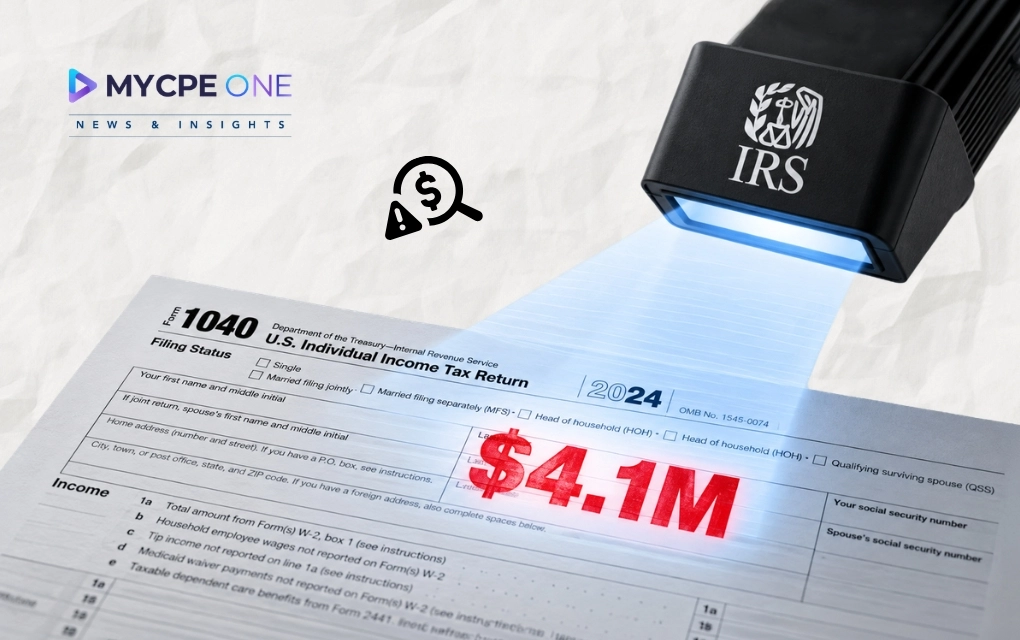
Goldstein testified that he relied largely on bank statements and a ledger prosecutors describe as “secret,” though he says it was simply incomplete and error-prone. He told jurors that in 2016 he overstated his gambling winnings by $2.7 million and that the correct number should have been zero. He described five categories of errors, some favoring him, some favoring the IRS, but claimed that on balance the mistakes increased his taxable income by about $4.7 million. Prosecutors tell a different story. They allege he failed to report millions in winnings, improperly routed payments through his law firm Goldstein & Russell, and used client funds or firm-related transfers to settle poker debts. Layer on top of that his admitted understatement of roughly $15 million in gambling debt on 2021 mortgage applications. His explanation: he did not want his wife to know the full scope of the debts.

What is the jury actually deciding?

Goldstein faces 16 counts, including tax evasion, aiding and abetting in the preparation of false returns, willful failure to pay taxes, and false statements on loan applications. He has pleaded not guilty to all charges. The government rested after presenting roughly 12 days of evidence. Goldstein took the stand in his own defense, which is always a calculated risk. He told jurors he acted in good faith and relied on accountants and staff. He acknowledged that mistakes on his returns were his responsibility and that being busy is not an excuse. The legal hinge in this case is willfulness.

Both sides agree that willfulness means the voluntary and intentional violation of a known legal duty. They disagree on how much knowledge the government must prove. Goldstein’s defense argues that prosecutors must show he knew nonpayment on the due date was criminal, not just subject to penalties. The government argues it only needs to prove he knew he had a legal duty and chose not to comply. That distinction might sound technical, but it is the difference between sloppy compliance and felony exposure. The jury is not deciding whether his recordkeeping was messy. They are deciding whether he crossed the line into intentional tax fraud. And once credibility becomes the focus, every inconsistency matters.

How does this end

The trial is expected to conclude soon, with cross-examination and closing arguments underway. A conviction on tax evasion alone can carry up to five years per count, plus fines. False statements on loan applications also carry serious penalties. Even if he avoids conviction on all counts, the reputational damage is already real. Goldstein retired from practice in 2023. His indictment in January 2025 stunned the Washington legal community. In the future, regardless of the verdict, expect three consequences.

  • First, increased scrutiny of high-income professionals with complex side activities. DOJ Tax Division has been clear in recent years that sophisticated taxpayers will not receive sympathy for “recordkeeping confusion.”
  • Second, more aggressive use of lifestyle and loan documents as corroborating evidence in tax prosecutions. Inconsistent debt disclosures are powerful narrative tools for prosecutors.
  • Third, a renewed focus on the definition of willfulness in failure-to-pay cases. If the court adopts a broader interpretation, more late-payment scenarios could theoretically move closer to criminal territory when paired with other facts.

This is not a one-off headline. It fits into a broader enforcement pattern.

What’s the real takeaway for the profession?

This case is still unfolding, and juries can be unpredictable. Goldstein has pleaded not guilty, and his defense is built around good faith, reliance on accountants, and messy recordkeeping rather than intent to defraud. But even before a verdict, the trial delivers a clean message to the profession:

  • If you run a high-income practice and also run a high-dollar side activity, you cannot treat reporting like an afterthought. You can’t.
  • Not in 2026. Not with modern financial tracing. Not with bank subpoenas. Not with forensic accountants who live for this stuff.

The IRS and DOJ have gotten extremely comfortable turning lifestyle evidence into intent evidence. Lavish spending, luxury travel, unusual payments, hidden debts, and inconsistent disclosures all become part of the narrative. And if your records look sloppy, the government will not assume you are sloppy. They will assume you are hiding something. That’s the uncomfortable truth.

Final Takeaway

Tom Goldstein’s trial isn’t just a headline about a famous lawyer who liked poker. It’s a reminder that in the IRS’s eyes, complexity does not reduce responsibility. It increases it. Goldstein says he overpaid. Prosecutors say he lied. The jury will decide. But for CPAs, controllers, and firm leaders, the lesson is already clear: when someone’s finances get tangled across personal life, business operations, and high-dollar side activity, the accounting risk turns into a legal risk fast. And once the government starts telling a jury a story about “deception,” it doesn’t matter how smart the taxpayer is. It matters how believable they are. And that is a very different kind of audit.

Until next time…

Don’t forget to share this story on LinkedIn, X and Facebook

Subscribe now for $199 and get unlimited access to MYCPE ONE, from CPE credits to insights Magazine

📢MYCPE ONE Insights has a newsletter on LinkedIn as well! If you want the sharpest analysis of all accounting and finance news without the jargon, Insights is the place to be! Click Here to Join

Unlock Annual Access to News & CPE Subscription

You’ve reached the 3 free-content piece limit. Unlock unlimited access to all News & CPE resources.
Subscribe Today.

News & Updates

  • Exclusive News & Insights
  • Latest Regulatory Updates
  • Accounting Industry Trends
  • Expert Insights
  • AI-Driven Audio & Summaries
  • Infographics & Videos
  • CPE-Approved Articles
  • Digital Magazine
  • Benchmarking Blogs

Unlimited CPE Access for 1 Year

  • 15,000+ Hours of Content
  • 500+ Subject Areas
  • Mandatory Ethics Courses
  • 250+ Compliance Packages
  • 50+ Virtual Conferences and Events Access
  • Format: Live, Audio, Video, E-Books
  • Audio Based Courses & Podcasts
  • Add External Certificates with AI
  • AI Compliance Tracking and Report
  • Instant Certification and Fast Reporting
  • Mobile App Access (iOS and Android)
  • Dedicated Support System
  • Practical Training Programs
  • AI Academy Access
  • Tax Academy Access
  • Audit Academy Access
  • Leadership Academy Access