Join 250,000+
professionals today
Add Insights to your inbox - get the latest
professional news for free.
Join our 250K+ subscribers
Subscribe14 MAY 2026 / ACCOUNTING & TAXES
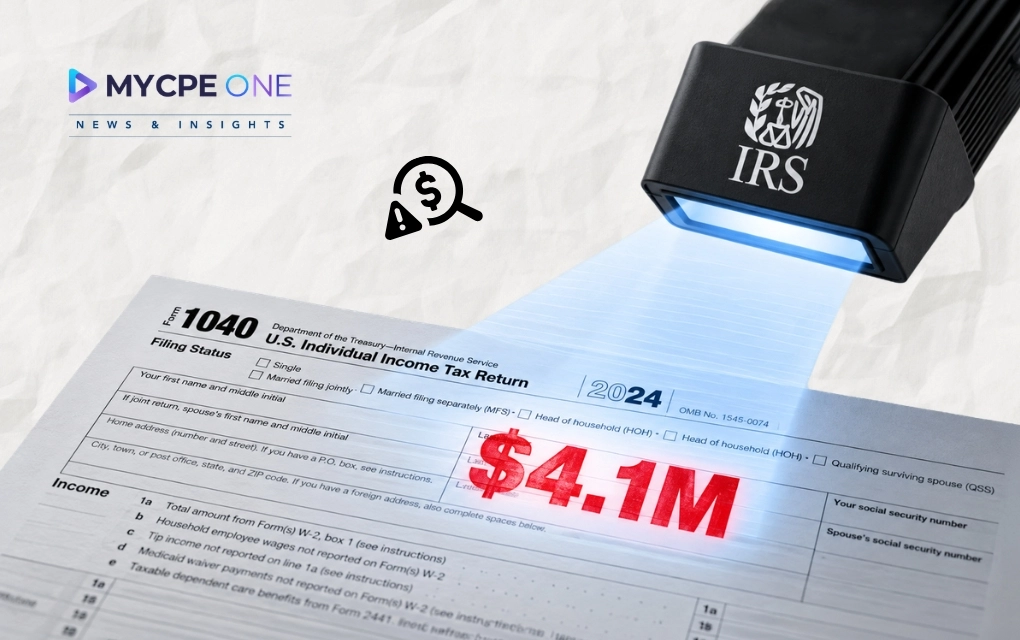
Dr. Peter Nwoke, a Grosse Pointe Woods physician, has been convicted by a federal jury for underreporting over $2 million in taxable income and illegally selling opioid prescriptions. The case highlights the intersection of financial misconduct, healthcare oversight, and the opioid crisis, raising urgent questions for CPAs, auditors, and compliance professionals in the healthcare sector and showing the increasing scrutiny by regulators on cash flows, tax records, and business structures connected to controlled substances.
A tax return usually tells a story. In Detroit, federal prosecutors argued that a Grosse Pointe Woods physician spent years writing a dangerous one hidden income, opioid prescriptions, shell-style corporations, and millions in cash moving through the shadows. After a federal jury conviction, the case against Dr. Peter Nwoke has grown beyond one physician or one fraudulent filing. It has cracked open an urgent conversation about where financial misconduct, healthcare oversight, and America's opioid crisis meet and what it means for every CPA, auditor, and compliance professional serving healthcare clients today.
Federal prosecutors alleged that Dr. Nwoke underreported more than $2 million in taxable income between 2011 and 2013, paying just $29,424 in taxes against a liability of roughly $849,088.
Key mechanics of the alleged scheme:
One statement from the trial will likely echo in compliance seminars for years. When an associate was raided by the FBI, Nwoke allegedly said: "They'll never get me, because I keep my paperwork together." Modern enforcement doesn't collapse over missing paperwork. It collapses when the numbers stop making sense together.
Yes, and enforcement caught up fast. In the early years of the epidemic, agencies focused on prescription volume and illegal distribution. Today, regulators follow the money first. Tax records, cash deposits, reimbursement claims, and entity structures often surface patterns before criminal drug charges even emerge.
What makes this case a signal, not an outlier:
When large cash flows move through fragmented business structures tied to controlled substances, regulators don't look away. They lean in.
Because financial evidence is easier to establish than clinical misconduct and prosecutors know it. IRS Criminal Investigation played a central role alongside multiple federal agencies in this case. That's not a coincidence. It reflects a deliberate, national enforcement strategy.
The walls between regulatory silos are coming down:
For firms serving healthcare clients, the challenge is real. Even fully legitimate practices now face heightened scrutiny around:
As one healthcare forensic consultant recently put it: "Every medical practice now needs the documentation discipline of a public company." That's not hyperbole anymore.
The trajectory says yes. This conviction lands during a period of expanding, coordinated federal healthcare fraud enforcement. AI tools now help investigators flag abnormal billing patterns, suspicious prescription volumes, and tax discrepancies at a pace that far outpaces manual review.
Practices at elevated risk carry several common traits:
The pressure won't stop with physicians. Banks, accounting firms, compliance consultants, billing companies, and payroll providers are increasingly expected to identify unusual activity early. Expanded beneficial ownership reporting rules and anti-money laundering requirements only raise the stakes. At the same time, smaller independent practices already stretched thin by staffing shortages, reimbursement disputes, and administrative overload face a real tension: more compliance layers at a moment of operational strain. That's a genuine policy challenge one regulators and providers haven't resolved.
The professional lesson from this case is direct: operational transparency now matters as much as technical compliance. A legally valid business structure won't protect a client if revenue flows, ownership records, prescribing patterns, and tax filings don't align logically. When threads look loose, regulators pull them.
Healthcare clients need stronger frameworks across:
One deeper insight worth stating plainly: financial misconduct typically surfaces before broader operational misconduct becomes visible. Tax irregularities, hidden entities, and unexplained deposits are often early warning signs, not isolated mistakes. Firms that treat them as the latter are behind the curve.
The conviction of Dr. Peter Nwoke closes one chapter. But the larger story about how tax enforcement, healthcare oversight, and financial crime are converging is still being written. For professionals across accounting, healthcare, and finance, the message is clear: if the numbers, prescriptions, and paperwork tell different stories, someone will eventually notice. And increasingly, they notice sooner.
Until next time…
Don’t forget to share this story on LinkedIn, X and Facebook
Subscribe now for $199 and get unlimited access to MYCPE ONE, from CPE credits to insights Magazine
📢MYCPE ONE Insights has a newsletter on LinkedIn as well! If you want the sharpest analysis of all accounting and finance news without the jargon, Insights is the place to be! Click Here to Join
You’ve reached the 3 free-content piece limit. Unlock unlimited access to all News & CPE resources.
Subscribe Today.
Already have an account?
Sign In