Join 250,000+
professionals today
Add Insights to your inbox - get the latest
professional news for free.
Join our 250K+ subscribers
Subscribe17 MAR 2026 / ACCOUNTING & TAXES
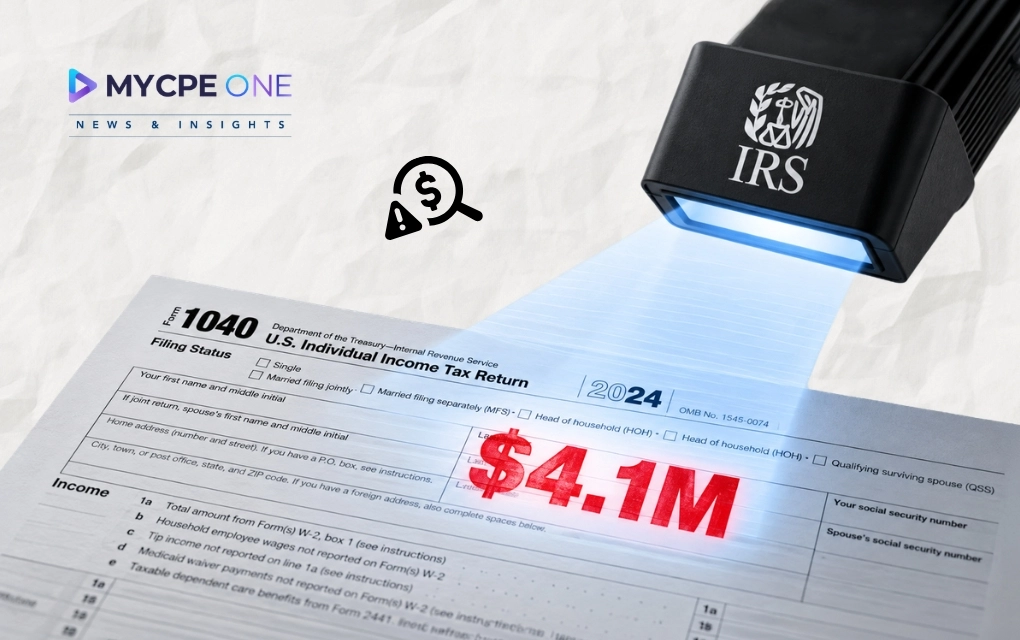
Coca-Cola is in a dispute with the IRS regarding the allocation and tax treatment of revenues from international operations. The company's case has been influenced by a recent court ruling in favor of 3M that limited the IRS's ability to reallocate income, potentially setting a precedent that could impact the interpretation of tax law and create uncertainty for multinational corporations.
Every tax professional has seen it. A client walks in with a position they “felt comfortable with” years ago, only to have the IRS revisit it with a completely different lens. Now scale that up to Coca-Cola, layer in cross-border IP, and add a Supreme Court decision that quietly rewrote how courts read tax law. That is where we are right now. This is not just a corporate tax dispute. It is a stress test for how far the IRS can go under Section 482, and whether courts are finally ready to say, “Hold on, let’s read the statute ourselves.”
Let’s rewind.
Coca-Cola’s dispute traces back to a long-standing arrangement with the IRS from the late 1980s through the mid-1990s. The company and the IRS agreed to a “10-50-50” profit split model for its international operations. Coca-Cola earned a fixed margin, while residual profits were split with foreign affiliates that handled production and marketing. Fast forward to the 2007 to 2009 tax years. The IRS changed its approach, ditched the prior framework, and applied the Comparable Profits Method. The result: massive reallocations of income tied to intangible assets. The numbers are not small. The Tax Court upheld roughly $2.7 billion in deficiencies. With interest, exposure climbed to around $6 billion, which Coca-Cola has already paid under protest. If the IRS extends its method through 2024, the total could reach $18 billion.
Now enters 3M.
In October 2025, the Eighth Circuit ruled that the IRS cannot reallocate income under Section 482 if a taxpayer does not actually control that income. In 3M’s case, Brazilian law capped royalty payments at 1% of revenue. The IRS still tried to allocate more. The court said no, citing a basic principle: no dominion, no income. Coca-Cola immediately pointed to this decision, arguing that similar “blocked income” logic should apply to its own case. On paper, it sounds like a solid hook. In practice, it is not that clean.
Here is where things get messy, and honestly, this is where most transfer pricing disputes live. 3M had a clear legal barrier. Brazilian law physically blocked the payment of additional royalties. That made the argument straightforward: you cannot tax income that cannot legally be received. Coca-Cola’s situation is more nuanced. There were caps in Brazil, but not an absolute block. The case leans heavily on economic substance, functions, risks, and ownership of intangibles. In other words, it is less about legal impossibility and more about valuation and allocation. That distinction matters.
The DOJ has already pushed back, telling the Eleventh Circuit not to apply 3M broadly. Their argument is simple: Coca-Cola is trying to stretch a case about legal restrictions into one about pricing methodology. That is a different ballgame. And they are not wrong to draw that line. Even practitioners are split. Some see 3M as a pathway. Others think Coca-Cola’s reliance on old agreements and economic arguments makes the connection weaker. If you have ever argued a transfer pricing position with incomplete comparables, you know the feeling. You think you have a strong case, but there is always that one variable that could flip the outcome.
This is the part that should get every CPA’s attention. The 3M decision was not just about blocked income. It was one of the first major tax cases applying the Supreme Court’s 2024 Loper Bright ruling. That decision overturned Chevron deference, which for decades required courts to defer to agency interpretations of ambiguous statutes. Now, courts must determine the “best reading” of the law themselves. That is a big deal. Section 482 is famously short and broad. For years, the IRS filled in the gaps through regulations and enforcement. Courts largely went along with it. Loper Bright changes that dynamic.
In 3M, the Eighth Circuit essentially said: " We are not deferring to Treasury, we are reading the statute directly. And when we do that, “income” means something you actually control. That is a shift in tone. Coca-Cola is leaning heavily on this argument in its appeal. You can almost hear the strategy: if courts are no longer deferring, maybe we can reopen issues that were previously settled in favor of the IRS. But here is the catch. Independent interpretation cuts both ways. Judges are not bound to follow 3M, especially in a different circuit with different facts.
So yes, Loper Bright gives taxpayers more room to push back. But it also introduces more uncertainty. And as any audit partner will tell you, uncertainty is where disputes thrive.
If the Eleventh Circuit sides with Coca-Cola, we could be looking at a circuit split. That usually means one thing: the Supreme Court steps in. And that would not just be about Coca-Cola. Think bigger. Meta, Airbnb, Eaton, and other multinationals are dealing with similar transfer pricing issues tied to intellectual property and cross-border royalties. A ruling that limits the IRS’s authority under Section 482 could ripple across billions of dollars in tax positions. It also raises practical questions for firms advising clients today. Do you revisit transfer pricing policies in jurisdictions with payment restrictions? Do you document legal barriers more aggressively? Do you take a more assertive position knowing courts may scrutinize IRS authority more closely? There is no one-size answer. But ignoring this trend would be a mistake.
At the same time, Coca-Cola itself is playing a long game. The company has been reshaping its operations, selling a $2.4 billion stake in Coca-Cola Consolidated and moving to offload a 41.52% stake in Coca-Cola Beverages Africa. It is also eyeing growth markets like India, which could soon become its third-largest by volume. But here is the interesting part. Management has not gone all-in on acquisitions yet. They are waiting for tax clarity. That tells you everything. Even for a company of this scale, unresolved tax exposure can put the brakes on strategic decisions.
Right now, nobody is popping champagne. Coca-Cola has $6 billion tied up and potentially much more at stake. The IRS is defending a long-standing interpretation of its authority. Courts are stepping into unfamiliar territory post-Loper Bright. If you zoom out, this feels less like a single case and more like a reset. For years, Section 482 operated with broad administrative discretion. Now, courts are taking a closer look at what the statute actually allows. That is a healthy check, but it also creates a period where outcomes are harder to predict.
There is an old line from Benjamin Graham: “The essence of investment management is the management of risks, not the management of returns.” The same applies here.
For tax professionals, this is not about picking a winner between Coca-Cola and the IRS. It is about understanding how the rules of the game are shifting, and what that means for the next audit, the next restructuring, or the next cross-border deal. Because if there is one thing this case makes clear, it is this: when courts start reading the fine print themselves, everyone needs to go back and check their assumptions. And maybe keep a little extra documentation handy, just in case.
Until next time…
Don’t forget to share this story on LinkedIn, X and Facebook
Subscribe now for $199 and get unlimited access to MYCPE ONE, from CPE credits to insights Magazine
📢MYCPE ONE Insights has a newsletter on LinkedIn as well! If you want the sharpest analysis of all accounting and finance news without the jargon, Insights is the place to be! Click Here to Join
You’ve reached the 3 free-content piece limit. Unlock unlimited access to all News & CPE resources.
Subscribe Today.
Already have an account?
Sign In