MYCPE ONE
MYCPE ONE LOGO

Join 250,000+
professionals today

Add Insights to your inbox - get the latest
professional news for free.

MYCPE ONE insights

Optimum’s Debt Crisis Just Took a $4 Billion Tax Turn

Join our 250K+ subscribers

Join our 250K+ subscribers

Subscribe

17 JUN 2026 / ACCOUNTING & TAXES

Optimum’s Debt Crisis Just Took a $4 Billion Tax Turn

Optimum’s Debt Crisis Just Took a $4 Billion Tax Turn

In most restructuring fights, the tax partner arrives after the bankers have already worn out the spreadsheet. In Optimum Communications’ creditor fight, tax has walked in early, pulled up a chair, and made the room quiet. That is the oddity here. The headline says bondholders face a possible $4 billion tax hit. The deeper story says something more useful for CPAs, controllers, tax directors, and audit teams: debt structure, entity structure, and tax consolidation can decide who actually gets paid when leverage stops behaving.

How did Optimum stack $26B?

Optimum did not wake up with a debt problem. It bought one, built on it, refinanced it, and then met a much tougher credit market. In May 2015, Altice agreed to buy 70% of Suddenlink, then the seventh-largest U.S. cable operator, in a deal valuing Suddenlink at $9.1 billion. Altice said the transaction would use $6.7 billion of new and existing debt at Suddenlink, plus a $500 million vendor loan note, $1.2 billion of Altice cash, and rollover equity from BC Partners and CPP Investment Board. Then Altice went bigger. In September 2015, it announced the Cablevision acquisition at a $17.7 billion enterprise value. Altice said it would fund that transaction with $14.5 billion of new and existing debt at Cablevision, cash on hand at Cablevision, and $3.3 billion of Altice cash. That deal gave Altice a dense New York metro cable footprint, the Optimum brand, and a much larger U.S. presence. It also added another heavy layer to the balance sheet.

The original thesis made sense on paper. Cable broadband threw off cash, customers paid monthly, and management expected synergies. That was the “down to brass tacks” pitch: cut costs, invest where needed, and let stable broadband cash flow carry the debt. The problem, as Benjamin Graham might have put it, is that a “margin of safety” needs room for reality. Cord-cutting, broadband competition, fiber upgrades, higher rates, refinancing risk, and operating pressure all hit the model. By March 31, 2026, Optimum reported consolidated gross debt of $26.537 billion and net debt of $25.488 billion. Its CSC Holdings restricted group alone had $21.780 billion of gross debt, $21.200 billion of net debt, and LTM EBITDA of $1.002 billion, putting CSC’s LTM net leverage at 21.2x. That is not a capital structure. That is a stress test with a logo.

Why do creditors want CSC?

The fight centers on CSC Holdings, not just Optimum’s public parent company. Optimum, formerly Altice USA, changed its corporate name on November 7, 2025, and moved its NYSE ticker from ATUS to OPTU on November 19, 2025. New name, same debt problem. CSC matters because it carries most of the debt. As of March 31, 2026, Optimum said CSC had $21.8 billion of funded debt, including about $5.0 billion of loans and $16.8 billion of notes. About $6.2 billion matures in 2027, with $4.1 billion due in April 2027 alone.

Creditors want CSC because that is where their claims, borrower value, and recovery prospects sit. Optimum says creditors holding about 99% of CSC debt entered a cooperation agreement in June 2024. The company says that pact blocks individual creditors, or smaller groups, from cutting separate restructuring or financing deals with CSC. For a distressed borrower, that removes a key option: buying time by negotiating with parts of the creditor stack. One important distinction: lenders are not literally asking the IRS for deconsolidation. They want remedies at CSC, potentially through foreclosure, bankruptcy, or a debt-for-equity swap. Deconsolidation would arise as a tax consequence if those remedies change who owns CSC or its assets.

The IRS Wants Its Cut

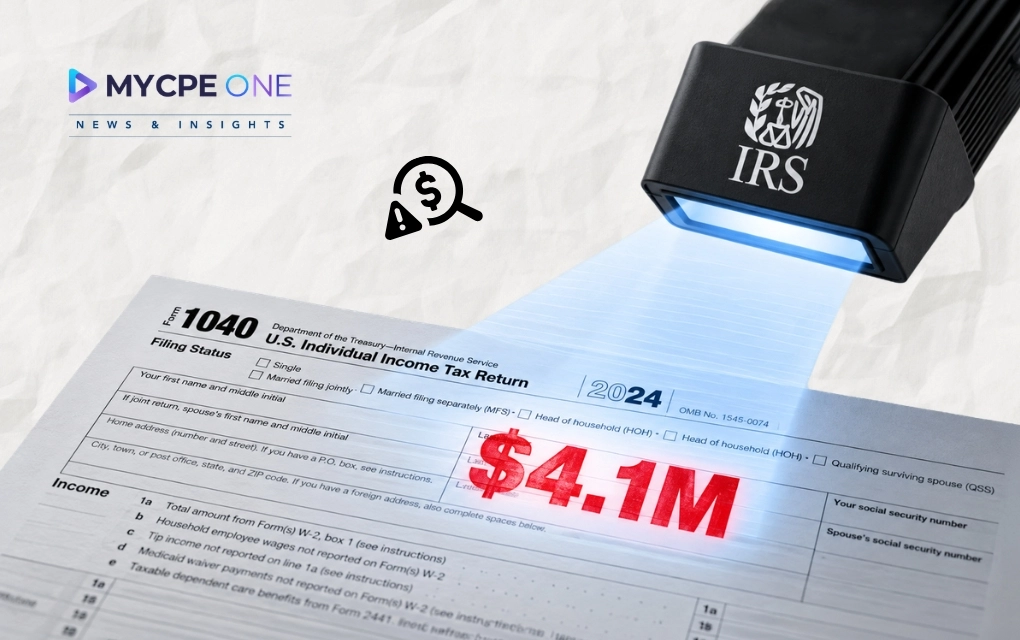
Optimum says most of its operations sit in subsidiaries owned directly or indirectly by CSC Holdings, while Optimum itself does not guarantee CSC debt. If creditors force a debt-for-equity swap, foreclosure, or similar exchange where CSC debt gets forgiven or reduced for CSC assets or equity, CSC could leave Optimum’s consolidated tax group. That exit could turn deferred tax items into current tax bills. Under consolidated return rules, including Treasury Reg. 1.1502-13, intercompany gains and related tax items can stay deferred while entities remain in the group. Deconsolidation can unlock them. Optimum estimates the liability could exceed $4 billion, with Optimum, CSC, and related subsidiaries potentially jointly and severally liable under Treasury Reg. 1.1502-6.

The key point: this is not a penalty on creditors. It is a tax consequence of changing ownership and wiping out debt. If creditors take CSC value but trigger the tax bill, part of their recovery could move straight to the IRS.

Why does deconsolidation create tax?

Optimum says much of its business sits in subsidiaries owned through CSC Holdings, while the parent does not guarantee CSC debt. If creditors take CSC assets or equity through foreclosure, bankruptcy, or a debt-for-equity swap, and CSC debt gets reduced or forgiven, CSC could leave Optimum’s consolidated tax group. That separation can turn deferred tax items into current income: intercompany gains, basis adjustments, excess loss accounts, cancellation-of-debt effects, and deemed consideration. Optimum estimates the bill could exceed $4 billion, with Optimum, CSC, and related subsidiaries potentially jointly and severally liable. In plain terms, creditors may win CSC value, then watch part of the recovery go to the IRS.

What comes after the tax memo?

The future has three tracks, and none looks clean.

  • First, Optimum wants a consensual restructuring. The company says the tax risk could fall materially if CSC debt holders receive equity interests in Optimum, rather than CSC assets or CSC equity.
  • Second, creditors may challenge the tax analysis. They may argue the $4 billion estimate overstates the risk, depends on assumptions that will not hold, or serves mainly as negotiating pressure.
  • Third, the creditor cooperation fight may shape future distressed deals. Optimum sued creditors including Apollo, Ares, and BlackRock, claiming they used a cooperation agreement to freeze the company out of the U.S. credit market.
  • For CPA firms, this is not just Wall Street theater. Imagine a regional firm advising a sponsor-backed broadband company with multiple subsidiaries, debt at one borrower, assets in another, and a parent that files consolidated returns.

The Takeaway

Optimum’s tax threat only makes sense because the debt sits where it sits. The leverage came from acquisition-era optimism and years of refinancing. The creditor pressure comes from CSC’s maturity wall and weak recovery math. The tax bill appears because a forced transfer of CSC value could break the consolidated tax group and unlock deferred taxable items. Cash gets attention. Collateral gets argued over. In this fight, tax may decide whether the recovery model survives first contact with the Code.

Until next time…

Don’t forget to share this story on LinkedIn, X and Facebook

Subscribe now for $199 and get unlimited access to MYCPE ONE, from CPE credits to insights Magazine

📢MYCPE ONE Insights has a newsletter on LinkedIn as well! If you want the sharpest analysis of all accounting and finance news without the jargon, Insights is the place to be! Click Here to Join

Unlock Annual Access to News & CPE Subscription

You’ve reached the 3 free-content piece limit. Unlock unlimited access to all News & CPE resources.
Subscribe Today.

News & Insights

  • Exclusive News & Insights
  • Latest Regulatory Updates
  • Accounting Industry Trends
  • Expert Insights
  • AI-Driven Audio & Summaries
  • Infographics & Videos
  • CPE-Approved Articles
  • Digital Magazine
  • Benchmarking Insights

Unlimited CPE Access for 1 Year

  • 15,000+ Hours of Content
  • 500+ Subject Areas
  • Mandatory Ethics Courses
  • 250+ Compliance Packages
  • 50+ Virtual Conferences and Events Access
  • Format: Live, Audio, Video, E-Books
  • Audio Based Courses & Podcasts
  • Add External Certificates with AI
  • AI Compliance Tracking and Report
  • Instant Certification and Fast Reporting
  • Mobile App Access (iOS and Android)
  • Dedicated Support System
  • Practical Training Programs
  • AI Academy Access
  • Tax Academy Access
  • Audit Academy Access
  • Leadership Academy Access