Join 250,000+
professionals today
Add Insights to your inbox - get the latest
professional news for free.
Join our 250K+ subscribers
Subscribe17 DEC 2025 / ACCOUNTING & TAXES
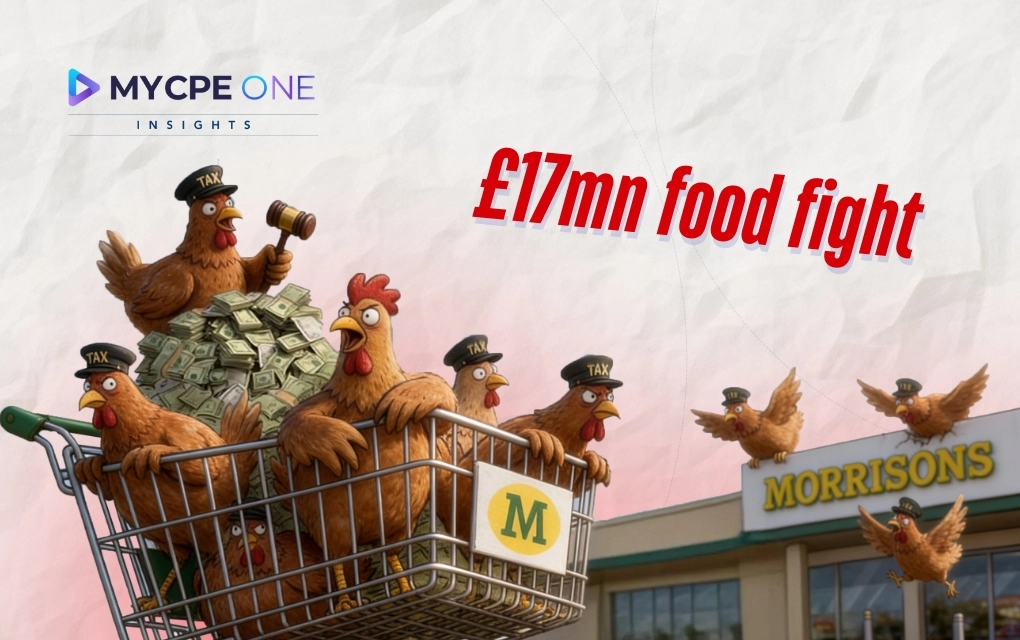
After a 13-year legal battle, Morrisons officially lost its tax case regarding its hot rotisserie chickens, which owe a VAT charge leading to a £17 million tax bill for the supermarket. This verdict may affect profits but could also generate customer goodwill as the company fought to keep prices lower, and it sets a precedent for taxing and offering hot food in UK supermarkets.
Sometimes, a corporate showdown smells less like high finance and more like a Sunday roast gone wrong. After 13 long years of legal sparring, Morrisons just found out that its rotisserie chickens are officially, legally, and undeniably hot. Not “kind of warm.” Not “eat it later.” Hot enough to trigger a full 20% VAT charge. The verdict handed Morrisons a £17 million tax bill that is now locked in, payable, and very real. But zoom out, and this is not just about chicken. It is about how tax law collides with razor-thin grocery margins, how branding can soften a financial hit, and whether losing a court case can still be a savvy long game. Let’s break it down, past, present, and what comes next.
To get here, you have to rewind to 2012 and the moment George Osborne dropped what became infamous as the “pasty tax.” The logic was simple. Hot takeaway food should be taxed like a service. The execution? A mess. Public backlash forced the Treasury to retreat. Instead of taxing anything above ambient temperature, HMRC drew a fuzzy line. Food deliberately kept hot in heated cabinets would attract VAT. Food that was only “incidentally hot” would not. That gray area turned into a legal buffet. UK courts have since spent years debating food identity crises that sound absurd but carry real money.
Is a Jaffa Cake a cake or a biscuit? Are flapjacks cakes or confectionery? And now, is a rotisserie chicken hot because it is meant to be hot or just because heat exists? Morrisons leaned into that ambiguity. The company argued its chickens were sold as freshly cooked, not hot takeaway, and that most customers ate them later, cold or reheated. HMRC pushed back hard. Cue a 13-year slow roast through the courts.
When the ruling finally landed, it was blunt. The chickens are hot, and Morrisons knew it. Several details sealed the deal:
Expert witnesses testified that even after two hours, a bagged chicken would still be between 42 and 45 degrees Celsius. Without the bag, it would still hover around 31.8 degrees. Either way, not exactly a cold deli item. The court ruled these were “more than incidentally hot” and therefore subject to VAT as food supplied in the course of catering. That one phrase unlocked the £17 million liability, covering VAT from 2017 to 2020. No wiggle room. No do-overs. End of debate.
Let’s be clear, £17 million is not pocket change for a supermarket. That figure represents roughly half of Morrisons’ 2024 net profit excluding exceptionals. With EBITDA margins around 5%, this stings. Here is the math that makes finance folks sweat. To recoup £17 million in profit, Morrisons would need roughly £340 million in additional sales. In the UK grocery market, worth about £200 billion annually, that translates to a 0.2% increase in market share. On paper, that sounds tiny. In reality, that is brutal competition territory. Morrisons already sits fifth in the market, squeezed between giants like Tesco and Sainsbury’s on one side and ruthless discounters Aldi and Lidl on the other. Every basis point is a street fight. So, financially, this hurts. No way around it.
Here is where things get interesting. Morrisons did not just lose a tax case. It gained a narrative. For over a decade, it can credibly say it fought HMRC to keep prices lower for customers. In the middle of a cost-of-living crunch, that message hits different. As the Financial Times pointed out, sometimes showing up to a court fight matters almost as much as winning. Supermarkets are not just selling groceries. They are selling trust. Loyalty. The sense that they are batting for shoppers, not the taxman.
If even a small slice of customers reward Morrisons with slightly bigger baskets or more frequent visits, that elusive 0.2% market share starts to look doable. Suddenly, the £17 million feels less like a disaster and more like an unofficial marketing spend. Call it damage control, call it brand positioning, call it playing the long game. Either way, Morrisons may have turned an L into something that is not a total wipeout.
This ruling does more than clip Morrisons. It tightens the rules for everyone.
For Morrisons, the real test is execution. Can it turn public goodwill into lasting loyalty? Can it absorb higher costs without getting undercut by discounters? Can it prove that losing a legal fight does not mean losing customers? That answer will not come from a judge. It will come at the checkout line.
On the surface, this looks like a clean loss. Morrisons pays £17 million, the taxman wins, case closed. But business is not just about balance sheets. It is perception, positioning, and timing. Morrisons stood up to HMRC, lost with a straight face, and walked away with a story customers understand. In an industry where every penny and every shopper counts, that story might end up being worth more than the tax bill itself. The chicken got taxed. The brand? Still scrapping.
Until next time…
Don’t forget to share this story on LinkedIn, X and Facebook
Subscribe now for $199 and get unlimited access to MYCPE ONE, from CPE credits to insights Magazine
📢MYCPE ONE Insights has a newsletter on LinkedIn as well! If you want the sharpest analysis of all accounting and finance news without the jargon, Insights is the place to be! Click Here to Join
Earn CPE Credits by Simply Reading Articles – Starting at Just $199/Year!
50 of the Top 200 Accounting Firms trust MYCPE ONE for their team’s learning—why not you? With 15,000+ approved content hours, 500+ emerging subject areas, and automated compliance tracking, staying ahead has never been easier.
We don’t just create boring tax, accounting, and audit content—our platform offers engaging, insightful, and trending material that your team will actually enjoy while earning CPE credits.
Sign up today, go through the comprehensive list of features and unlock unlimited learning!
You’ve reached the 3 free-content piece limit. Unlock unlimited access to all News & CPE resources.
Subscribe Today.
Already have an account?
Sign In