Join 250,000+
professionals today
Add Insights to your inbox - get the latest
professional news for free.
Join our 250K+ subscribers
Subscribe17 FEB 2026 / ACCOUNTING & TAXES
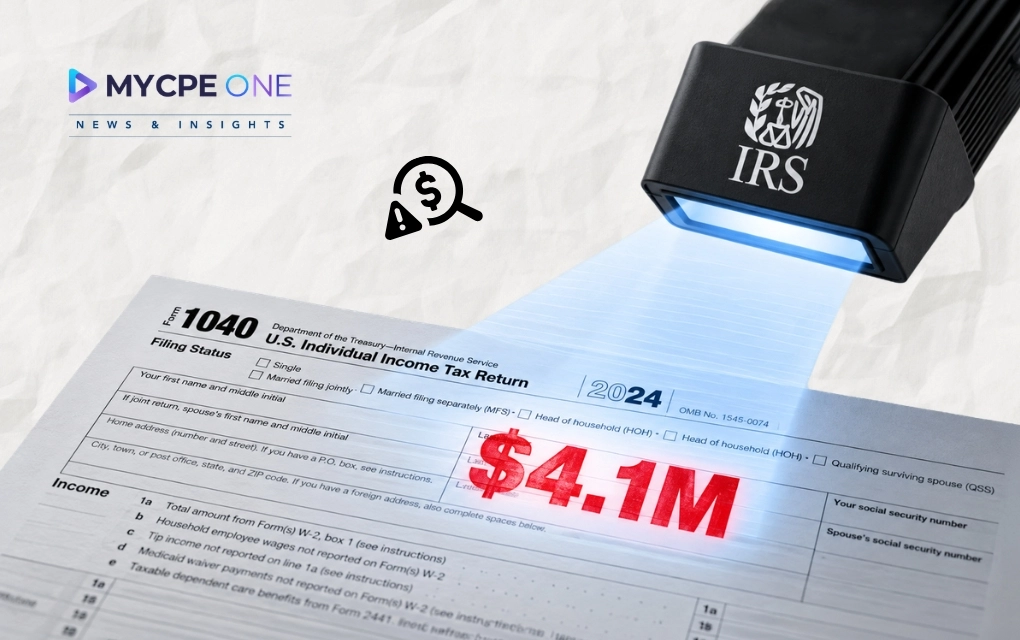
Orlando tax preparers Juan Humberto Garcia and Marcos Yariel Figueroa, alongside Garcia’s company, The Tax Master of BVL Inc., have been temporarily penalized for preparing federal returns for others by a federal judge in the Middle District of Florida. The accused allegedly fabricated or inflated deductions and business losses, leading to this civil enforcement action, and as a result, the Justice Department is seeking a permanent injunction to halt their operations.
Tax season has a smell to it. Coffee, printer, and a little bit of panic. Most of us live in that world for three months straight, trying to get clean, defensible returns out the door. Then a case like this lands in the middle of filing season and reminds everyone what happens when someone treats a tax return like a scratch-off ticket. A federal judge in the Middle District of Florida has preliminarily barred Orlando tax preparers Juan Humberto Garcia and Marcos Yariel Figueroa, along with Garcia’s business, The Tax Master of BVL Inc., from preparing federal returns for others. The Justice Department is seeking a permanent injunction, but for now, the court has said: stop. Immediately. This is not a criminal conviction. It is a civil enforcement action. But the message is loud.
The government’s theory is straightforward. Over multiple tax years, the preparers allegedly fabricated or inflated deductions and business losses to reduce tax liability and boost refunds. The two primary tools were not exotic credits or obscure code sections. They were the basics:
If you review enough returns, you know why these categories matter. They are common. They feel ordinary. And for many taxpayers, they are hard to mentally benchmark. A client drops off a shoebox or uploads a PDF folder. The preparer inputs numbers. The client signs. Refund hits the bank account. Everyone moves on. According to court filings, more than a dozen customers testified they did not recognize the deductions and losses claimed on their returns. That pattern, not just one odd return, is what caught attention. This was not allegedly about one aggressive interpretation. It was about repetition. And repetition is what analytics systems love to catch.
A preliminary injunction is not routine. Courts call it an extraordinary remedy. To get one, the government must show a likelihood of success and that harm will occur if the conduct continues. The judge found that the standard was met. One key factor: the government alleged that the preparers continued filing problematic returns even after being served with the lawsuit. From a judicial perspective, that is gasoline on the fire. Judges tend to lose patience when conduct continues during active litigation. The court also focused on the practical burden. Every allegedly inflated return creates future work: audits, assessments, appeals, and collections. That drains IRS resources and places taxpayers in a mess they did not anticipate. And here is the uncomfortable reality. When the IRS adjusts a return, the taxpayer pays. Interest runs. Penalties stack up. Saying, “My preparer handled that,” rarely changes the bottom line.
The order does more than tell them to stop filing returns. It bars them from preparing or assisting with federal tax returns for others. It prohibits owning or working for a tax prep business. It restricts the use or transfer of PTINs and EFINs. It even blocks transferring customer lists. That scope tells you something important. The court is not just trying to correct errors. It is trying to prevent a business model from continuing under a different name. In enforcement terms, this is containment. For practitioners who operate clean firms, this may feel extreme. But from the government’s point of view, volume return preparation combined with systematic inflation of deductions presents ongoing risk. Shut it down now, sort out liability later.
This is where the story stops being about Orlando and starts being about your office.
Benjamin Graham wrote that investing is about managing risk, not chasing returns. Tax practice runs on the same principle. If refund maximization starts outrunning documentation and consistency, the firm is taking a bet it may not survive.
Strip away the legal language, and this case is simple. The government alleges that a tax prep business systematically inflated deductions and losses to increase refunds. The court saw enough evidence to pause the operation before another filing season compounded the damage. For professionals, the lesson is not moral grandstanding. It isan operational discipline. Tax preparation is not about squeezing every possible dollar out of the return. It is about filing something you can defend in a conference room with an IRS agent and a stack of source documents. In busy season, it is tempting to move fast and trust the workflow. That is when shortcuts sneak in. The Orlando injunction is a reminder that the basics still matter. Clean inputs. Documented deductions. Supervisory review. Pattern monitoring. In this profession, your name goes on the return. That signature is not just ink. It is a bet that you can stand behind every number. Make sure you can.
Until next time…
Don’t forget to share this story on LinkedIn, X and Facebook
Subscribe now for $199 and get unlimited access to MYCPE ONE, from CPE credits to insights Magazine
📢MYCPE ONE Insights has a newsletter on LinkedIn as well! If you want the sharpest analysis of all accounting and finance news without the jargon, Insights is the place to be! Click Here to Join
You’ve reached the 3 free-content piece limit. Unlock unlimited access to all News & CPE resources.
Subscribe Today.
Already have an account?
Sign In