MYCPE ONE
MYCPE ONE LOGO

Join 250,000+
professionals today

Add Insights to your inbox - get the latest
professional news for free.

MYCPE ONE insights

The BDO Audits That Failed to Catch $26.6M

Join our 250K+ subscribers

Join our 250K+ subscribers

Subscribe

29 DEC 2025 / ACCOUNTING & TAXES

The BDO Audits That Failed to Catch $26.6M

The BDO Audits That Failed to Catch $26.6M

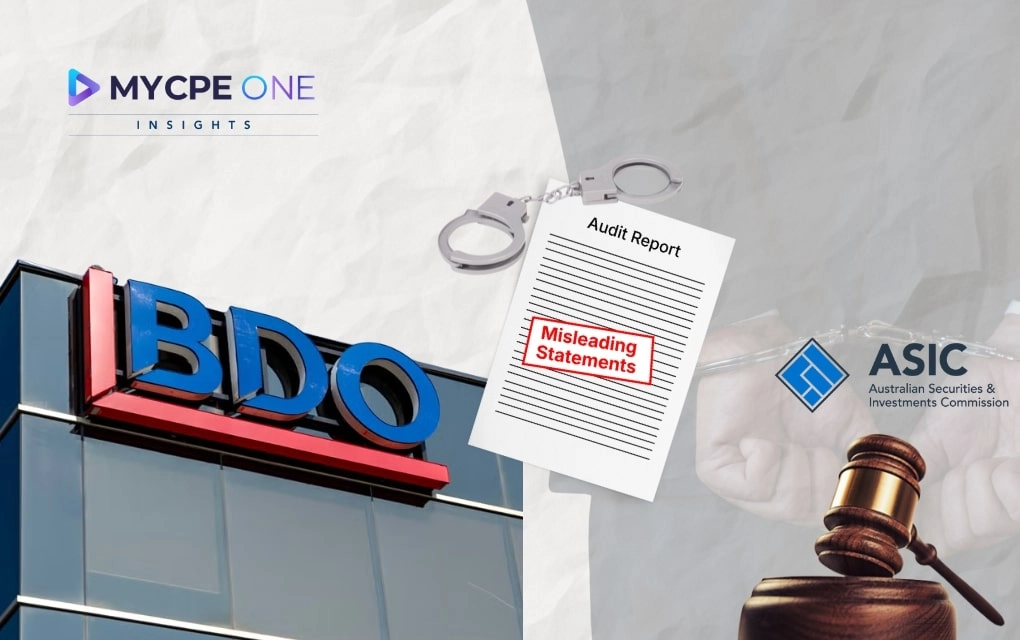
Audit opinions are meant to calm nerves. They are the professional equivalent of a seatbelt, quiet reassurance that someone kicked the tires and checked the math. That is why regulators rarely accuse them of being “materially false or misleading.” When they do, everyone in the audit world sits up straight. ASIC’s lawsuit against BDO Audit (WA) Pty Ltd and its director, Dean Just, over Dubber Corporation’s audit reports does exactly that. It turns a routine sign-off into a very public stress test of how audits can go wrong. At the center of the dispute is a question that refuses to stay theoretical. How does A$26.6 million, said to be safely tucked away in a term deposit, pass through multiple audits without triggering louder concerns? 

The Backstory Nobody Wanted 

Between the financial years ending 30 June 2020 and 30 June 2022, BDO Audit signed off on Dubber Group’s financial statements. Each audit report stated the usual trio: the accounts gave a true and fair view, the audits complied with Australian Auditing Standards, and the audit evidence obtained was sufficient and appropriate. Then came 1 March 2024. Dubber told the ASX that during a review of its half-year accounts to 31 December 2023, it identified inconsistencies tied to funds held by a third-party trustee. Those funds, supposedly held in a term deposit, may have been used for other purposes. In plain English, the cash was not available. 

Dubber disclosed a maximum exposure of A$26.6 million. On 9 April 2024, it went further, alleging its former CEO and the trustee were likely involved in unauthorized use of those funds. By 17 June 2025, Dubber’s subsidiary had launched Federal Court proceedings against BDO Audit (WA), seeking up to A$26,605,000 plus interest and costs. ASIC’s civil penalty action followed soon after. 

The Quiet Red Flags 

So where were the red flags? That is the million-dollar question, big time. Based on ASIC’s allegations and what has been publicly disclosed so far, several pressure points stand out: 

 Reliance on third-party trustees holding material cash balances. 

 Confirmation of cash and term deposits that may not have been independently verified. 

 Professional skepticism that ASIC says did not go far enough given the risks involved. 

Cash held off the balance sheet or controlled by third parties is a no-brainer risk area. Auditing standards are clear that existence and rights to cash require strong, direct evidence. Bank confirmations. Independent verification. Follow-ups when documentation looks thin or delayed. If a term deposit exists, proving it should not require guesswork or trust falls. 

The unanswered questions are the ones that tend to sting later. Was there too much reliance on management representations? Were confirmations indirect, incomplete, or accepted at face value? Did earlier clean audits make later years feel routine enough to let skepticism slide? ASIC’s position is blunt: the audits were not conducted in accordance with the standards. Mark Twain had a line auditors still live by. “It ain’t what you don’t know that gets you into trouble. It’s what you know for sure that just ain’t so.” 

Where Audit Leaks 

This case is less about one firm and more about how audit processes can quietly leak. Confirmation procedures that stop short. Comfort with recurring balances. Trust placed in third parties without enough backup. Zero chill from regulators when those habits collide with missing money. ASIC Deputy Chair Sarah Court made the regulator’s stance clear. Auditor misconduct remains a key enforcement priority. Confidence and trust sit at the core of financial markets, and investors rely heavily on audit opinions when making decisions. The alleged loopholes here are not exotic accounting tricks. They are basic execution risks. When evidence points to cash being somewhere else, the audit has to chase it down, even when it is awkward, time-consuming, or unpopular with management. 

For the Professionals 

For auditors, accountants, and finance leaders, this lawsuit is a clear warning shot. 

First, third-party arrangements deserve extra scrutiny. Trustees, escrow accounts, and funds held on behalf of companies should trigger enhanced procedures, not lighter ones. 

Second, documentation matters more than ever. If an audit file cannot clearly show how sufficient and appropriate evidence was obtained, the opinion is exposed, no matter how confident it sounded at signing. 

Third, recurring balances do not get a free pass. Just because cash was there last year does not mean it stays off-limits this year. Asking uncomfortable questions is part of the job, full stop. 

For finance teams, this is also a reminder that auditors are not insurance. Controls over cash, governance around trustees, and internal oversight have to stand on their own. When they fail, everyone pays for it. 

What Comes Next 

The Federal Court will now decide whether ASIC’s allegations stick and what penalties may follow. Regardless of the outcome, this case is already destined for audit training decks and partner meetings. Regulators are taking auditor conduct seriously and taking it up a notch. Boilerplate opinions without rock-solid evidence are no longer tolerated. Audits may be routine, but trust is earned every year. Miss the red flags once, and the cleanup can last a long time.

Until next time…

Don’t forget to share this story on LinkedIn, X and Facebook

Subscribe now for $199 and get unlimited access to MYCPE ONE, from CPE credits to insights Magazine

📢MYCPE ONE Insights has a newsletter on LinkedIn as well! If you want the sharpest analysis of all accounting and finance news without the jargon, Insights is the place to be! Click Here to Join

The Only All-in-One CPE & Learning Platform for CPA & Accounting Firms

Get everything you need for team learning and CPE compliance—starting at just $199 per user/year!

  • 15,000+ hours of CPE-approved content
  • Learning Management Software to track & manage learning
  • CPE compliance tracking for all 50 states & 100+ designations
  • Mobile app access with audio-based courses
  • CPE-approved articles (like the one you're reading!)
  • Practical staff training & assessments
  • Learning & Development services

Learn more or schedule a no-obligation call!

Unlock Annual Access to News & CPE Subscription

You’ve reached the 3 free-content piece limit. Unlock unlimited access to all News & CPE resources.
Subscribe Today.

News & Updates

  • Exclusive News & Insights
  • Latest Regulatory Updates
  • Accounting Industry Trends
  • Expert Insights
  • AI-Driven Audio & Summaries
  • Infographics & Videos
  • CPE-Approved Articles
  • Digital Magazine
  • Benchmarking Blogs

Unlimited CPE Access for 1 Year

  • 15,000+ Hours of Content
  • 500+ Subject Areas
  • Mandatory Ethics Courses
  • 250+ Compliance Packages
  • 50+ Virtual Conferences and Events Access
  • Format: Live, Audio, Video, E-Books
  • Audio Based Courses & Podcasts
  • Add External Certificates with AI
  • AI Compliance Tracking and Report
  • Instant Certification and Fast Reporting
  • Mobile App Access (iOS and Android)
  • Dedicated Support System
  • Practical Training Programs
  • AI Academy Access
  • Tax Academy Access
  • Audit Academy Access
  • Leadership Academy Access