Join 250,000+
professionals today
Add Insights to your inbox - get the latest
professional news for free.
Join our 250K+ subscribers
Subscribe16 JAN 2026 / ACCOUNTING & TAXES
The article discusses the impact of state tax policies on the decisions of college football players since the introduction of Name, Image, and Likeness (NIL) in 2021. Changes in incentives due to state taxation could influence where players choose to play, potentially skewing college football competitions.
I keep thinking about the sound of cleats on concrete. That dull, echoing knock when a team walks through a tunnel. No music yet. Just footsteps and breath and the low murmur of someone cracking a joke that nobody really laughs at. It reminds me of the first time I watched Friday Night Lights, the movie, not the show. There is that long pause before kickoff where nobody explains what is at stake. You just feel it. The weight. The waiting. Music comes later. So do slogans. Those show up once people need something to grab onto. Before that, there is usually silence. Or memory. Or ritual. A song you heard when you were seventeen that still hits you in the chest for reasons you cannot fully explain.
I have always thought that the interesting part of competition lives in that quiet stretch. Not the scoreboard. Not the fireworks. The moment when people decide, often subconsciously, what this place represents to them. Home. Escape. A shot at something bigger. Sometimes it is just a vibe. Sometimes it is money. Sometimes it is how much of that money you actually get to keep.
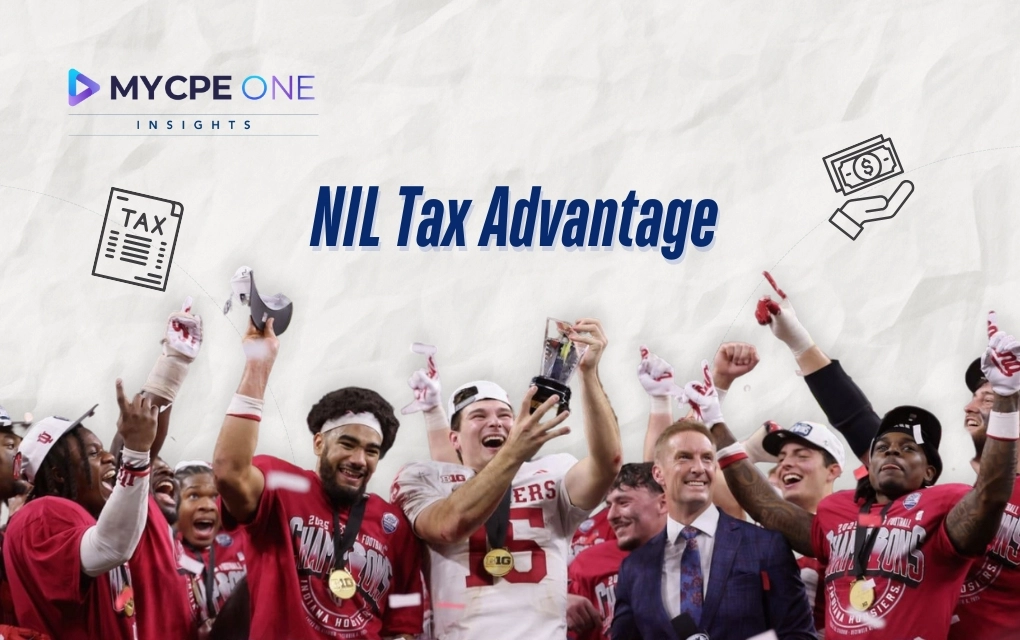
The Miami versus Indiana championship matchup feels strange in a way that is hard to pin down. Not strange like a fluke. Strange like a mirror held at a slightly wrong angle. These were not the teams most people circled back in August. Yet here they are, sharing the biggest stage in the sport. The obvious questions get asked first. Coaching. Culture. Transfer portal hits. Defensive schemes. Those are all real. They matter. But hovering behind them is a quieter question that feels more uncomfortable to say out loud. When players choose where to play now, what are they really choosing? Is it a playbook? A locker room culture? Or is it a spreadsheet they never show on camera? When NIL money turns into something that looks a lot like a salary, does geography quietly start doing some of the recruiting work?
This is not about whether that is good or bad. It is about whether it changes the meaning of “equal offers.” A million dollars is not always a million dollars. Sometimes it is closer to six hundred thousand. Sometimes it is a whole lot more. That difference does not show up on highlight reels, but it has a way of hanging around in the background, shaping decisions before anyone ever says “We ready.”
Charlie Munger used to talk about incentives as the most reliable explanation for human behavior. Not morality. Not intelligence. Incentives. People respond to what nudges them, even when they swear they are not paying attention. That idea works best when incentives are quiet. Loud incentives feel transactional. Quiet ones feel natural. They slide in under the door and rearrange the furniture while nobody is watching. State tax policy is one of those quiet incentives. It is not designed for college football. It is not marketed to recruits in official brochures. Yet it sits there, doing math in the background. After NIL became legal in 2021, that math started to matter more. NIL income is taxable income. Federal taxes apply everywhere. State taxes do not.
Florida takes zero percent. Indiana takes roughly 3%. California can take more than 13%. New York is not far behind. Nobody has to explain what that means. A player can feel it without fully articulating it. Same deal. Same headline number. Different bank balance. No drama. Just arithmetic. This lens does not explain everything. It rarely does. But once you see it, it is hard to unsee. Incentives do not need to be decisive to be influential. They just need to be there, patiently tilting the table.
Miami sits in Florida, a state with no income tax. Indiana sits in a state with one of the lowest flat rates in the country. That alone does not win games. But it shapes the environment in which games get won. There are hints that policymakers are starting to notice this, even if they are not saying it out loud. Arkansas quietly crossed a line recently by making NIL income exempt from state tax. No slogans. No victory lap. Just a small adjustment in the code that changes the math for anyone paying attention. It felt less like a sports move and more like a shrug from the system, as if to say, “Yes, this counts now.”
Take Miami’s quarterback situation. Carson Beck reportedly entered the season with an NIL valuation north of $4 million. After federal taxes, a player at that level already writes some painful checks. Add a high state tax, and the pain compounds fast. Playing in Florida means hundreds of thousands of dollars stay put each season. That is not pocket change. That is real money, even in a sport swimming in hype. Indiana does not get the zero percent headline, but its roughly 3% rate still lands far below most power conference states. Fernando Mendoza’s estimated $2.6 million NIL valuation likely triggers a state tax bill that stays below six figures. Compare that to California, and the gap gets uncomfortable quickly.
This is not theoretical. Research following the introduction of NIL suggests that teams in low tax jurisdictions saw measurable performance bumps, especially in power conferences. The numbers are not perfect. They never are. But the direction is consistent enough to make you pause. Recruiting has started to sound a little like free agency. Transfers bounce. Rosters churn. Donors grumble. Schools tweet about tax advantages like they just discovered a cheat code. It feels messy. It also feels very human. People chase upside. They chase comfort. They chase places where the math feels less hostile. Meanwhile, the games themselves still look like football. Sacks. Long drives. Turnovers that swing momentum. Indiana losing one fumble all season. Miami living in the backfield with nearly fifty sacks. None of that shows up on a tax return. Yet the path that led those players there might.
The first crack is donor fatigue. When NIL starts to feel like renting loyalty, some people step back. Troy Aikman saying he is done funding UCLA’s collective was not shocking. It felt inevitable. Fans want belief, not invoices. The second crack is complexity. NIL income gets taxed where services are performed. School payments, after the House v. NCAA ruling, could trigger jock taxes across multiple states. That means more filings, more compliance, more chances to mess it up. Quiet incentives become noisy once accountants get involved.
There is also the human side. Do players really think about taxes when they are eighteen or nineteen? Some do. Some do not. But agents do. Parents do. Collectives do. Incentives do not require universal awareness to work. They only need enough people in the room to care. And then there is the sport itself. When advantages live off the field, the risk is not collapse. It is drift. A slow shift where outcomes feel pre negotiated, even when they are not. Does that change how fans hear the fight songs? Does it dull the meaning of “refuse to lose”? Or does it simply add another layer to a game that has always been about more than the lines on the turf?
After the confetti settles, nobody will talk about marginal tax rates. They will talk about throws, tackles, mistakes, moments. Someone will play “Thunderstruck.” Someone will yell “One team, one dream.” The tunnel will echo again. Still, it is hard to shake the feeling that something subtle has shifted. Not broken. Shifted. Like when you rewatch an old movie and notice a line you missed the first time. The story did not change. Your awareness did. Maybe college football has always been about edges. Facilities. Television money. Recruiting footprints. Taxes just joined the list quietly, without asking permission. Or maybe they have always been there, hiding in plain sight, waiting for NIL to give them a reason to matter.
There is a line from Moneyball that sticks with me, even if it gets overused. “Adapt or die.” I do not love the drama of it. But the idea underneath feels right. Systems evolve. People follow incentives. Songs still play. Games still get decided on the field. The question is not whether this feels fair. The question is whether we are honest about what we are watching now. And whether, years from now, when someone hears a fight song echo through a concrete tunnel, they will remember the silence that came before it, or the math that followed after.
Until next time…
Don’t forget to share this story on LinkedIn, X and Facebook
Subscribe now for $199 and get unlimited access to MYCPE ONE, from CPE credits to insights Magazine
📢MYCPE ONE Insights has a newsletter on LinkedIn as well! If you want the sharpest analysis of all accounting and finance news without the jargon, Insights is the place to be! Click Here to Join
You’ve reached the 3 free-content piece limit. Unlock unlimited access to all News & CPE resources.
Subscribe Today.
Already have an account?
Sign In