Join 250,000+
professionals today
Add Insights to your inbox - get the latest
professional news for free.
Join our 250K+ subscribers
Subscribe28 JAN 2026 / ACCOUNTING & TAXES
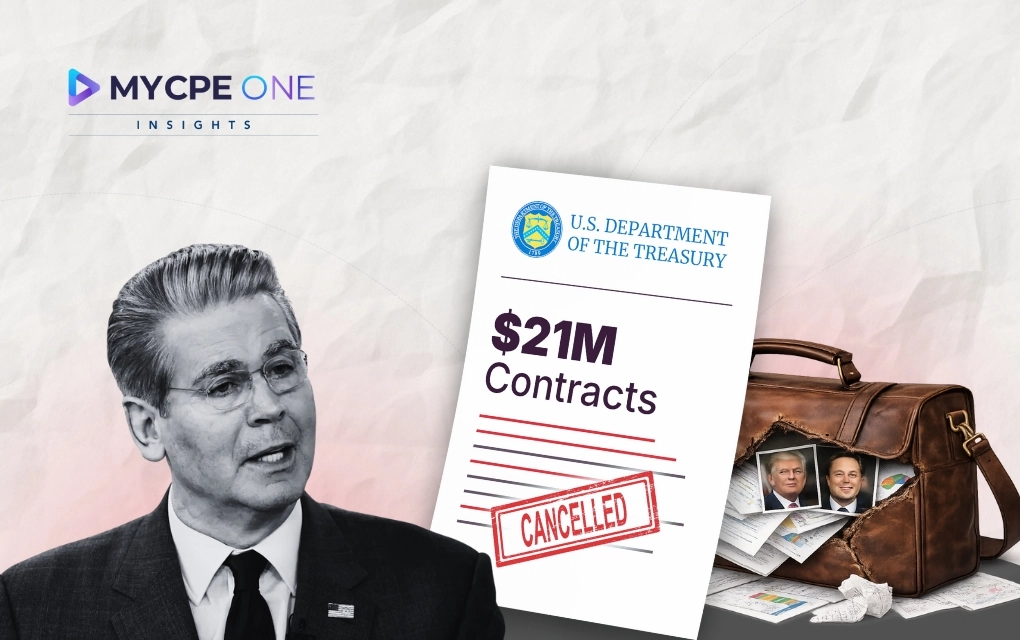
Charles Edward Littlejohn, a contractor for Booz Allen Hamilton at the IRS, perpetrated the largest IRS data breach in history, leaking sensitive tax information, including those of high-profile figures such as Donald Trump, Elon Musk, and Jeff Bezos, among others. The fallout led to the cancellation of $21m worth of contracts with Booz Allen by Treasury Secretary Scott Bessent, highlighting the importance of data security and internal systems checks within companies handling sensitive information.
What happens when the firm trusted to guard America’s most sensitive tax data gets blindsided from the inside? You don’t just get a breach, you get a full-blown credibility crisis. That is exactly what unfolded when Charles Edward Littlejohn, a Booz Allen Hamilton contractor embedded at the IRS, quietly pulled off what a federal judge later called “the biggest heist in IRS history.” The fallout took years to surface, but in January 2026, the hammer finally dropped. Treasury Secretary Scott Bessent cancelled $21 million in Booz Allen contracts, blaming “failed safeguards” and putting every federal contractor on notice. For accounting and compliance professionals, this is not just scandal watching. It is a case study in how trust erodes, how markets punish reputational risk, and how insider access has become the weakest link in data security.
This was not a smash-and-grab hack. It was slow, deliberate, and disturbingly methodical.
Between 2018 and 2020, Littlejohn worked as a Booz Allen contractor supporting IRS systems. According to prosecutors, he applied for the role specifically to access Donald Trump’s tax records, which he viewed as a civic mission. Once inside, he figured out how to search IRS databases using broad queries designed to avoid triggering internal alarms. He did not just peek. He extracted more than 15 years of tax data, quietly downloading massive files onto personal storage devices, including an iPod. The information went far beyond Trump. The New York Times published Trump’s returns showing years of zero federal income tax. ProPublica received data on Elon Musk’s stock transactions, Jeff Bezos’ gambling winnings, and audit histories tied to Warren Buffett and Michael Bloomberg.
The scope stunned regulators. Roughly 406,000 taxpayers were affected, many exposed indirectly through pass-through entities and K-1 filings. Prosecutors called the breach “unparalleled in IRS history.” Littlejohn pleaded guilty in October 2023 to unauthorised disclosure of tax return information under Internal Revenue Code Section 7213(a)(1). In January 2024, he received the maximum five-year prison sentence. The IRS sent apology letters to victims and faced congressional grilling over how a contractor walked out with the crown jewels. Booz Allen’s defense was blunt and consistent: the breach occurred on government systems, not Booz Allen infrastructure. The firm said it stores no taxpayer data and fully cooperated with investigators, helping secure Littlejohn’s conviction. Legally accurate or not, that argument did little to stop the reputational bleed.
Fast forward to January 26, 2026. Treasury Secretary Scott Bessent announced the cancellation of all Treasury Department contracts with Booz Allen Hamilton.
The numbers were precise:
“President Trump has entrusted his cabinet to root out waste, fraud, and abuse, and canceling these contracts is an essential step to increasing Americans’ trust in government,” Bessent said, adding that Booz Allen “failed to implement adequate safeguards” around confidential taxpayer data. On paper, the revenue hit looks like a rounding error. Booz Allen generates roughly $12 billion in annual revenue, with about 98% tied to government contracts. Losing $21 million represents roughly 0.04% of annual revenue.
Source: Financial Times
Wall Street did not shrug. Shares fell between 8% and 10% in two trading days, sliding from about $102 to $91. That wiped out more than $1 billion in market capitalization. This came on top of a broader 30-plus per cent decline since Trump’s return to office, compounded by layoffs tied to government shutdown disruptions. The message from investors was clear: trust risk is not linear. It compounds fast. Even Booz Allen’s reported financial support for Trump’s $400 million White House ballroom project offered zero insulation. When data trust breaks, relationships do not matter.
This was not a random cleanup. The move landed just as the 2026 tax season kicked off, when taxpayer sensitivity is at its peak. It also arrived amid a broader Trump administration push to crack down on waste, fraud, and abuse across federal agencies, with Elon Musk’s DOGE efficiency initiative sharpening scrutiny of contractors. For seasoned observers, the parallels are uncomfortable. Think EY and Wirecard. Think DWS hiring scandals. Once a firm becomes the example, every regulator piles on. Booz Allen’s insistence that the breach happened on government systems rings hollow to many compliance professionals. When your contractor can quietly siphon hundreds of thousands of tax records onto personal devices, the control environment failed somewhere, period.
The future is still being written, but several trajectories are already clear.
Smart firms will pivot. Others will get benched.
Was this smart governance or political payback? Reasonable people can debate that. What is not debatable is the lesson. In a world where insiders pose the biggest threat, access without airtight controls is playing with fire. Booz Allen may survive on defense and intelligence work, but the era of casual contractor trust is toast. For accounting, tax, and compliance professionals, this is the warning shot. Harden systems now, demand real safeguards, and stop assuming someone else owns the risk. The next breach will not get five years to surface. And the market will not wait to punish it.
Until next time…
Don’t forget to share this story on LinkedIn, X and Facebook
Subscribe now for $199 and get unlimited access to MYCPE ONE, from CPE credits to insights Magazine
📢MYCPE ONE Insights has a newsletter on LinkedIn as well! If you want the sharpest analysis of all accounting and finance news without the jargon, Insights is the place to be! Click Here to Join
You’ve reached the 3 free-content piece limit. Unlock unlimited access to all News & CPE resources.
Subscribe Today.
Already have an account?
Sign In