Join 250,000+
professionals today
Add Insights to your inbox - get the latest
professional news for free.
Join our 250K+ subscribers
Subscribe06 JAN 2026 / ACCOUNTING & TAXES
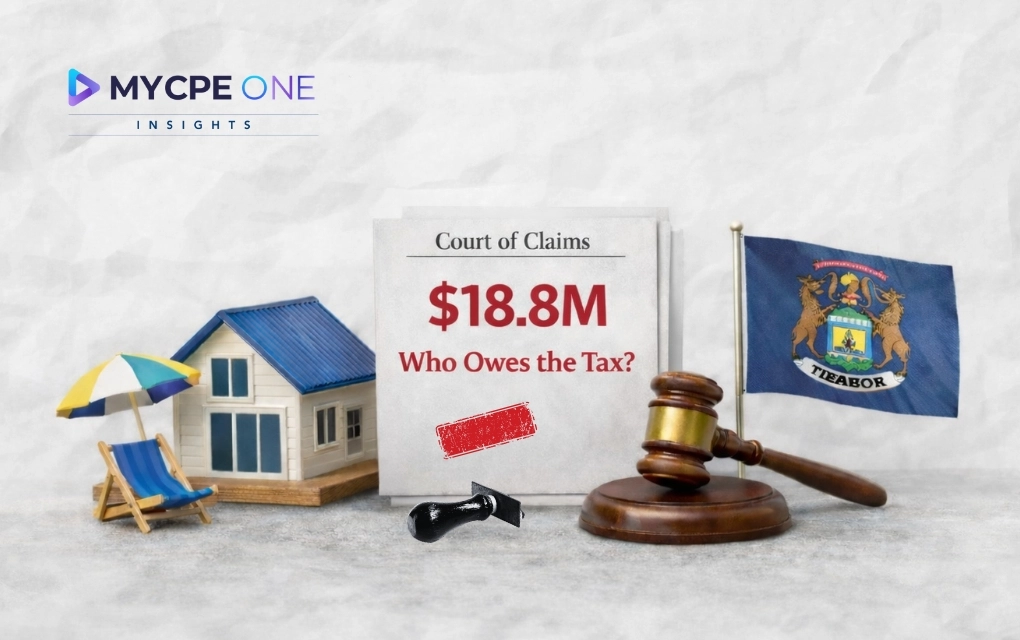
Short-term rental platform HomeAway, a subsidiary of Vrbo, is disputing a tax bill totalling $18.8 million, including interest, with the state of Michigan. The case could set a precedent for how far states can push platform liability when modern digital business models outpace tax legislation; Michigan alleges that by collecting a 6% tax on bookings, HomeAway became responsible for remitting it, although HomeAway argues the tax was always passed directly to hosts.
When a tax bill explodes to $18.8 million, it is rarely about the math. It is about fingerprints. Who touched the money, who held it for a millisecond, and who the law decides should have known better. That question now sits at the center of a courtroom showdown between Vrbo parent HomeAway and the State of Michigan. On paper, it is a fight over unpaid use taxes from 2020 through 2022. In reality, it is a stress test for how far states can push platform liability when tax statutes lag modern digital business models. This case is not just a Michigan problem. It is a warning flare for every marketplace, payment intermediary, and platform that ever thought “pass-through” was a safe harbor.
The roots of the dispute go back further than the audit itself. Michigan’s short-term rental market took off after the 2008 housing crisis and went into overdrive during the pandemic. With that growth came more scrutiny. Michigan imposes a 6% use tax on short-term accommodations, a tax traditionally collected and remitted by property owners, not booking platforms. HomeAway, best known for operating Vrbo, built its system around that long-standing assumption. When hosts joined the platform, they were given tax-handling options. In Michigan, hosts could either add the tax as a percentage at checkout or collect and remit taxes independently outside the platform. According to HomeAway’s court filings, hosts explicitly acknowledged that tax remittance was their responsibility.
The company’s complaint is blunt on one critical point: “At no time during the audit period did payouts to HomeAway include any amounts for applicable taxes.” Any tax collected at checkout was remitted directly to hosts. For years, that setup raised no red flags. Then, in January 2023, Michigan’s Department of Treasury opened a multi-year audit covering pandemic-era bookings. The stakes escalated fast.
By September 2025, the audit ended with a bill totaling roughly $18.7 to $18.8 million. About $15.1 million was attributed to unpaid use tax, with another $3.6 to $3.7 million piled on as interest. The year-by-year growth tells its own story: roughly $676,000 in 2020, jumping to $8.6 million in 2021 and $9.5 million in 2022. Michigan’s position hinges on a razor-thin distinction. The state argues that when the tax was added during the booking process, HomeAway crossed a line. In the Treasury’s view, collecting the tax, even on behalf of hosts, made the platform responsible for remitting it. HomeAway calls that logic a stretch. The company says it never retained the tax, never benefited from it, and never agreed to act as Michigan’s tax collector. In its lawsuit, HomeAway pushes back hard on the state’s claim of unjust enrichment, arguing that you cannot be enriched by money you never keep.
One detail from the media coverage raises eyebrows. According to HomeAway, the unjust enrichment theory only surfaced late in the audit and has not been applied to other similarly situated taxpayers. That inconsistency underpins the company’s state and federal equal protection claims. Even Michigan’s billing notices add to the fog. The bills cite use tax and interest following an audit, but reportedly do not specify which booking structures triggered platform-level liability. For an eight-figure assessment, that lack of clarity is a big deal.
This lawsuit is unfolding alongside a broader political fight in Michigan over how to regulate and tax short-term rentals. Lawmakers have debated statewide frameworks, local tax authority, and whether communities should vote on short-term rental taxes to fund police, fire, and other essential services. That backdrop matters. When legislatures hesitate, tax authorities often fill the gap through audits and aggressive interpretations of old laws. This case tests how far that improvisation can go.
HomeAway, now part of Expedia Group, is effectively asking the court to draw a bright line. Facilitating a transaction, even handling checkout mechanics, does not automatically make a platform the taxpayer when contracts and cash flows point elsewhere. Michigan, meanwhile, appears to be signaling that marketplace intermediaries are firmly in its crosshairs. Even without explicit statutory language, the state seems willing to argue that touching tax dollars equals tax responsibility. That stance could ripple far beyond short-term rentals.
For tax, accounting, and audit professionals, this case is packed with lessons.
Finally, this case reinforces a hard truth. Platforms evolve faster than tax law. When lawmakers stall, courts become the referees, and audits become the testing ground.
The case now moves forward in Michigan’s Court of Claims. A ruling in favor of the state could open the door to similar assessments nationwide, especially for platforms that thought they were just middlemen. A ruling for HomeAway could force legislatures to step up and modernize platform tax statutes instead of relying on creative audits. Either way, this is not just another tax dispute. It is a precedent-in-the-making. This fight is not really about $18.8 million. It is about whether facilitating a transaction quietly turns a platform into a taxpayer. For professionals advising digital marketplaces, short-term rental operators, or payment intermediaries, that distinction is no longer theoretical. It may define the next wave of state tax exposure. If you are advising clients who “never keep the tax,” now is the time to double-check whether the state agrees.
Until next time…
Don’t forget to share this story on LinkedIn, X and Facebook
Subscribe now for $199 and get unlimited access to MYCPE ONE, from CPE credits to insights Magazine
📢MYCPE ONE Insights has a newsletter on LinkedIn as well! If you want the sharpest analysis of all accounting and finance news without the jargon, Insights is the place to be! Click Here to Join
You’ve reached the 3 free-content piece limit. Unlock unlimited access to all News & CPE resources.
Subscribe Today.
Already have an account?
Sign In