Join 250,000+
professionals today
Add Insights to your inbox - get the latest
professional news for free.
Join our 250K+ subscribers
Subscribe05 JAN 2026 / ACCOUNTING & TAXES
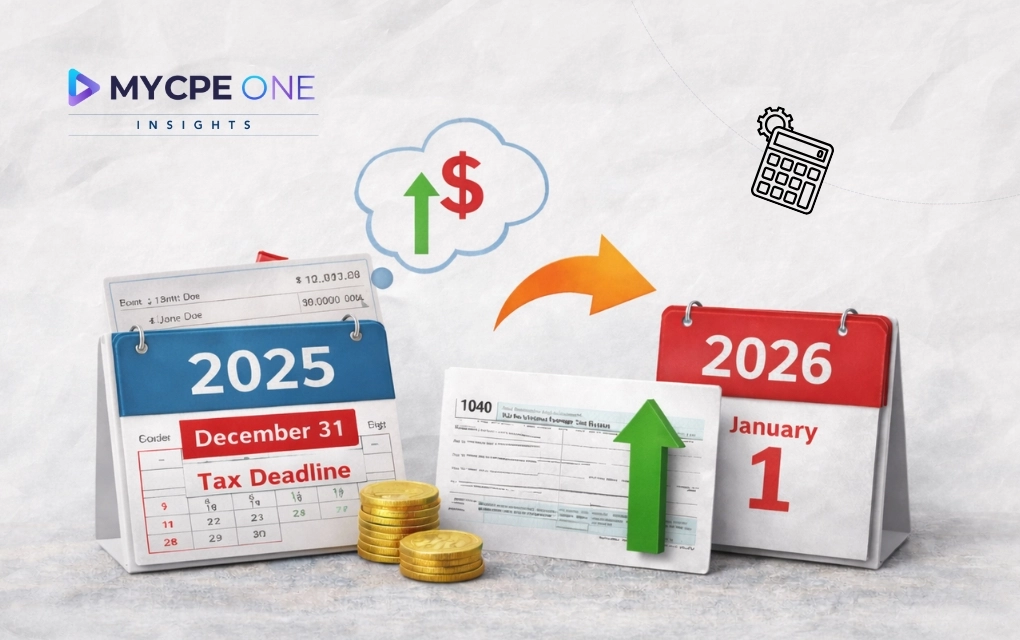
The doctrine of constructive receipt, wherein income is taxable when you have the right to it, even if uncollected, is a potential strategy for benefiting from tax relief measures expiring soon, such as tax relief for wildfire victims which is set to expire on December 31, 2025. In addition, miscalculations for income tax withholdings, particularly for tipped and overtime workers, under the One Big Beautiful Bill Act, could lead to a "gigantic refund year" in 2026.
That question is quietly driving some very real tax savings right now. And it leads to a surprising idea: reporting some 2026 payments on your 2025 return could lower your tax bill. Sounds backwards. It is not. Welcome to constructive receipt, year-end settlements, and a few brand-new deductions that caught a lot of people flat-footed. If this feels like the IRS playing chess while everyone else is playing checkers, you are not wrong.
The tax code has a long memory and zero chill when it comes to timing. Under the doctrine of constructive receipt, income is taxable when you have an unrestricted right to it, even if you decide to wait to collect. Classic example. A client cuts you a check on December 30, offers to hand it over, and you say, “Let’s do January.” The IRS says nice try. If the money was available in December, it is December income. Asking for a delay does not change the tax year. This rule mostly hits cash-basis taxpayers, meaning individuals and most small businesses. The whole point is to stop income gamesmanship. The IRS does not love loopholes. It loves bright lines. But here is where things get interesting.
Year-end legal settlements sit in a gray area that accountants run into big time, especially when checks, signatures, and trust accounts all hit at once. Timing matters, and small differences in facts can flip the tax year.
Here is how it typically plays out:
Here is the twist. That same IRS logic can work for taxpayers when reporting income earlier actually helps.
In late 2024, Congress expanded tax relief for wildfire victims, making many disaster-related legal settlements tax-free. That relief expires on December 31, 2025. There is a bipartisan bill, the Protect Innocent Victims of Taxation After Fire Extension Act, that would make the exclusion permanent. As of now, it has not passed.
That puts wildfire survivors in a tough spot. If settlement proceeds arrive in 2026 and the law is not extended, those funds could be taxable. But if the money hits a lawyer’s trust account before the end of 2025, taxpayers may argue constructive receipt applies, locking in tax-free treatment. Is it aggressive? A little. Is it grounded in existing IRS positions? Yes. This is one of those no-brainer moments where timing matters big time. Expect a lot of last-minute scrambling as lawyers and clients try to get in under the wire. As Benjamin Franklin put it, “In this world nothing can be said to be certain, except death and taxes.” Timing just decides which year.
Constructive receipt is not the only reason 2026 could bring lighter tax bills. The One Big Beautiful Bill Act quietly changed withholding math, but most employers never adjusted payroll during 2025. Treasury Secretary Scott Bessent recently predicted a “gigantic refund year” in early 2026, and the numbers support that claim. Tipped workers can now deduct up to $25,000 of tipped income, while overtime workers can deduct up to $12,500, or $25,000 for joint filers. Because payroll systems kept withholding as if these deductions did not exist, many workers overpaid.
Example one. A server earns $60,000 in wages and $20,000 in tips. Withholding assumed all $80,000 was taxable. When the tip deduction is applied on the 2025 return, part of that withheld tax comes back as a refund.
Example two. An employee earns $20 an hour and $30 for overtime. Only the $10 premium qualifies for the deduction, not the full $30. Many employers did not calculate this difference during the year, leaving taxpayers to fix it at filing time.
Add an extra $6,000 deduction for older adults, higher first-year depreciation for small businesses, and expanded savings options, and refunds can stack up quickly. Social Security and Medicare taxes still apply, state rules vary, and phaseouts begin above $150,000, but the upside for many filers is very real.
Tax law rarely rewards procrastination. Whether it is settlement timing, expiring wildfire relief, or under-withheld wages tied to new deductions, the winners are the ones who act before December 31, not after April 15. If you or your clients might be affected, now is the moment to review timing, adjust withholdings, and get documentation lined up. The IRS is not sentimental, but it is predictable. Use that to your advantage.
Until next time…
Don’t forget to share this story on LinkedIn, X and Facebook
Subscribe now for $199 and get unlimited access to MYCPE ONE, from CPE credits to insights Magazine
📢MYCPE ONE Insights has a newsletter on LinkedIn as well! If you want the sharpest analysis of all accounting and finance news without the jargon, Insights is the place to be! Click Here to Join
You’ve reached the 3 free-content piece limit. Unlock unlimited access to all News & CPE resources.
Subscribe Today.
Already have an account?
Sign In