Join 250,000+
professionals today
Add Insights to your inbox - get the latest
professional news for free.
Join our 250K+ subscribers
Subscribe06 AUG 2025 / ACCOUNTING & TAXES
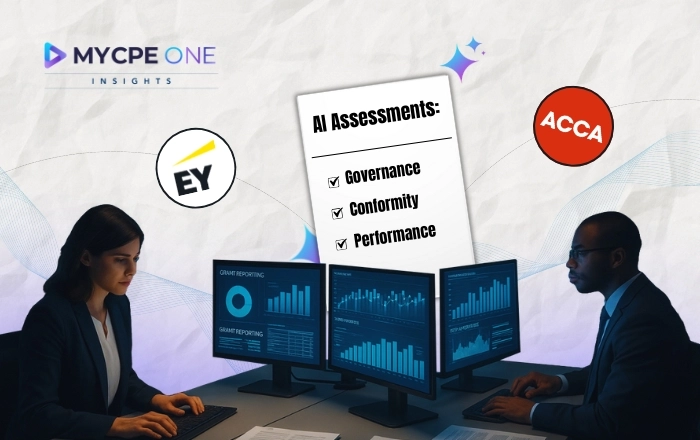
EY and the Association of Chartered Certified Accountants (ACCA) have published a policy paper advocating for the mandatory accountability of AI systems. The policy calls on auditors, regulators, executives, and boardrooms to treat AI as a financial asset, underlining the importance of AI assessments to maintain confidence and trust, due to the increasing influence of AI in fields such as hiring, pricing, and medical diagnosis.
AI may be driving your business, but who’s checking the GPS? That’s the core question behind the latest policy paper from EY and the Association of Chartered Certified Accountants (ACCA), “AI Assessments: Enhancing Confidence in AI.” And spoiler alert, it’s not just a suggestion. It’s a hard nudge toward mandatory accountability. In an age where machines influence hiring, pricing, compliance, and even medical diagnosis, EY and ACCA make it clear: if you're not assessing your AI systems, you're asking for trouble. The report calls on auditors, regulators, boardrooms, and tech execs to treat AI like any other financial asset, subject to scrutiny, standards, and trust checks. As Marie-Laure Delarue, EY’s Global Vice-Chair of Assurance, puts it: “Confidence is the key to unlocking AI’s full potential as a driver of growth and prosperity.” Let’s break it down, no fluff, just facts, finance, and a little fire.
AI’s no longer chilling in the innovation lab, it’s front and center in boardrooms, balance sheets, and strategic plans. But while adoption has gone full throttle, guardrails haven’t kept up. As the report notes, many organizations still treat AI like a magic black box rather than a system needing governance, compliance, and performance checks. EY and ACCA say that’s got to change, and fast. “The ability to trust what AI says is not just important, it’s vital for the public interest.” Helen Brand, Chief Executive, ACCA, whether you’re a finance chief, CTO, auditor, or regulator, this paper is a playbook for building AI systems that don’t just work, they work right.
The guidance outlines three core types of AI assessments, each covering a different piece of the puzzle:
But here’s the kicker: none of this works without clear goals, sound methodology, and credible evaluators. And the stakes are high. According to EY’s 2025 AI Sentiment Index, 58% of consumers worry businesses aren’t holding themselves accountable for AI misuse.
For audit and assurance professionals, this isn’t just a new challenge, it’s a new market. Organizations will soon need help navigating AI risk frameworks, compliance strategies, and audit-readiness. EY’s report doesn’t just hint, it explicitly positions AI assurance as an evolving, in-demand discipline. Whether you're part of a Big Four firm or leading an internal audit team, this is the time to upskill. Expect to see voluntary assessments evolve into service offerings, and eventually, regulated compliance activities across sectors.
If you think this is just a corporate "nice-to-have," think again. According to the OECD, nearly 70 countries have launched over 1,000 AI-related policy initiatives, many of which already include assessment and audit mechanisms. In the U.S., the Trump administration’s AI Action Plan states: “Rigorous evaluations can be a critical tool in defining and measuring AI reliability and performance in regulated industries.” So, whether it’s healthcare, finance, insurance, or even public infrastructure, AI audits are heading straight for the rulebooks. And when regulators come knocking, having a third-party AI assessment in hand may be the best insurance policy you've got.
The EY-ACCA paper isn’t just a policy memo; it’s a strategic call-to-action. Here’s the quick-hit guidance:
The report even encourages capacity-building in the market to ensure assessments are accessible and cost-effective, especially for smaller organizations entering the AI race.
AI might be the sharpest tool in your tech stack, but without oversight, it can cut the wrong way. Just like you wouldn’t publish unaudited financials, you shouldn’t rely on unaudited algorithms. As EY and ACCA make clear, auditing AI is about more than compliance; it’s about confidence. And in today’s data-driven economy, confidence is currency. So, next time your tech team brags about its “state-of-the-art” AI, lean in and ask: “Has it been assessed?” Because in the era of intelligent machines, trust isn’t automatic; it’s audited. Want more insights like this? Subscribe to our newsletter and stay ahead of the regulatory curve.
Until next time…
Don’t forget to share this story on LinkedIn, X and Facebook
Subscribe now for $199 and get unlimited access to MYCPE ONE, from CPE credits to insights Magazine
📢MYCPE ONE Insights has a newsletter on LinkedIn as well! If you want the sharpest analysis of all accounting and finance news without the jargon, Insights is the place to be! Click Here to Join
Digital Marketing Services for CPA & Accounting Firms - Starting $399/month.
Struggling to attract new clients? MYCPE ONE’s Digital Marketing Services help accounting firms stand out, generate leads, and grow revenue effortlessly.
With expertise in SEO, paid ads, social media, and targeted PPC, MYCPE ONE maximizes your marketing efforts to deliver high ROI and broader industry reach.
Invest in digital marketing for your firm today—see the difference with MYCPE ONE!
Stand out. Generate leads. Grow revenue.
You’ve reached the 3 free-content piece limit. Unlock unlimited access to all News & CPE resources.
Subscribe Today.
Already have an account?
Sign In