Join 250,000+
professionals today
Add Insights to your inbox - get the latest
professional news for free.
Join our 250K+ subscribers
Subscribe08 DEC 2025 / ACCOUNTING & TAXES
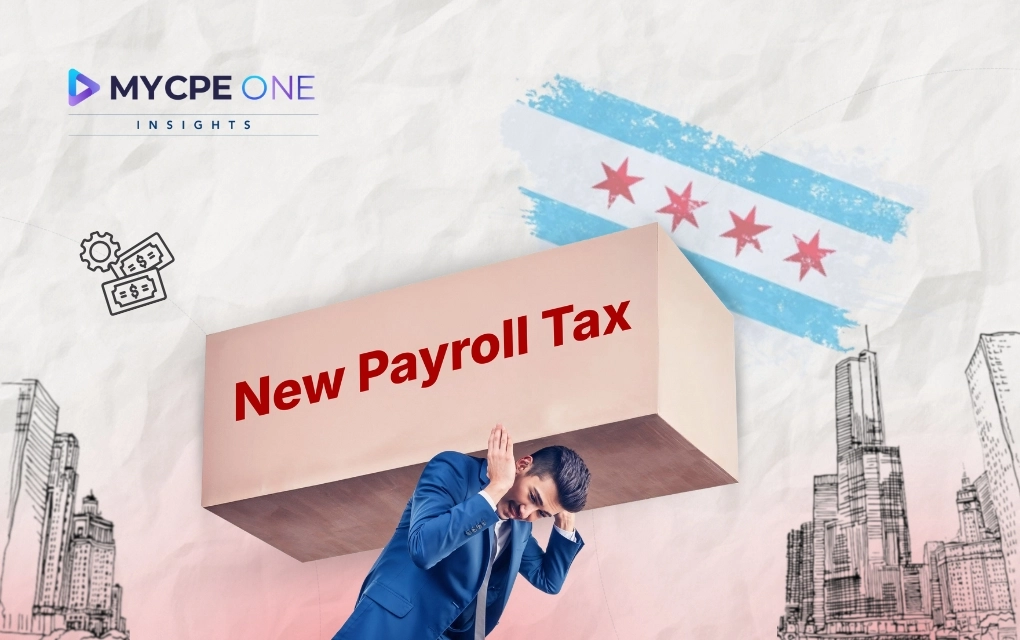
Chicago city leaders are debating a proposed payroll tax that targets large employers in a bid to stabilize the city's budget post-pandemic. However, a significant backlash from the business community and the City Council has erupted, citing concerns for competitiveness, talent attraction, and the impact on growth-stage companies.
If Chicago’s economy were a basketball game, the city just hit the fourth quarter with two minutes on the clock, and the scoreboard is way too close for comfort. The city needs revenue, businesses need stability, and everyone is trying to avoid fouling out. The debate over a new payroll tax didn’t just appear out of thin air; it’s the climax of years of budget struggles, shifting workforce trends, and a post-pandemic market that’s still finding its footing. This moment isn’t just about balancing a spreadsheet; it’s about shaping Chicago’s economic identity for the next decade.
Chicago hasn’t always leaned on payroll taxes. From 2011 to 2016, the city largely shut the door on them, favoring property taxes, service fees, and temporary revenue patches. Things changed fast when COVID hit. Costs ballooned, federal aid dried up, and remote work thinned out downtown foot traffic. Suddenly the math stopped mathing. By 2023 and 2024, city leadership began eyeing a payroll tax all over again. The idea: target only the biggest employers and use the revenue to stabilize essential services. The current proposal charges companies with 100+ employees a $21-per-worker monthly fee, expected to generate $100 million annually.
Supporters frame it as a “fair share” contribution from large corporations benefiting from city infrastructure. Opponents see it differently, arguing it lands at the worst possible time. And the opposition isn’t quiet. A group backed by financier Michael Sacks has already put up six-figure ad campaigns, calling the proposal a fresh $100 million tax hike. Another group, One Future Illinois, is also funding ads against it. Even real estate and restaurant leaders have chimed in, with McDonald’s franchisees warning of “negative impacts” and major employers raising flags over competitiveness.
Chicago’s corporate community isn’t mincing its words. Their concerns fall into four big buckets:
Add to that the lingering effects of slow downtown revitalization, office occupancy remains choppy, retail traffic is inconsistent, and transit ridership hasn’t fully returned, and you get a business community feeling like the city is stacking uncertainty on top of uncertainty.
Chicago isn’t debating this tax in a vacuum. The city faces a $1.2 billion budget gap as pandemic-era relief winds down and costs rise. But here’s the twist, and it’s a big one: More than half of the City Council, 26 aldermen, now back an alternative budget that removes the payroll tax entirely. Their proposal replaces it with higher garbage fees, liquor taxes, and a delivery tax, signaling one message loud and clear: the payroll tax is a non-starter for them. This is the second straight year the council has pushed back forcefully on revenue proposals. Last year, they unanimously rejected a property tax increase. This year, they’re flexing again. For businesses, the internal disagreement only heightens uncertainty. For the city, it underscores just how tough the road ahead will be.
With pressure mounting from employers, City Council, economic groups, and residents, Chicago’s next steps will likely fall into one or more of these lanes:
This isn’t just a tax debate. It’s a referendum on Chicago’s next decade.
The core questions ahead are big ones:
One thing is certain: whatever Chicago decides will ripple far beyond tax bills. Cities across the U.S. are wrestling with the same tension between revenue needs and economic competitiveness. Chicago’s playbook could very well become the case study others watch.
Chicago is entering a defining chapter, one where fiscal responsibility and economic ambition collide. The city needs stable funding. Employers need stability and predictability. And residents need both jobs and essential services. Striking that balance is the challenge of the moment. The months ahead will shape whether Chicago emerges as a model for modern urban growth or becomes another example of the struggle to adapt in a rapidly shifting economy.
Until next time…
Don’t forget to share this story on LinkedIn, X and Facebook
Subscribe now for $199 and get unlimited access to MYCPE ONE, from CPE credits to insights Magazine
📢MYCPE ONE Insights has a newsletter on LinkedIn as well! If you want the sharpest analysis of all accounting and finance news without the jargon, Insights is the place to be! Click Here to Join
You’ve reached the 3 free-content piece limit. Unlock unlimited access to all News & CPE resources.
Subscribe Today.
Already have an account?
Sign In