Join 250,000+
professionals today
Add Insights to your inbox - get the latest
professional news for free.
Join our 250K+ subscribers
Subscribe27 JAN 2026 / ACCOUNTING & TAXES
Milwaukee tax preparer, Cameron Summers, prepared more than 400 individual returns between 2020 and 2022, inflating refunds and using credits that clients did not qualify for, resulting in an estimated loss for the IRS of over $1.1 million. This case highlights the common type of fraud in small- to mid-sized practices across the US, focusing less on one-off mistakes and more on repeat behaviour tied to a single Preparer Tax Identification Number (PTIN), and is expected to lead to more such cases being caught as the IRS sharpens its detection methods.
Every tax season has a smell. Coffee gone cold, printers overheating, and that quiet pressure of knowing April does not wait for anyone. Somewhere in that grind, a Milwaukee tax preparer decided the fastest way through was not by the book. It worked for a while. Then the paper trail caught up. What happened with Cameron Summers is not flashy. No offshore trusts. No crypto wallets. Just hundreds of Form 1040s, inflated refunds, and a mindset that bigger refunds meant better business. That simplicity is the point. This case matters because it mirrors how fraud actually shows up in small and mid-sized practices across the country.
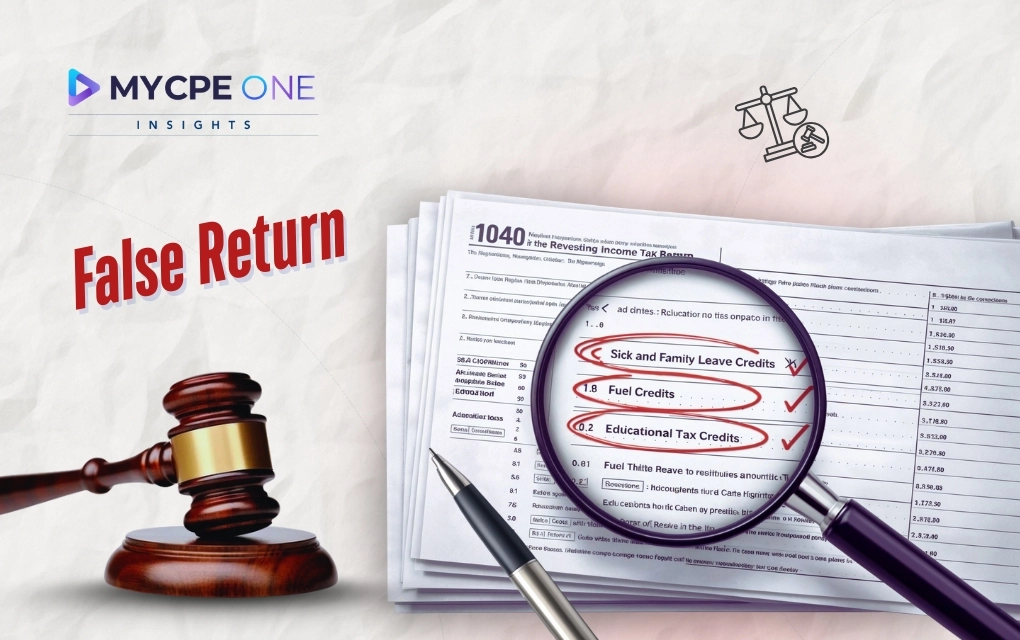
Summers started at a Milwaukee tax preparation business in 2018. By 2020, he was filing returns under his own name and PTIN. Over the next three filing seasons, he prepared more than 400 individual returns. The playbook stayed consistent. He padded business expenses that did not exist. He dropped in Sick and Family Leave Credits, fuel credits, and education credits that clients did not qualify for. He mixed in fabricated income or withholding figures to make refunds pop. In his own notes, he wrote that he had “boosted” refunds. In an interview with IRS Criminal Investigation, he said the quiet part out loud. He used whatever numbers were available and maxed credits.
This was not a sophisticated scheme. It was volume-based. File fast, cut corners, move on. That approach worked because most individual returns never get looked at closely. A single questionable credit might slide. Hundreds start to light up dashboards. From 2020 through 2022, the IRS estimates the loss at more than $1.1 million. That number matters less than the pattern. The same credits. The same fact patterns. The same preparer's signature.
This case did not appear in a vacuum. Refundable credits exploded during the pandemic years. Sick and Family Leave Credits, expanded child-related credits, and stimulus-linked provisions created a perfect storm. They were complex, new, and easy to abuse. The IRS response followed its usual arc. First came filters and analytics. Then came preparer-level reviews. Finally, criminal referrals when intent became clear. Summers was not alone. Another Wisconsin preparer, Jahnell Easly, pleaded guilty after filing over 400 returns with similar fraud indicators. Her intended loss topped $3.4 million.
This tells you where the enforcement focus sits today. The IRS is less interested in one-off mistakes and more interested in repeat behavior tied to a single PTIN. When refunds spike and patterns repeat, that is a red flag that does not go away. IRS Criminal Investigation still lacks staffing compared to its workload. Even so, preparer fraud stays near the top of its priority list because it scales fast and undermines voluntary compliance.
Expect more cases like this, not fewer. The IRS is refining preparer-level analytics and leaning harder on cross-year comparisons. Credits tied to specific eligibility criteria will stay under the microscope. PTIN misuse, inflated Schedule C losses, and fabricated withholding remain easy tells. There is also a quiet shift happening. Courts are less patient with the “everyone was doing it” defense. Judges increasingly treat volume fraud as aggravated conduct, even when dollar amounts look modest compared to corporate cases. Think of it like The Big Short, minus the glamour. The system tolerated bad behavior until the math broke. Then it corrected fast.
If you run or manage a firm, this case should feel uncomfortably familiar. Not because you would do this, but because the pressure points are real.
Cameron Summers did not exploit a loophole. He exploited complacency. He relied on speed, volume, and the assumption that no one was watching closely. The IRS watched. It always does, eventually. For professionals, the lesson is simple and uncomfortable. Fraud in tax prep rarely looks dramatic. It looks routine. It looks like shortcuts are taken one return at a time. The fix is not more software or more slogans. It is judgment, oversight, and the willingness to slow down when something feels off. Tax season will always be intense. That pressure does not excuse decisions that put clients, firms, and careers at risk. The past shows how easy it is to cross that line. The present shows the cost. The future will reward the firms that keep their work clean, even when no one seems to be looking.
Until next time…
Don’t forget to share this story on LinkedIn, X and Facebook
Subscribe now for $199 and get unlimited access to MYCPE ONE, from CPE credits to insights Magazine
📢MYCPE ONE Insights has a newsletter on LinkedIn as well! If you want the sharpest analysis of all accounting and finance news without the jargon, Insights is the place to be! Click Here to Join
You’ve reached the 3 free-content piece limit. Unlock unlimited access to all News & CPE resources.
Subscribe Today.
Already have an account?
Sign In