
MYCPE ONE
MYCPE ONE LOGO

Join 250,000+
professionals today

Add Insights to your inbox - get the latest
professional news for free.

MYCPE ONE insights

Why PwC Is Planning a Global Overhaul Now

Join our 250K+ subscribers

Join our 250K+ subscribers

Subscribe

15 APR 2026 / BUSINESS

Why PwC Is Planning a Global Overhaul Now

Why PwC Is Planning a Global Overhaul Now

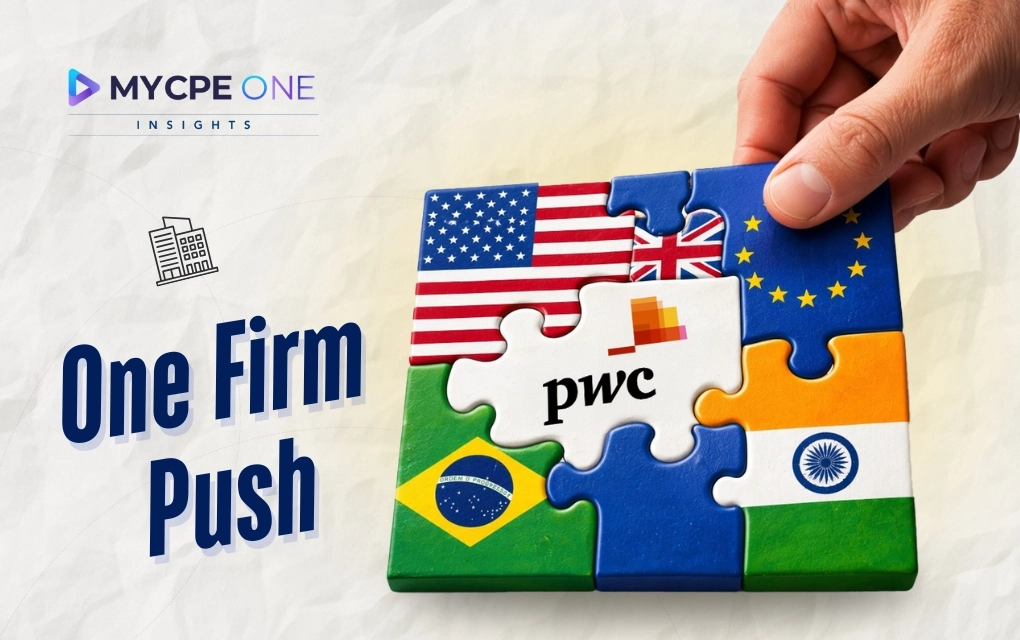
A partner once joked during a cross-border project, “Same firm, different planet.” Everyone laughed, then quietly went back to fixing mismatched deliverables from three countries. That joke is now a strategy problem. PwC’s latest move to overhaul its global consulting business is less about rebranding and more about fixing something clients have been side-eyeing for years. When a multinational hires PwC, they expect one firm. What they often get is a patchwork of local teams, each with its own style, tools, and pace. In 2026, that gap is harder to defend, especially with AI speeding up delivery and competitors tightening their global models. PwC is now trying to close that gap. The plan centers on standardizing services, aligning training, expanding shared delivery hubs like India, and merging service lines such as risk and consulting. The goal is simple to say, tough to execute: act like one firm across borders without blowing up the partnership model that built the firm in the first place.

Why does PwC suddenly care about acting like one firm?

Large multinationals want consistency. They want the same methodology in New York, London, and Singapore. They want faster turnaround. They want fewer internal handoffs. Right now, the Big Four model does not always deliver that. Each country operates as a separate partnership, which works well for local compliance but gets messy for global advisory work. Competitors like Accenture and McKinsey have leaned into tighter integration. They show up as one team, one system, one playbook. PwC leadership sees that difference, and it stings a bit.

Then comes AI. Once work becomes more standardized and tech-enabled, clients start asking tough questions. Why does the same engagement look different in two countries? Why does one team take longer? Why are we paying premium rates for inconsistent output? That is the moment where “global network” starts sounding like an excuse instead of a strength.

Is AI the real driver?

Consulting is shifting from custom-heavy work to a mix of reusable tools, data models, and tech-enabled delivery. PwC has already launched AI-led platforms like PwC One in the U.S., signaling where things are heading. When work becomes more repeatable, firms need consistent systems behind the scenes. Otherwise, you end up with five versions of the same solution, built five different ways. That is inefficient, expensive, and frankly, a little embarrassing for a global firm.

There is also a margin story here. Standardization allows firms to route work to the best location, not just the closest one. Shared delivery hubs in India and other regions are not new, but they are becoming central to how consulting work gets done. That shift can protect margins while keeping pricing competitive. So yes, AI is part of the story. But the bigger driver is pressure on delivery models, pricing, and client expectations. AI just sped up the timeline.

What’s with merging risk and consulting?

PwC UK is merging its risk and consulting divisions into one unit, with about 4,600 people and roughly £1.1 billion in annual revenue. Deals remain separate, which also says something. Transaction work still has its own rhythm, but advisory is becoming more interconnected. Clients are not asking for “risk advice” or “consulting advice” in isolation anymore. They are asking for answers to messy, real-world problems.

If PwC has to coordinate across separate internal teams just to respond, it loses time. And in consulting, time is money and perception. Clients notice when things move slow. They also notice when answers feel stitched together. By merging these service lines, PwC is trying to cut through that friction. One team, faster response, cleaner delivery. At least in theory.

Can a partnership model actually behave like a global firm?

PwC operates in 136 countries with over 360,000 people and roughly $56.9 billion in global revenue. That scale is impressive. It is also the reason change is hard. Each member firm has its own leadership, incentives, and revenue pressures. Global leaders have pushed for standardization before. Local firms have pushed back before. This is not new.

What feels different now is the pressure. Clients want consistency. AI demands scale. Competitors are tightening their models. At some point, the old “local autonomy” argument starts losing weight. Still, let’s be real. Getting hundreds of partners across dozens of countries to align on delivery, staffing, and methodology is not a quick win. There will be friction. There will be turf protection. There will be debates about who owns what work. If you have ever seen a partner meeting debate revenue allocation, you know this is not going to be a smooth ride.

What does this mean for clients and CPA firms watching from the outside?

  • For multinational clients, the upside is obvious. More consistent teams, faster turnaround, and less internal coordination noise. If PwC executes well, engagements should feel tighter and more predictable.
  • For staff, it is a mixed bag. There will be more cross-border opportunities, more structured training, and clearer expectations. There will also be more pressure to adapt, especially as work shifts toward shared delivery hubs and standardized processes.
  • For U.S. CPA firms, especially mid-market firms, this is a signal worth paying attention to. The Big Four are not just competing on expertise anymore. They are competing on delivery models.

Think about your own clients. Are they asking for more integrated advice, faster answers, more tech-enabled solutions? If yes, this shift is not just a Big Four story. It is a broader industry trend.

So, what’s the real takeaway here?

PwC is not breaking itself apart. It is trying to act more like one firm without changing its legal DNA. The move is driven by three things: client frustration, AI-driven change, and competitive pressure. The UK merger is the first visible step. The global blueprint is the bigger play. The real question is not whether the strategy makes sense. It does. The question is execution. Can a network built on local autonomy behave like a unified global platform? Can partners align incentives across borders? Can the firm deliver consistency without slowing itself down?

Those answers will not come from press releases. They will show up in client experiences over the next 12 to 24 months. If PwC gets this right, it strengthens its position in a consulting market that is already shifting fast. If it struggles, it risks reinforcing the exact problem it is trying to solve. Either way, one thing is clear. The days of “same firm, different planet” are numbered. The only question is how quickly firms can close that gap before clients start looking elsewhere.

Until next time…

Don’t forget to share this story on LinkedIn, X and Facebook

Subscribe now for $199 and get unlimited access to MYCPE ONE, from CPE credits to insights Magazine

📢MYCPE ONE Insights has a newsletter on LinkedIn as well! If you want the sharpest analysis of all accounting and finance news without the jargon, Insights is the place to be! Click Here to Join

Unlock Annual Access to News & CPE Subscription

You’ve reached the 3 free-content piece limit. Unlock unlimited access to all News & CPE resources.
Subscribe Today.

News & Updates

  • Exclusive News & Insights
  • Latest Regulatory Updates
  • Accounting Industry Trends
  • Expert Insights
  • AI-Driven Audio & Summaries
  • Infographics & Videos
  • CPE-Approved Articles
  • Digital Magazine
  • Benchmarking Blogs

Unlimited CPE Access for 1 Year

  • 15,000+ Hours of Content
  • 500+ Subject Areas
  • Mandatory Ethics Courses
  • 250+ Compliance Packages
  • 50+ Virtual Conferences and Events Access
  • Format: Live, Audio, Video, E-Books
  • Audio Based Courses & Podcasts
  • Add External Certificates with AI
  • AI Compliance Tracking and Report
  • Instant Certification and Fast Reporting
  • Mobile App Access (iOS and Android)
  • Dedicated Support System
  • Practical Training Programs
  • AI Academy Access
  • Tax Academy Access
  • Audit Academy Access
  • Leadership Academy Access