Join 250,000+
professionals today
Add Insights to your inbox - get the latest
professional news for free.
Join our 250K+ subscribers
Subscribe28 APR 2026 / TECHNOLOGY
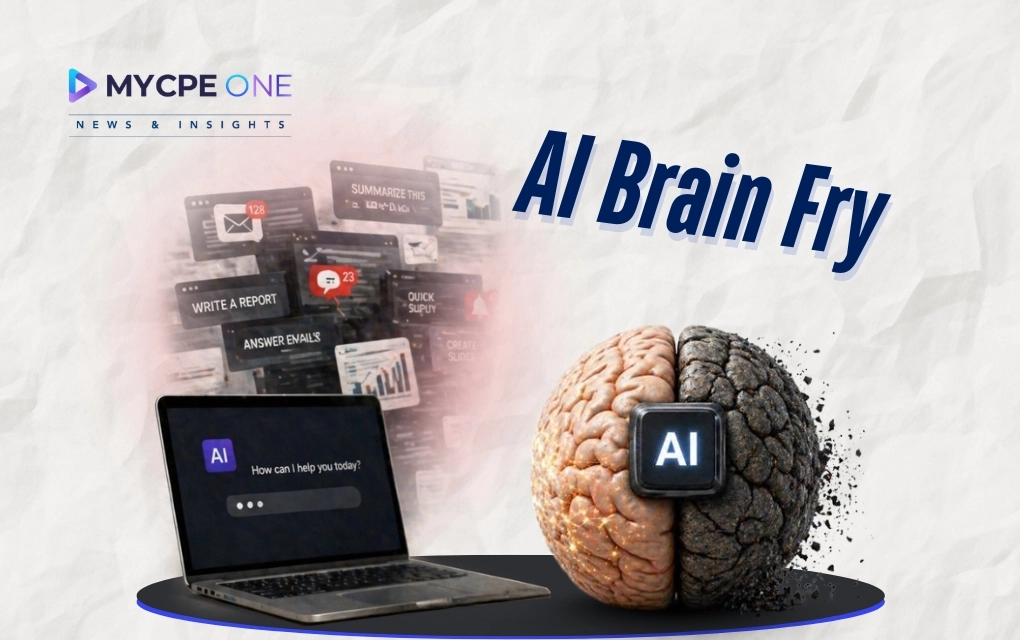
A study shows that heavy use of AI can lead to mental fatigue, known as "AI brain fry", from the increased oversight and higher order tasks it requires from professionals. It prompts the question of whether the use of AI is in fact making work faster or simply increasing workload, with the shift in effort raising performance and risk issues for individuals and firms.
It starts quietly. You finish a client memo in half the time, clear your inbox before lunch, and even knock out a reconciliation that usually drags into the evening. Feels like a win. Then around 3:30 pm, your brain just… stalls. You reread the same paragraph twice, second-guess a number you already checked, and suddenly a simple decision feels like moving concrete. That is the trade nobody really advertised. AI promised to take the grunt work off our plates. In accounting, tax, and finance, it has done exactly that. But what replaced that work is not free time. It is heavier thinking, more oversight, and a strange kind of mental fatigue that is creeping into the workday.
The core issue is not effort; it is where the effort shifted. When AI handles routine tasks like drafting emails, summarizing guidance, or building first-pass analyses, what is left for professionals is higher-order work: judgment, interpretation, validation, and risk assessment. Research is starting to put numbers behind what many professionals already feel. A Harvard Business Review analysis based on a study of 1,488 U.S. workers found that heavy AI use can lead to “AI brain fry,” a mix of cognitive exhaustion, decision fatigue, and reduced focus.
Here is the catch. Using AI well is not passive. You are not just receiving outputs. You are reviewing, questioning, correcting, and re-prompting. That loop can double or even triple the mental effort compared to doing the task manually. Think about a tax manager reviewing an AI-generated research memo. The first draft looks clean, citations seem solid, and the structure is polished. But now comes the real work. Validating accuracy, checking interpretation, identifying gaps, and assessing risk. You saved time on drafting. You spent it on thinking harder.
Here is where neuroscience enters the conversation.
The brain’s working memory can manage only three to five meaningful chunks at once. Now layer AI into that environment. Multiple tools, multiple outputs, prompts in progress, half-reviewed drafts, and ongoing client work. You are not just doing your job anymore. You are also managing the workflow of machines. Studies show that task switching can cost more than 20 minutes of lost focus each time. Now imagine bouncing between Excel, an AI assistant, a research database, and a Teams call. A finance analyst described it bluntly: “It feels like I have ten tabs open in my head, and none of them fully load.” That is cognitive overload.
Here is the uncomfortable question. If AI makes work faster, does that mean you do less work, or just more of it? Right now, in many organizations, it is the second. AI speeds up task completion, which often leads to increased expectations, higher volume, and expanded scope. A controller reviews more analyses. A tax team processes more returns. A CPA firm pushes tighter deadlines. You move faster, but the finish line keeps shifting. The uncertainty around AI’s role adds another layer. Are we freeing time for better work, or just being asked to do more?
AI reduces repetitive work. But it introduces mental fatigue from constant oversight. When the brain is overloaded, something gives. Often, it is small details. Researchers found that employees experiencing AI-related fatigue reported more errors, slower decision-making, and difficulty focusing. A well-known insight applies here: “A wealth of information creates a poverty of attention.” In practice, this shows up clearly. An audit senior generates documentation using AI. The output looks strong. But now they must validate every step against real controls. If fatigue sets in, the risk is not theoretical. It shows up in missed issues or review comments. AI did not create the error. Cognitive overload did.
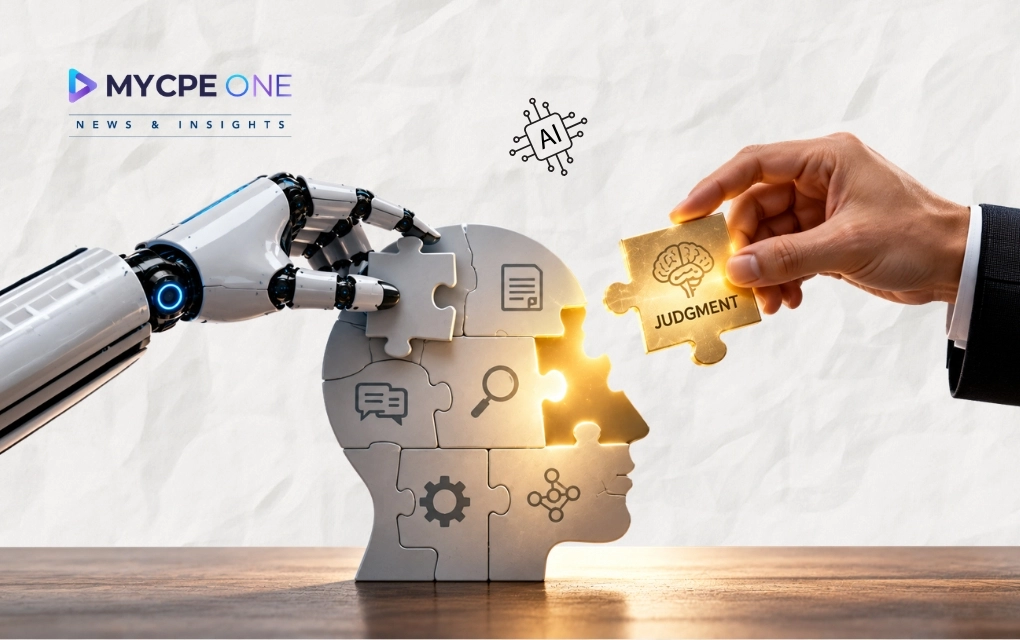
The instinct is to add more tools, more automation, more training. That is not the fix. The problem is not capability. It is a lack of boundaries. Fewer tools often beat more tools. Managing multiple AI systems erodes productivity gains and increases mental strain. Quiet time matters. Insight does not come from a constantly stimulated brain. It comes from space to think. Work measurement needs to shift. If teams are judged by hours, they will keep stacking tasks. If judged by outcomes, they can use AI strategically instead of continuously. And training needs to evolve. The real skill is not prompting. It is metacognition, using AI to refine thinking, not replace it.
In the middle of a transition. AI brings real benefits. Faster insights, better access to data, and more capacity for meaningful work. But it also brings mental fatigue, decision strain, and reduced focus. The question is no longer whether to use AI. The real question is: Are you simplifying your thinking, or adding another layer to manage? For firms, this affects performance and risk. For individuals, it affects clarity and energy. Right now, many professionals are pushing through the fog. The smarter move is to step back and redesign how the work actually flows.
Until next time…
Don’t forget to share this story on LinkedIn, X and Facebook
Subscribe now for $199 and get unlimited access to MYCPE ONE, from CPE credits to insights Magazine
📢MYCPE ONE Insights has a newsletter on LinkedIn as well! If you want the sharpest analysis of all accounting and finance news without the jargon, Insights is the place to be! Click Here to Join
You’ve reached the 3 free-content piece limit. Unlock unlimited access to all News & CPE resources.
Subscribe Today.
Already have an account?
Sign In