Join 250,000+
professionals today
Add Insights to your inbox - get the latest
professional news for free.
Join our 250K+ subscribers
Subscribe17 MAR 2026 / CPA STATE BOARD UPDATES
Rhode Island and Louisiana introduced legislation in February 2025 to reform CPA licensure rules, replacing the traditional 150-hour education requirement with more flexible pathways that place emphasis on both education and experience. The move was driven by concerns about the sustainability of the accounting talent pipeline and is expected to broaden the talent pool, reduce the cost of licensure, and facilitate earlier career entry.
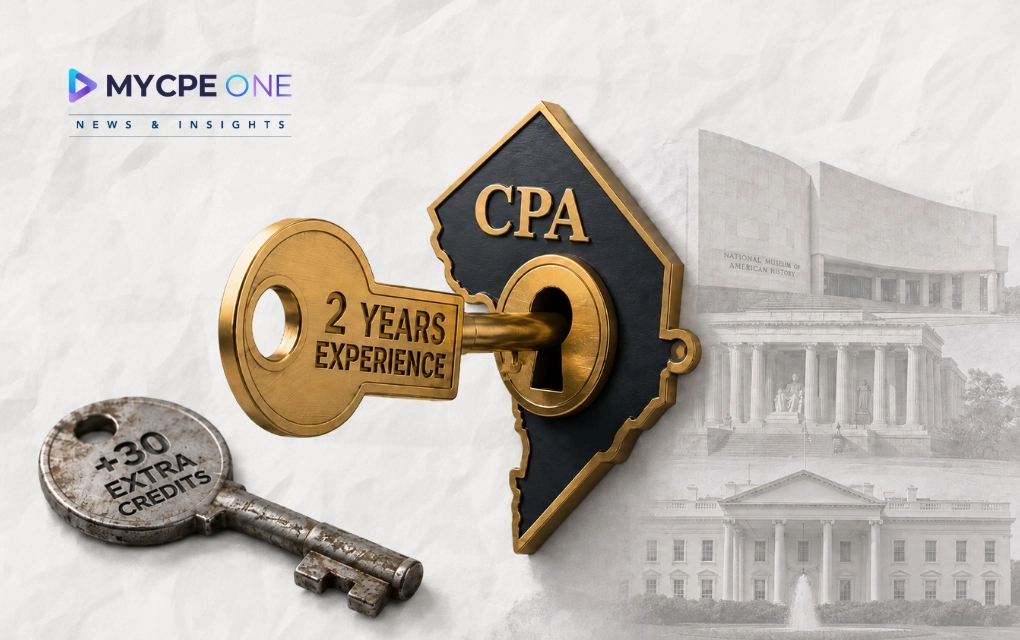
For decades, the path to becoming a CPA followed an ironclad formula: earn 150 credit hours, pass the exam, gain experience. It was predictable, standardized, and quietly a significant barrier to entry. But that era is ending. In late February 2025, Rhode Island and Louisiana introduced groundbreaking legislation that signals a fundamental shift in how America thinks about accounting credentials. These bills don't eliminate the CPA exam; they strengthen it as a true measure of competency. Instead, they eliminate the rigid 150-hour educational prerequisite, replacing it with flexible pathways that value both education and real-world experience. The message is clear: the profession is ready to move beyond a one-size-fits-all model.
Rhode Island and Louisiana are the latest to join a growing wave of states reworking CPA licensure rules. Lawmakers in both states introduced bills in late February aimed at replacing the 150-hour education requirement with more flexible pathways, while still preserving the CPA exam as the core benchmark. Rhode Island’s proposal, introduced by Rep. Stephen Casey, would take effect immediately upon passage. Louisiana’s bill, introduced by Rep. Gerald Beau Beaullieu IV, follows a similar framework, although its implementation timeline remains unclear. These changes reflect a broader trend across the U.S., where regulators are increasingly focused on improving accessibility without lowering standards.
Rhode Island’s Approach: Rep. Stephen Casey’s proposal introduces three alternative CPA pathways, all removing the 150-hour requirement while keeping experience at the core.
The bill is set for immediate implementation upon passage, accelerating the shift toward flexible licensure.
Louisiana’s Framework: Rep. Gerald Beau Beaullieu IV’s bill follows a similar multi-path structure, offering flexibility in combining education and experience.
While the timeline remains unclear, the direction aligns with a broader move toward accessible CPA pathways.
The push for reform is tied directly to long-standing concerns about the accounting talent pipeline. Fewer students are choosing accounting, and many who enter public accounting leave before reaching senior roles. The 150-hour requirement has increasingly been viewed as a financial and time barrier, delaying earning potential and making accounting less competitive compared to other business careers. At the same time, firms are already feeling the impact at the top. As highlighted in The Next Generation of Big Four Partners Is Shrinking, fewer professionals are staying long enough to reach leadership positions. That pressure is now forcing regulators to rethink how the pipeline starts, not just how it ends.
For aspiring CPAs, these changes could significantly reshape how they plan their careers. The focus is shifting from a fixed education requirement to a flexible mix of education and experience.
For firms, this could mean a broader talent pool, but also a need to rethink training and early-career development.
Rhode Island and Louisiana are part of a much larger movement. Since Ohio led early reforms, dozens of states have introduced or passed similar changes, leaving only a few states yet to act. For professionals navigating this evolving landscape, staying informed is critical. You can track state-wise rule changes, deadlines, and licensure updates through the CPA State Board Updates section, which offers quick insights into how requirements are shifting across jurisdictions.
The key question is no longer whether the CPA will remain relevant, but how the pathway to earning it will evolve. The profession still depends on technical expertise, ethics, and judgment, especially in audit and assurance. At the same time, AI and automation are reshaping accounting work, increasing demand for professionals who can interpret data, advise clients, and make strategic decisions. A more flexible licensure model may help attract talent, but it also places greater responsibility on firms and regulators to maintain quality and credibility.
Rhode Island and Louisiana’s reforms signal a turning point for the accounting profession. The traditional 150-hour model is no longer the only path, and states are actively experimenting with alternatives that balance accessibility and rigor. As these changes expand nationwide, the focus will shift toward building a stronger, more sustainable pipeline, from entry-level talent to future firm leadership.
Until next time…
Don’t forget to share this story on LinkedIn, X and Facebook
Subscribe now for $199 and get unlimited access to MYCPE ONE, from CPE credits to insights Magazine
📢MYCPE ONE Insights has a newsletter on LinkedIn as well! If you want the sharpest analysis of all accounting and finance news without the jargon, Insights is the place to be! Click Here to Join
You’ve reached the 3 free-content piece limit. Unlock unlimited access to all News & CPE resources.
Subscribe Today.
Already have an account?
Sign In