Join 250,000+
professionals today
Add Insights to your inbox - get the latest
professional news for free.
Join our 250K+ subscribers
Subscribe20 AUG 2025 / IRS UPDATES
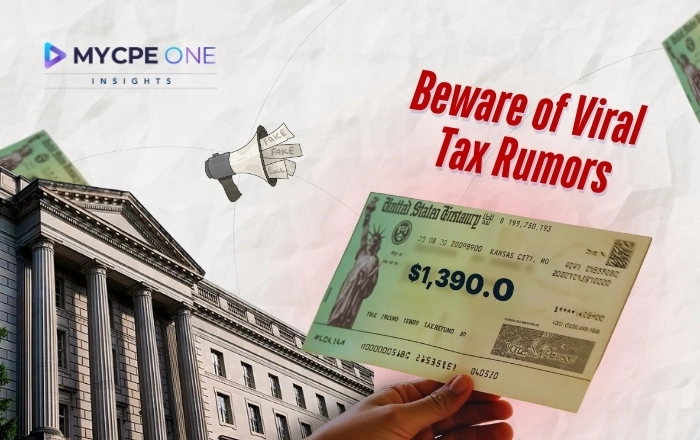
Rumors circulated on social media during the summer of 2025 about the IRS sending out $1,390 stimulus checks, prompting the agency to publicly deny these unsubstantiated claims. These inaccurate posts, manipulated based on earlier real IRS programs, highlight an ongoing issue of misinformation affecting the tax system, necessitating effective strategies from the IRS to combat such rumours and to ensure taxpayer compliance.
Some stories just won’t quit, and the summer 2025 rumor mill is at it again. Social media lit up with claims that the IRS is sending out $1,390 stimulus checks. The posts had all the right hooks, specific dollar amounts, Treasury mentions, and even Trump-era tariff talk. The problem is none of its true. For accountants, tax professionals, and finance leaders, the real story isn’t about extra spending money; it’s about the tax system’s constant battle with misinformation. Let’s break it down here.
The confusion didn’t come out of thin air. During the pandemic, three separate laws authorized real, direct payments: the CARES Act, the COVID-Related Tax Relief Act, and the American Rescue Plan Act. Each carried hefty price tags and left millions of taxpayers with direct deposits or checks in their mailboxes. Even more recently, the IRS reminded taxpayers that they had until April 15, 2025, to file for unclaimed Recovery Rebate Credits from 2021, worth up to $1,400 per person. That legitimate program wrapped up months ago, but the timing set the stage for rumor peddlers to twist old facts into new “news.” As accountants like to say, once you blur tax years, it’s open season for confusion.
Fast forward to this summer. Viral posts claimed checks were inbound, some even tossing in a fake August $2,000 payout for extra spice. The IRS had to step in with a heads-up: no checks are coming. Congress hasn’t passed anything new, and only Congress can greenlight such payments. Sen. Josh Hawley’s tariff-driven “American Worker Rebate Act” is floating around, but it hasn’t advanced. Trump has teased rebate checks funded by tariff revenues, but talk isn’t legislation. Meanwhile, scammers are milking the rumor cycle, posing as IRS reps, and pressing taxpayers for sensitive info. The IRS has had to pin warnings on its official X account just to cut through the noise.
For professionals, this is déjà vu. Remember when taxpayers fell for “stimulus grants” that turned out to be phishing traps? This round is no different, except the dollar figure is oddly precise at $1,390. Maybe scammers think oddly specific makes it believable.
The IRS faces a credibility challenge in the social media age. The tax code is already dense, and when misinformation spreads faster than facts, compliance takes a hit. What can the Service do? A few measures stand out:
If these rumors keep recycling every tax season, the IRS may need to treat misinformation the way it treats identity theft, an ongoing compliance risk that costs both money and trust.
While shutting down fake-check talk, the IRS is moving forward with something real: the 2026 Compliance Assurance Process (CAP) program. The application window runs from September 3 to October 31, 2025, for companies with at least $10 million in assets. CAP has been around since 2005, offering large corporations a cooperative way to resolve tax issues in real time rather than slugging it out years later under audit.
What’s new this cycle? Expanded eligibility for privately held corporations, tighter rules on audited financials, and flexibility for companies impacted by IRA or CHIPS Act provisions. For CFOs and tax directors, CAP isn’t glamorous, but it’s a no-brainer way to cut down on exam risk. In a year when misinformation is flooding the taxpayer side, the Service is at least giving big companies a clearer path to compliance.
So where does this leave us? No new $1,390 checks. No August $2,000 surprise. Just the IRS trying to squash rumors while running real programs like CAP for large corporations. For accountants and finance professionals, the message to clients is simple: if it sounds too good to be true, it probably is. And when it comes to taxes, don’t trust viral posts, trust the code, the regs, and yes, sometimes the IRS website. As one old idiom goes, “Don’t count your chickens before they hatch.” Or in today’s terms: don’t spend your stimulus before Congress even votes. Cut through the noise and get trusted tax updates today only on MYCPE ONE Insights.
Until next time…
Don’t forget to share this story on LinkedIn, X and Facebook
Subscribe now for $199 and get unlimited access to MYCPE ONE, from CPE credits to insights Magazine
📢MYCPE ONE Insights has a newsletter on LinkedIn as well! If you want the sharpest analysis of all accounting and finance news without the jargon, Insights is the place to be! Click Here to Join
Earn CPE Credits by Simply Reading Articles – Starting at Just $199/Year!
50 of the Top 200 Accounting Firms trust MYCPE ONE for their team’s learning—why not you? With 15,000+ approved content hours, 500+ emerging subject areas, and automated compliance tracking, staying ahead has never been easier.
We don’t just create boring tax, accounting, and audit content—our platform offers engaging, insightful, and trending material that your team will actually enjoy while earning CPE credits.
Sign up today, go through the comprehensive list of features and unlock unlimited learning!
You’ve reached the 3 free-content piece limit. Unlock unlimited access to all News & CPE resources.
Subscribe Today.
Already have an account?
Sign In